Clear Sky Science · en
Understanding depression through an intersectional framework: the joint impact of childhood adversities and social determinants using Canadian longitudinal study on aging (CLSA) data
Why Early Hardships Still Matter in Later Life
Many people assume that childhood is far behind us by the time we reach midlife, but the experiences we carry from those early years can leave lasting marks on our mental health. This study looks at how tough events in childhood, such as abuse or family instability, combine with adult circumstances like income, education, and gender to shape the chances of becoming depressed in later life. Using data from thousands of Canadians aged 45 and over, the researchers show that depression risk is not driven by a single factor, but by how multiple disadvantages stack up over a lifetime.
Connecting Childhood Events to Adult Mood
The starting point of the study is a group of experiences known as adverse childhood experiences, or ACEs. These include physical, sexual, and emotional abuse, neglect, witnessing violence at home, and serious problems affecting parents or caregivers, such as mental illness, separation, or death. Past research has shown that any one of these can increase the likelihood of depression in adulthood. However, real lives are messy, and many children are exposed to several types of adversity at once. The authors therefore focused on patterns of adversity rather than single events, asking how different combinations of ACEs show up in people’s later mental health.
Three Paths of Early-Life Adversity
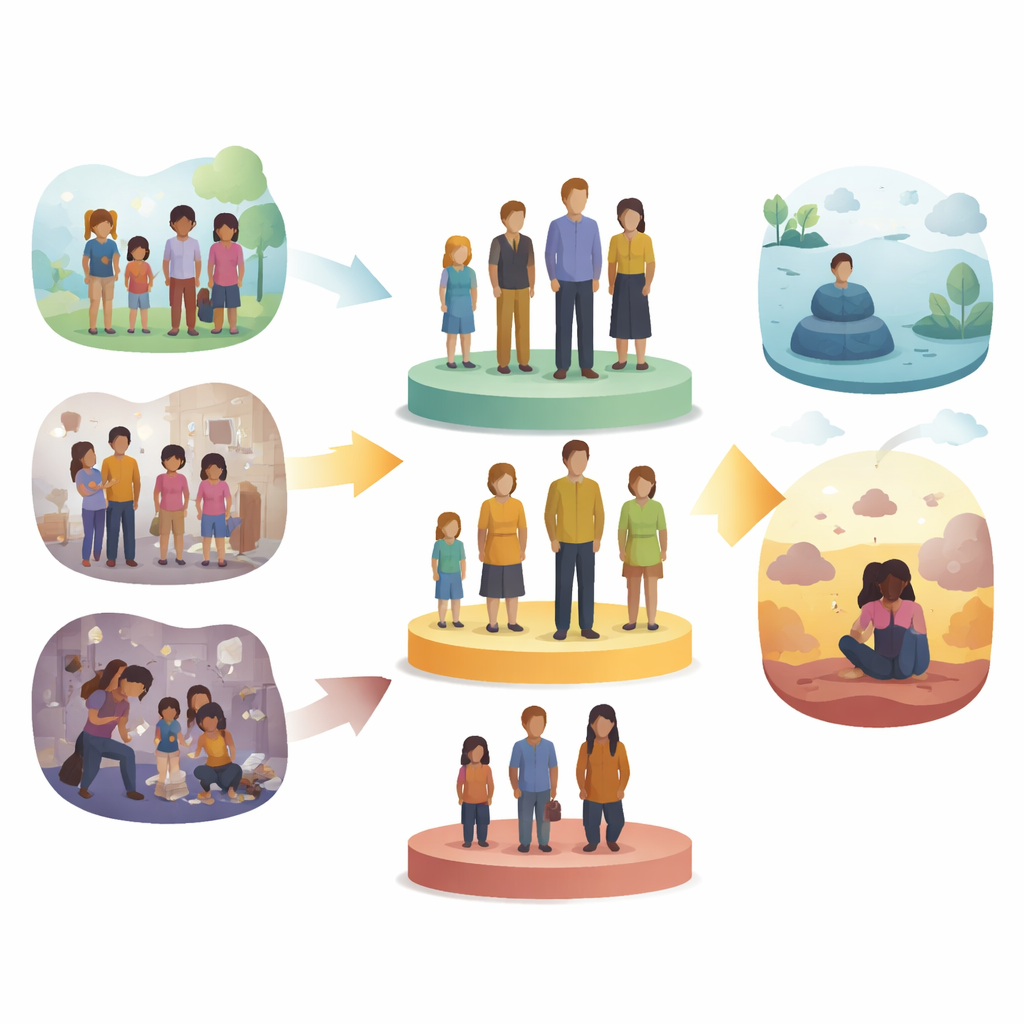
To uncover hidden groupings of childhood experience, the researchers used a statistical technique that clusters people with similar histories. Among more than 20,000 participants in the Canadian Longitudinal Study on Aging, they identified three main ACE patterns. The largest group, called the low-adversity class, had very little exposure to most childhood hardships, aside from some spanking and slightly higher chances of having a parent with mental illness or a parental separation. A smaller, moderate-adversity group had more family stress, especially verbal conflict and being yelled at, but still relatively low levels of physical or sexual abuse. The high-adversity group, nearly one in five participants, reported many different kinds of trauma across childhood, from abuse and neglect to repeated exposure to violence and serious family disruption. This last group represents people who faced widespread and repeated harm early in life.
When Life Circumstances Intersect
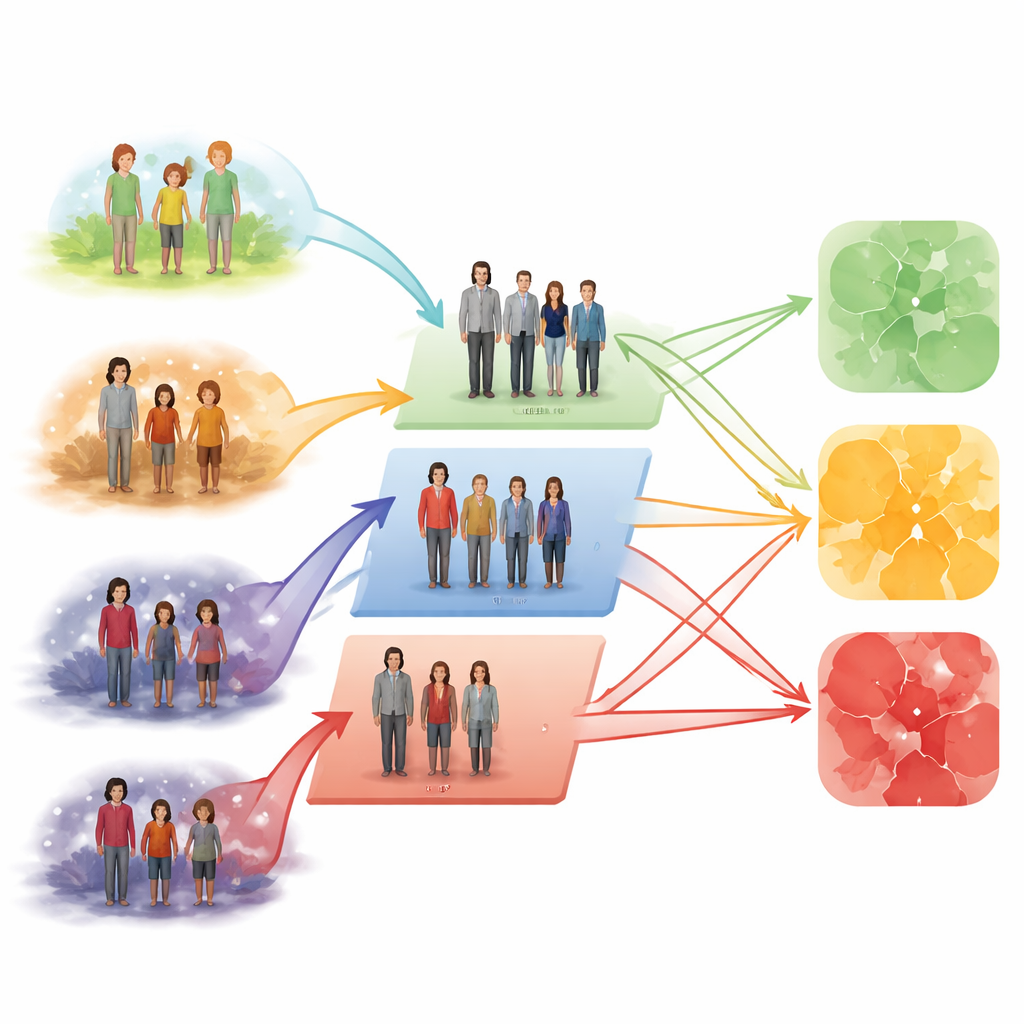
The study then asked how these childhood patterns interact with core features of adult life: being male or female, belonging to White or non-White groups, and where people fall on the socioeconomic ladder based on education, income, and employment. Rather than looking at each factor separately, the authors used an intersectional approach, examining all possible combinations of childhood adversity, gender, ethnicity, and socioeconomic status as they relate to depression. This method better reflects real-world lives, where a person can be, for example, a woman, from a racial minority group, with low income and a history of high adversity, all at once. The analysis showed that these overlapping identities help explain why some groups are much more vulnerable to depression than others.
Who Faces the Highest and Lowest Risks
Across the whole sample, people with many types of childhood adversity were almost twice as likely to experience depression as those with little adversity. Being female was also linked to higher odds of depression. Yet the strongest influence came from socioeconomic status: older adults with low socioeconomic status had nearly five times the odds of depression compared with those with high status. When these factors were combined, clear patterns emerged. The lowest predicted risk was seen in men with little childhood adversity and high socioeconomic status, regardless of whether they were White or non-White. In contrast, the highest predicted risks clustered among people carrying several disadvantages at once: high childhood adversity, low socioeconomic status, and often female gender. In these groups, roughly one in three people were predicted to experience depression, underscoring how early trauma and current hardship can reinforce one another.
What This Means for Prevention and Care
For a layperson, the key message is that depression in later life is not simply a matter of individual weakness or biology. It often reflects a lifetime of unequal exposure to hardship, especially when early trauma is followed by ongoing financial strain and limited opportunities. The study suggests that health services and prevention programs should pay special attention to older adults who combine high childhood adversity with present-day disadvantage, particularly women with low income or education. By recognizing how childhood experiences and social conditions intersect, policymakers and clinicians can move toward more tailored, fair, and effective approaches to preventing and treating depression in aging populations.
Citation: Su, Y., Li, M., Fleury, MJ. et al. Understanding depression through an intersectional framework: the joint impact of childhood adversities and social determinants using Canadian longitudinal study on aging (CLSA) data. Transl Psychiatry 16, 227 (2026). https://doi.org/10.1038/s41398-026-03973-z
Keywords: depression in older adults, childhood adversity, socioeconomic status, intersectionality, mental health inequality