Clear Sky Science · en
ADHD polygenic risk predicts neural signatures of cognitive control: Evidence from midfrontal theta dynamics
Why brain timing matters for everyday focus
Why do some people with attention-deficit/hyperactivity disorder (ADHD) struggle to stay on task, react consistently, or filter out distractions? This study looks under the hood of the brain to connect tiny genetic differences with the split-second timing of electrical signals that support self-control. By tracing a path from DNA to brain rhythms to behavior, the researchers show how inherited risk for ADHD may subtly disrupt the brain’s internal metronome for keeping our thoughts and actions on track.
The mind’s traffic controller
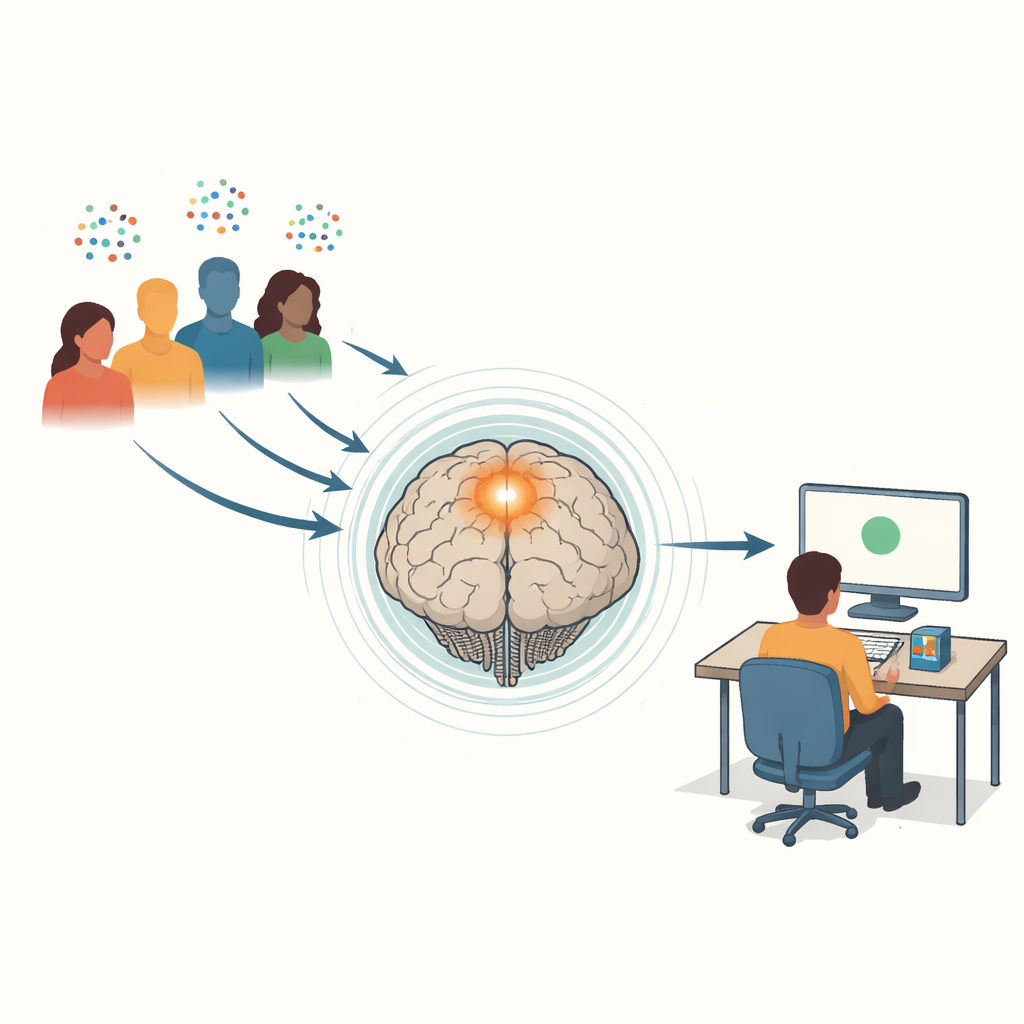
Everyday life constantly asks us to focus on what matters and ignore what does not, whether that is following directions in a busy classroom or driving through rush-hour traffic. Psychologists call this set of abilities “cognitive control.” One well-studied brain signal linked to cognitive control is a gentle rhythmic activity over the middle of the forehead region, known as midfrontal theta. This rhythm increases in short bursts when we need to resolve conflicts, correct mistakes, or stay aligned with our goals. Past work has shown that people with ADHD and autistic traits often have more irregular versions of these rhythms and more variable reaction times on demanding tasks, suggesting that their internal timing of control signals is less precise.
From genes to brain signals
ADHD and autism are both highly heritable, meaning that many genetic variants together nudge a person’s risk up or down. Scientists can summarize this inherited tendency using “polygenic scores,” which combine the small effects of thousands of DNA differences into a single number for each person. In this study, 454 young adult twins completed a computerized attention task in which they responded to arrows pointing left or right while ignoring distracting arrows around them. At the same time, their brain activity was recorded using an EEG cap. The team focused on three measures: the consistency of the midfrontal theta rhythm across trials (called inter-trial coherence), the size of a brain signal that follows errors, and the variability in reaction times.
What the brain rhythms revealed
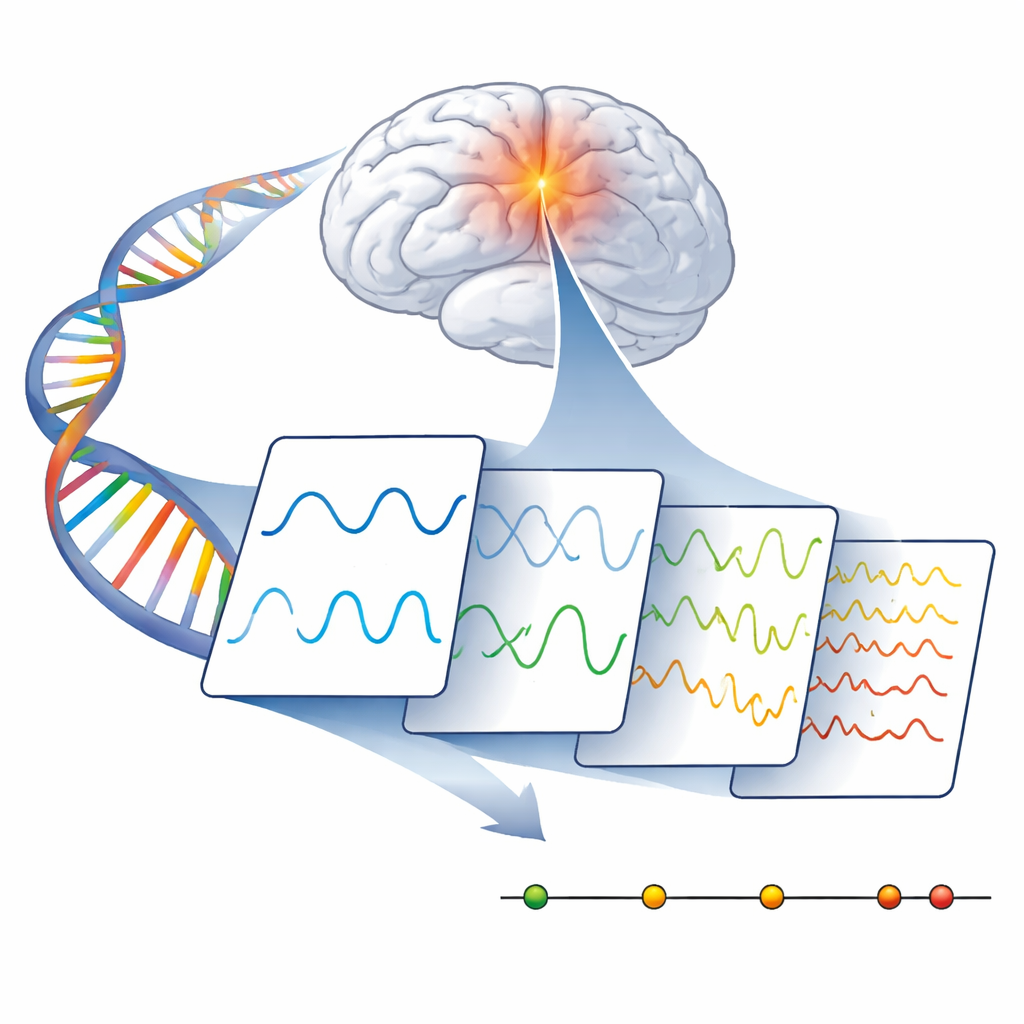
The key finding was that higher genetic risk for ADHD, as captured by the polygenic score, reliably predicted less consistent midfrontal theta timing during the attention task. In other words, people whose DNA carried more ADHD-related variants tended to have brain rhythms whose timing from one trial to the next was noisier. This link held even after accounting for age and sex, and ADHD genetic risk alone explained a similar fraction of variation in the brain measure as polygenic scores often explain in symptom questionnaires. Importantly, this theta measure showed excellent test–retest reliability when participants came back for a second session, meaning it behaved like a stable individual trait rather than random noise.
What did not change and why it matters
Interestingly, ADHD genetic risk did not significantly predict how variable people’s reaction times were, nor did it predict the strength of the brain’s error signal. Likewise, polygenic scores for autism did not meaningfully relate to any of the brain or behavior measures in this sample, even though earlier twin work had found shared genetic influences. The authors suggest that the study may have been too small to detect weaker effects, and that the reaction-time measure itself was less consistently reproducible than the midfrontal theta signal. Still, the pattern points to the theta rhythm as a particularly sensitive and reliable link between genes and the control systems that support everyday focus.
Bringing the story together
To a lay observer, the percentages of variance explained by genetics here may sound modest, but in the world of complex traits they are substantial. This work provides the first direct evidence that the combined effect of many ADHD-related genetic variants is tied to a specific, well-characterized brain rhythm involved in staying on task. Rather than viewing ADHD only through outward behaviors such as fidgeting or forgetfulness, the study highlights how inherited risk may influence the timing of internal control signals that coordinate brain networks. Over time, such precise, reliable brain measures could help refine how we define and study attention problems, and eventually support more tailored approaches to diagnosis and intervention.
Citation: Aydin, Ü., Wang, Z., Gyurkovics, M. et al. ADHD polygenic risk predicts neural signatures of cognitive control: Evidence from midfrontal theta dynamics. Transl Psychiatry 16, 174 (2026). https://doi.org/10.1038/s41398-026-03938-2
Keywords: ADHD, brain rhythms, cognitive control, genetic risk, EEG