Clear Sky Science · en
A genetic study of immunity in depression and interactions with childhood maltreatment
Why Early Hurt Can Shape Lifelong Mood
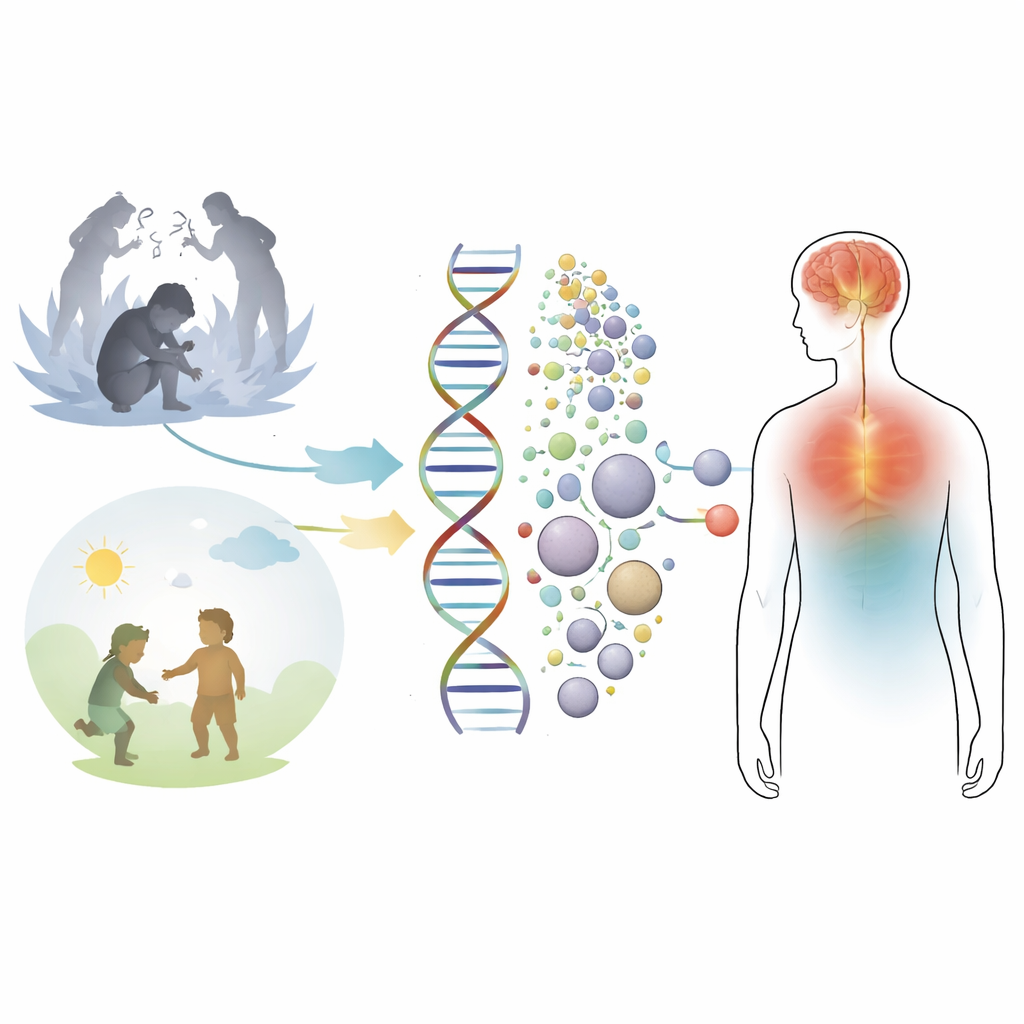
Many people who live through abuse or neglect as children go on to struggle with depression as adults, but not everyone does. This paper asks why some individuals seem especially vulnerable. The researchers looked at how a person’s inherited immune system traits and their experiences of childhood maltreatment might work together to influence the risk of depression. By zooming in on specific families of immune genes, they reveal biological pathways through which early emotional wounds may become embedded in the body and brain.
Looking at Mood Through the Lens of the Immune System
Depression is usually thought of as a disorder of thoughts and feelings, yet mounting evidence shows that our immune system is deeply involved. People with depression often have signs of ongoing inflammation, and large genetic studies suggest that immune changes can help cause, not just accompany, low mood. At the same time, harsh experiences in childhood—such as emotional or physical abuse or neglect—are strongly linked to later-life depression and to long-lasting changes in immune activity. The central idea of this study is that depression may arise, in part, from a long dialogue between an individual’s immune genes and the stress of early adversity.
Two Populations, One Big Question
The authors focused on 20 key immune pathways that together involve more than 2,300 genes spanning both innate and adaptive immunity. They analyzed genetic data from over 13,000 adults in the Generation Scotland study, of whom about one in seven had experienced depression at some point in their lives. For a subset of these participants, and for an additional sample from the German BiDirect study, detailed questionnaires captured different types of childhood maltreatment: emotional, physical, and sexual abuse, along with emotional and physical neglect. Rather than testing one genetic variant at a time, the team combined the effects of many variants within each gene and pathway to capture the overall influence of immune biology on depression.
Immune Pathways Linked to Depression
When the researchers examined genetic associations with depression alone, one gene in particular stood out: the growth hormone receptor (GHR), which helps cells respond to growth hormone. Although best known for guiding physical growth, this receptor is also present on immune cells such as macrophages, where it can tune their activity. A broader immune pathway regulating the development of myeloid cells—cells that give rise to macrophages and related cell types—was also tied to depression. These findings strengthen the idea that how the body generates and activates certain immune cells can influence who becomes depressed, independent of life history.
When Early Trauma Meets Immune Genes
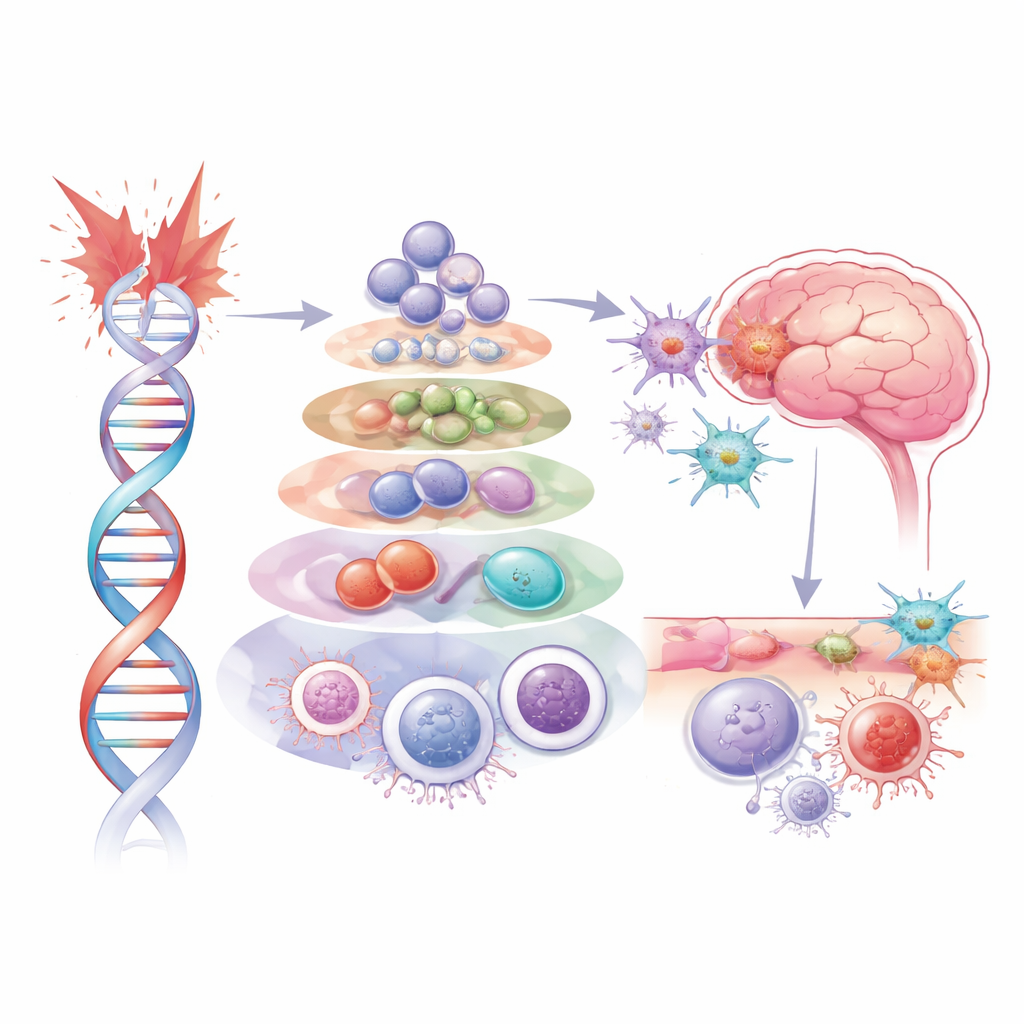
The heart of the study asked how immune genes interact with childhood maltreatment to shape depression risk. Across the Scottish and German samples, the authors found 56 immune-related genes whose combined activity was consistently linked to depression only when childhood trauma was taken into account. These genes are involved in a wide range of functions: producing and maturing blood and immune cells, sensing threats such as pathogens, managing oxidative stress, and regulating inflammation. Network analyses highlighted macrophages and their brain counterparts, microglia, as key cell types in which these genes are active. Some of the implicated genes are also connected to brain signaling and to responses to amyloid-beta, a protein central to Alzheimer’s disease, hinting at shared immune pathways between depression, early adversity, and later-life cognitive problems.
What This Means for People’s Lives
For a general reader, the take-home message is that childhood maltreatment does not operate in a vacuum, nor is depression simply a matter of brain chemistry alone. This work suggests that specific combinations of immune genes and early-life stress can push the body’s blood-forming system toward producing immune cells that are primed for heightened, long-term reactivity. Over time, these altered cells may foster persistent inflammation and changes in brain function that increase the likelihood of depression and perhaps other illnesses. While the study has limitations—including modest sample sizes for trauma-related analyses—it points to concrete biological targets that could, in the future, guide more personalized prevention and treatment strategies for people who have endured early adversity.
Citation: Herrera-Rivero, M., McCartney, D.L., Whalley, H.C. et al. A genetic study of immunity in depression and interactions with childhood maltreatment. Transl Psychiatry 16, 188 (2026). https://doi.org/10.1038/s41398-026-03935-5
Keywords: depression, childhood maltreatment, immune system, genetics, inflammation