Clear Sky Science · en
Identification of plasma biomarkers in lipid metabolism for accurate prediction of Alzheimer’s disease
Why Your Blood May Reveal Early Brain Trouble
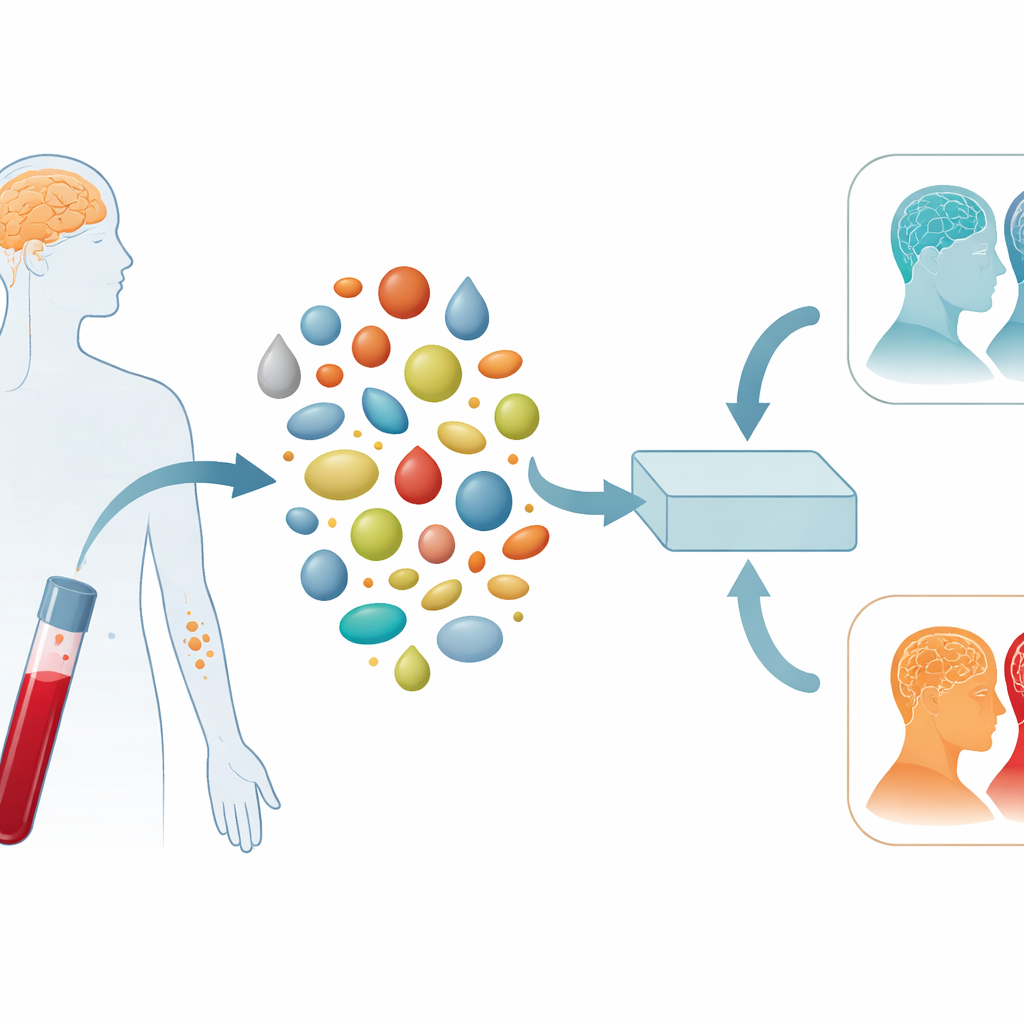
Alzheimer’s disease often creeps in years before memory problems become obvious. Today’s brain scans and spinal taps can spot warning signs, but they are expensive or invasive. This study asks a simple question with big implications: could an ordinary blood draw carry enough chemical clues to flag Alzheimer’s early, using the everyday fats and small molecules that circulate in our bloodstream?
A Look Inside Blood Chemistry
The researchers focused on “metabolites” – thousands of tiny molecules produced as our bodies process food, store energy, and keep cells running. Because these substances reflect both our genes and lifestyle, they can act like a real-time report card on health. Using a technique called mass spectrometry, the team measured 1,190 different metabolites in the blood plasma of 447 older adults in China: 188 people with Alzheimer’s disease, 181 with mild cognitive impairment (a possible early stage), and 78 with normal thinking abilities.
Distinct Fingerprints in Alzheimer’s Blood
When the team compared groups, people with Alzheimer’s had clearly different metabolic patterns from healthy volunteers, and those with mild cognitive impairment tended to fall in between. They identified 72 metabolites that differed between Alzheimer’s and healthy participants, and 39 that differed in mild impairment, with a sizable overlap. Most of these molecules were lower in people with memory problems, suggesting that certain chemical activities in the body are dialed down as the disease progresses. A striking share of the changes involved fats – especially triglycerides and two families of membrane-building fats called phosphatidylethanolamines and phosphatidylcholines – hinting that problems in how the body handles lipids may be closely tied to brain decline.
Building a Blood Test for Diagnosis
Rather than rely on any single molecule, the scientists used machine learning to select a combination of metabolites that, together, best distinguished Alzheimer’s from normal aging. From the 72 altered candidates, they honed in on a panel of 22 key metabolites, many of them lipids, but also a few diet-related and amino acid–linked molecules. They then trained a statistical model that takes in the levels of these 22 metabolites, along with basic information like age and sex, and outputs the likelihood that a person has Alzheimer’s. Tested in an independent group of participants, this blood-based model was highly accurate in telling Alzheimer’s patients from healthy controls. Even when the model was stripped down to the metabolites alone, without age or other factors, it still performed strongly.
Following the Pathways Behind the Markers
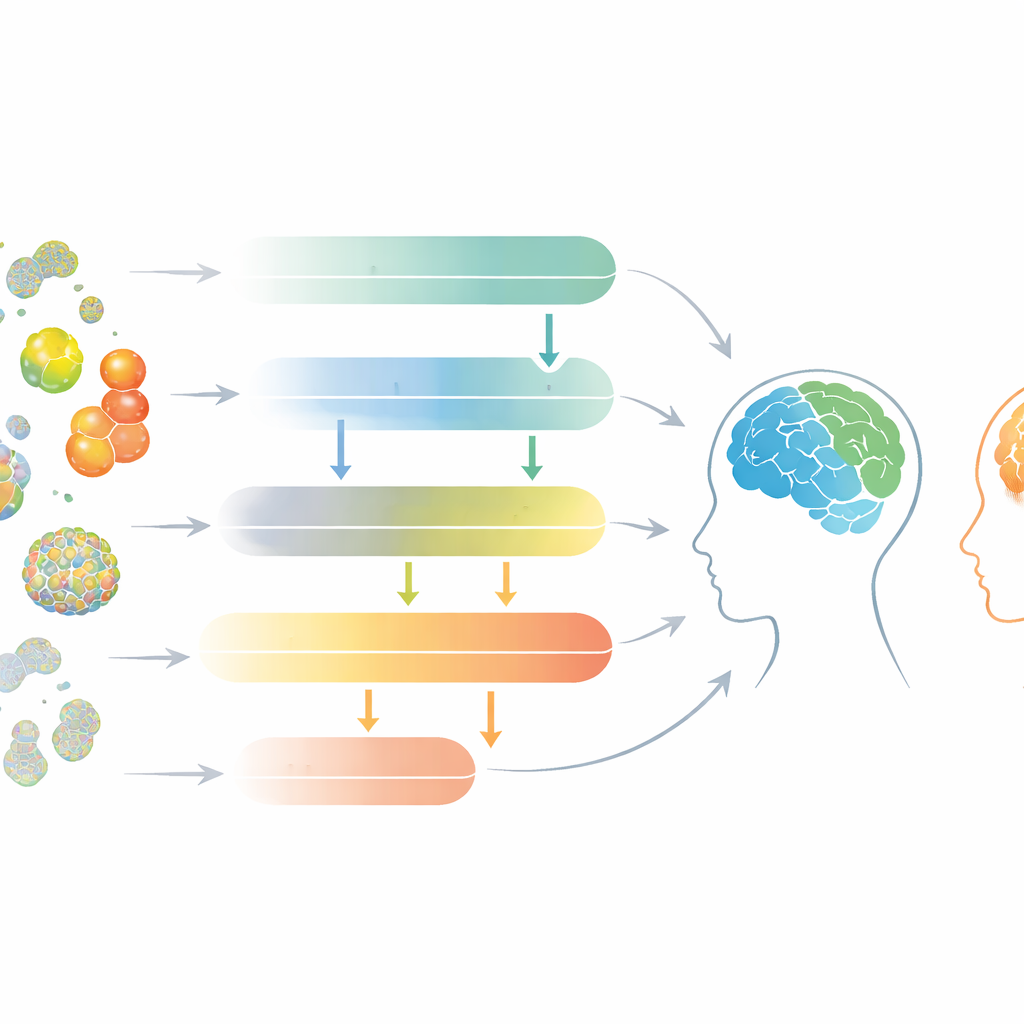
To move beyond a black-box test, the researchers asked what biological pathways these 22 metabolites belong to. They found that many sat within a small set of fat-processing routes, including those that handle linoleic acid, alpha-linolenic acid, arachidonic acid, and other complex lipids. When they looked at overall activity in these pathways, they saw a broad pattern of reduction in people with Alzheimer’s compared with healthy peers. Importantly, when they examined data from two completely independent studies, they saw similar pathway-wide drops in people with dementia or mild impairment, even though not all individual metabolites matched across studies. This suggests that the underlying disruption of lipid metabolism is robust and repeatable.
What This Could Mean for Patients
Taken together, the work shows that a carefully chosen combination of blood metabolites can reliably separate Alzheimer’s patients from healthy older adults, and that the strongest signals come from changes in how the body manages certain fats. For a layperson, the take-home message is that Alzheimer’s is not just “in the head” – it leaves a footprint in the bloodstream that can be picked up with modern chemistry tools. While more testing is needed before such a blood test becomes part of routine care, this study lays important groundwork for a future in which a simple blood draw could aid early diagnosis, guide monitoring, and point scientists toward new treatments that target disturbed lipid pathways.
Citation: Luo, X., Jia, L., Cao, J. et al. Identification of plasma biomarkers in lipid metabolism for accurate prediction of Alzheimer’s disease. Transl Psychiatry 16, 181 (2026). https://doi.org/10.1038/s41398-026-03933-7
Keywords: Alzheimer’s disease, blood biomarkers, lipid metabolism, metabolomics, early diagnosis