Clear Sky Science · en
Brain functional network correlates and predictors of the perioperative antidepressant effect of esketamine in breast cancer patients: a double-blind randomized controlled trial using resting-state fMRI and graph theory
Why this matters for patients and families
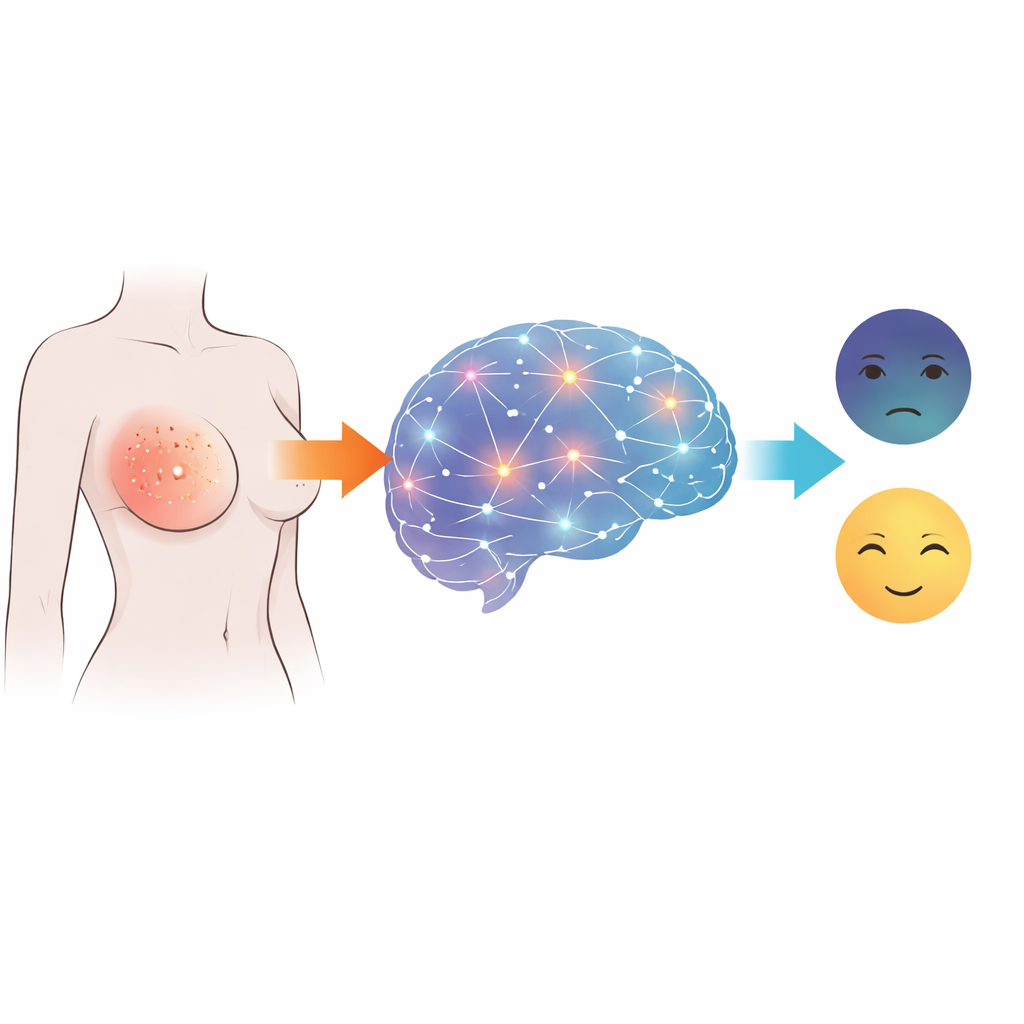
For many women, beating breast cancer is only half the battle. The stress of surgery and recovery can trigger or worsen depression, which in turn is linked to poorer cancer outcomes and quality of life. This study asks a timely question: can a modern anesthetic drug, esketamine, given during breast cancer surgery not only help with anesthesia but also ease depression by subtly reshaping brain activity?
A new role for an old anesthetic cousin
Esketamine is closely related to ketamine, a long‑used anesthetic that, in low doses, can rapidly lift mood in people with hard‑to‑treat depression. Unlike traditional antidepressant pills that often take weeks to work, esketamine can act within hours and may cause fewer nervous‑system side effects than ketamine. The researchers built on their earlier clinical trial showing that a single low dose of esketamine given during breast cancer surgery reduced short‑term depressive symptoms. In this follow‑up analysis, they set out to see what was happening in the brain, and whether brain scans could help predict who would benefit most.
Peeking into the resting brain
To do this, the team recruited women with breast cancer who had at least mild depressive symptoms before surgery. During anesthesia, they were randomly assigned to receive either a low dose of esketamine or a saline placebo, without patients or staff knowing which was which. All participants had a special type of brain scan, resting‑state functional MRI, the day before surgery and again on the first day after surgery. These scans measure how different brain regions “talk” to each other while a person is lying quietly. Using tools borrowed from network science, the researchers treated each brain region as a node and the connections between them as links, building a map of the brain’s communication network.
A key communication hub switches on
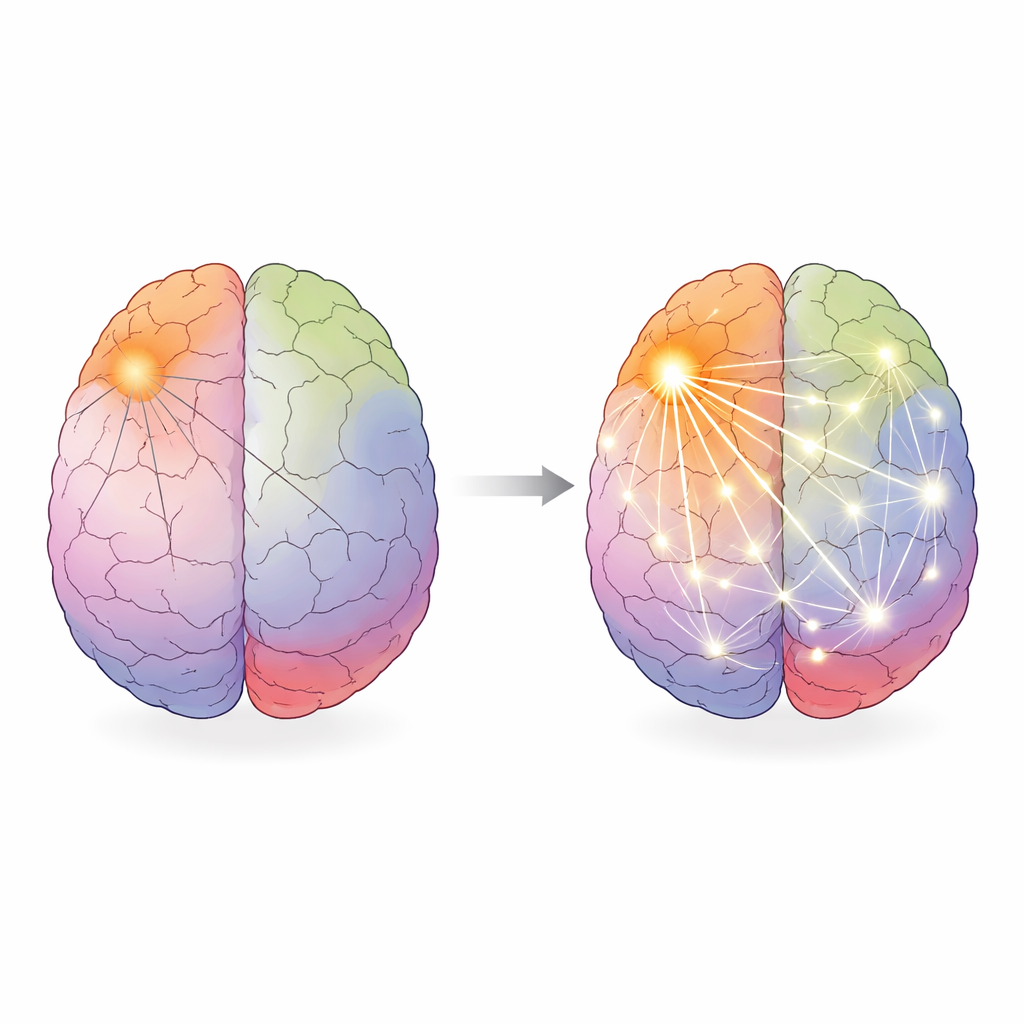
When the scientists compared the esketamine and placebo groups over time, one region stood out: a part of the left frontal lobe involved in controlling emotions. After surgery, women who had received esketamine showed stronger connectivity of this region with the rest of the brain, meaning it acted more like a central hub in the network. Those increases were closely tied to how much their depression scores improved. The placebo group, by contrast, showed no meaningful change in this brain hub. Interestingly, after treatment, the esketamine group showed even higher connectivity in this region than healthy volunteers, suggesting a short‑term, possibly compensatory boost in the brain’s emotion‑regulation circuitry.
Can brain scans forecast who will improve?
The team also looked at whether the brain’s network layout before surgery could forecast how much a patient’s mood would improve after esketamine. They found that several features of the pre‑surgery brain network – from overall communication efficiency to how strongly specific regions and connections were wired – were linked to both short‑term and three‑month changes in depression scores. For example, patients whose brains showed less efficient global communication at baseline tended to have greater long‑term mood improvement, and patterns of connections involving frontal, cingulate, visual, and deep brain regions also signaled who would fare better. These predictive links did not appear in the placebo group, implying that they are specific to esketamine’s action.
What this could mean for future care
Taken together, the findings suggest that a single low dose of esketamine, woven into standard anesthesia for breast cancer surgery, may nudge a key emotional control region into a more central coordinating role in the brain’s communication network, helping to relieve depressive symptoms. At the same time, the study hints that simple resting brain scans, analyzed with network tools, might one day help doctors identify which patients are most likely to benefit from this approach, bringing psychiatry closer to a “precision” model similar to that used in cancer care. While the trial was small and involved only Chinese women with breast cancer, it offers an intriguing glimpse of how tailoring anesthesia could also support mental health during a vulnerable window of cancer treatment.
Citation: Zhu, H., Wei, Q., Xu, S. et al. Brain functional network correlates and predictors of the perioperative antidepressant effect of esketamine in breast cancer patients: a double-blind randomized controlled trial using resting-state fMRI and graph theory. Transl Psychiatry 16, 135 (2026). https://doi.org/10.1038/s41398-026-03929-3
Keywords: breast cancer, esketamine, postoperative depression, brain networks, resting-state fMRI