Clear Sky Science · en
Maternal immune activation with high molecular weight poly (I:C) induces selective depressive-like phenotype in adult offspring
Why a Mother’s Immune System Matters for Her Children’s Mood
When a pregnant woman gets a viral infection, her immune system ramps up to protect her and her unborn child. But this same protective response may subtly shape how the child’s brain and behavior develop. This study uses rats to ask a specific question: can an immune reaction during pregnancy make adult offspring more prone to depression-like behavior, and if so, which aspects of mood are affected and how?
Simulating Infection During Pregnancy
To explore this, the researchers mimicked a strong viral infection in pregnant rats using a compound called poly(I:C), which tricks the body into mounting an immune response. They gave a single dose midway through pregnancy and then let the offspring grow up without further interference. The team followed both male and female offspring from adolescence to adulthood, checking not only behavior related to mood but also activity in a key brain region for mood regulation and the levels of immune messengers in the blood. 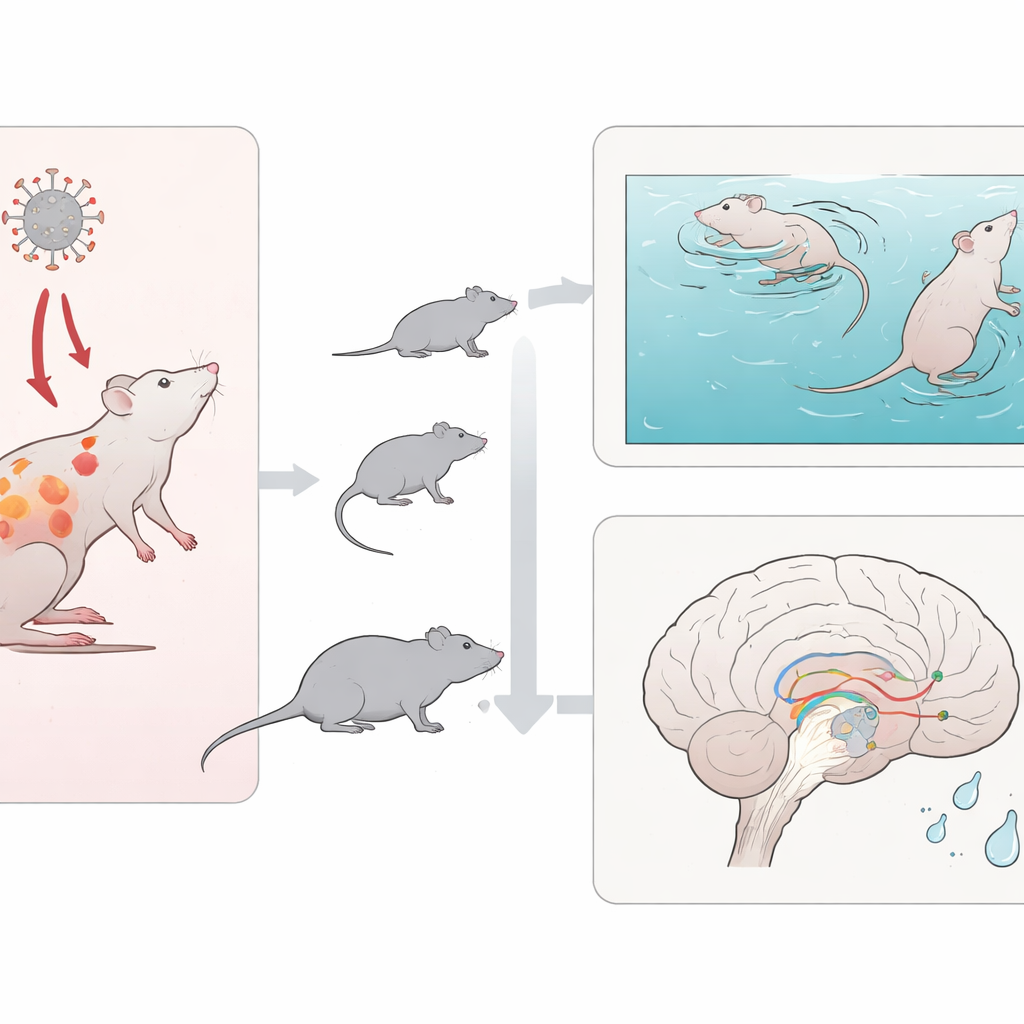
Testing Pleasure and How Animals Cope with Stress
The scientists focused on two different sides of depression-like states. One is loss of pleasure, often modeled in animals by asking whether they still prefer a sweet solution over plain water. The other is how they respond to an acute stress, such as being briefly placed in a cylinder of water: animals can either keep trying to escape (active coping, like swimming and climbing) or largely give up and float (a passive, despair-like response). Across several tests and sucrose concentrations, offspring from immune-activated mothers showed normal preference for the sweet solution, suggesting that their ability to experience basic pleasure was intact. However, in the swim test, both adolescent and adult offspring from these mothers spent more time immobile and less time actively swimming or climbing, especially males. This pattern points to a selective change in how they cope with stress, rather than a broad, all-encompassing depressive state.
Peering Into Mood-Related Brain Circuits
Because the brain’s serotonin system is deeply involved in mood and is a common target of antidepressant drugs, the researchers recorded electrical activity from serotonin-producing cells in the dorsal raphe nucleus, a small region in the midbrain. In adolescent offspring, maternal immune activation did not clearly alter how often these cells fired. By adulthood, however, male offspring from immune-activated mothers showed a higher firing rate of these serotonin neurons compared with control males, while females did not. This was somewhat surprising, because classic views often link lower serotonin activity to depression; here, stress-coping changes occurred alongside increased firing in this brain region, hinting at more complex or compensatory changes in mood circuits. 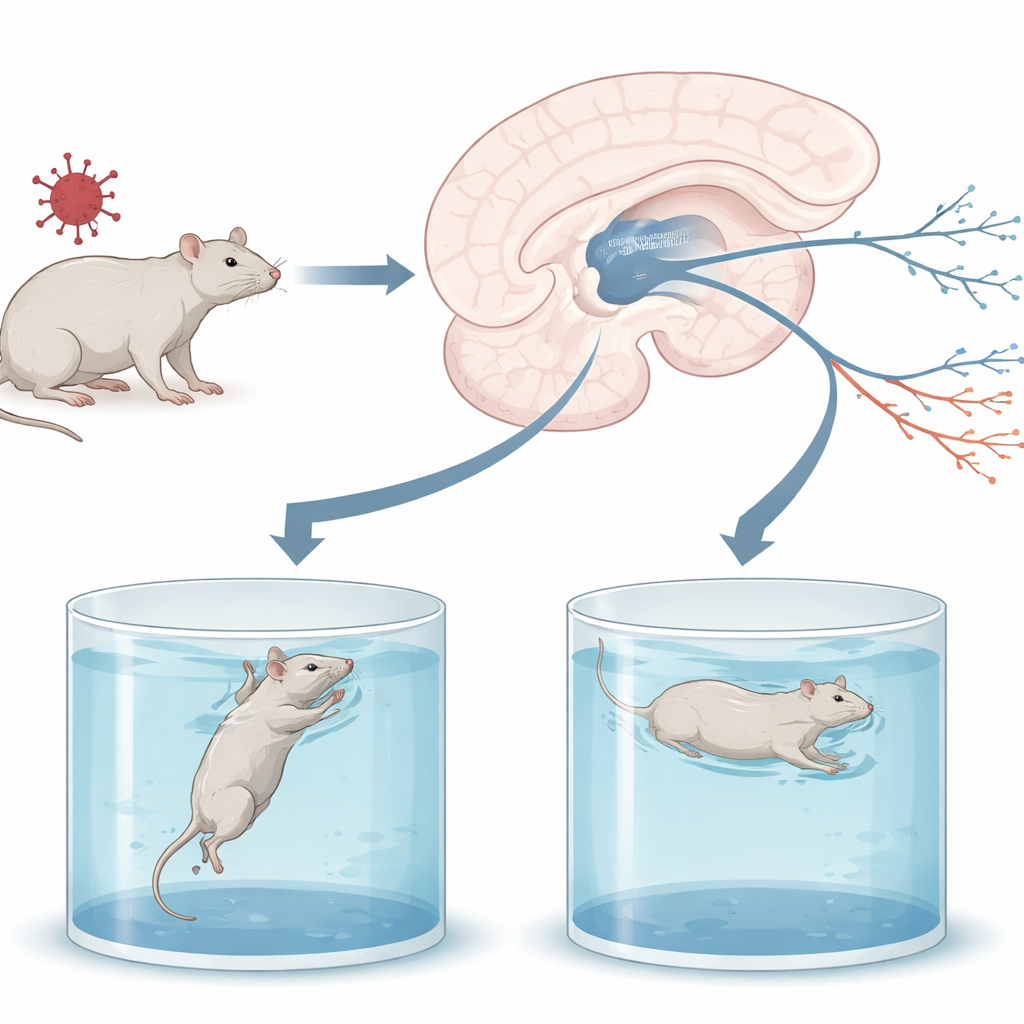
Immune Traces in the Blood
Since the work began with an immune challenge, the team also checked whether adult offspring still carried signs of altered immune signaling in their blood. Using a broad panel that measured dozens of cytokines and related molecules, they found few lasting differences. Two stood out: adult males exposed before birth showed slightly higher levels of the inflammatory messenger IL-1α, while adult females showed lower levels of a chemokine called GRO/KC, which helps guide immune cells. Overall, however, there was no evidence of ongoing, widespread inflammation in the bloodstream, suggesting that any long-term effects on mood and brain function may arise from more subtle or localized changes within the brain.
What This Means for Understanding Risk and Resilience
Taken together, the results suggest that a strong immune response during pregnancy does not automatically produce a full depression-like picture in offspring. Instead, in this rat model it selectively alters how they deal with stressful situations, particularly in males, while leaving basic enjoyment of sweet rewards untouched. These behavioral shifts are accompanied by sex-specific tweaks in serotonin neuron activity and modest changes in a few immune signals, rather than a dramatic, chronic inflammatory state. For humans, the study reinforces the idea that infections and immune activation during pregnancy can nudge developing brains in specific directions, potentially affecting later vulnerability to mood problems. It also highlights that sex, timing, and the exact nature of the immune challenge all matter for how this risk plays out.
Citation: Santoni, M., Mastio, A., Concas, L. et al. Maternal immune activation with high molecular weight poly (I:C) induces selective depressive-like phenotype in adult offspring. Transl Psychiatry 16, 139 (2026). https://doi.org/10.1038/s41398-026-03926-6
Keywords: maternal immune activation, prenatal infection, depression-like behavior, serotonin neurons, neurodevelopment