Clear Sky Science · en
Common and rare variant contributions to discontinuation of stimulant treatment in ADHD
Why some people stop ADHD medicine early
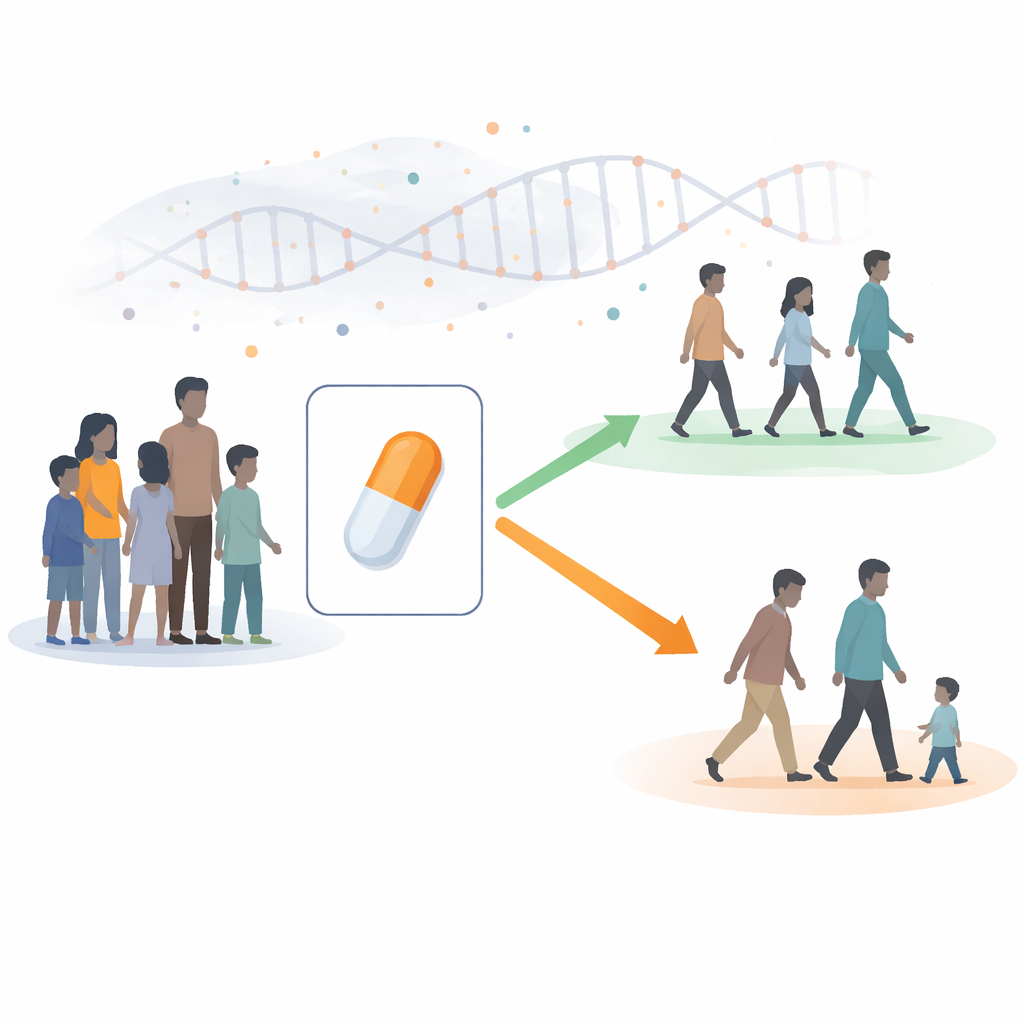
Stimulant medications such as methylphenidate can be life‑changing for many people with attention‑deficit hyperactivity disorder (ADHD). Yet a striking number stop taking them within the first year, sometimes after only a few prescriptions. This study asks a simple but important question: do our genes play a role in who keeps taking stimulant medication and who walks away early? Understanding this could eventually help doctors tailor treatment and support to each person’s needs.
Who was studied and what was measured
The researchers used Denmark’s nationwide health and prescription registers together with genetic data from over 18,000 people with ADHD who started stimulant treatment as children, teenagers, or adults. They defined “early discontinuation” as going at least six months without a new prescription during the first year after starting medication. About 4 in 10 people met this definition, and stopping was more common in older teens and adults than in children. Because the study linked prescriptions to DNA information, the team could ask whether certain genetic patterns were more common in those who stopped than in those who continued.
Small genetic signals in common DNA changes
First, the team looked at millions of common DNA variants across the genome. They estimated how much these variants, taken together, explained differences in stopping medication. The answer was: a modest but real contribution. Common variants accounted for roughly 6% of the variation in early discontinuation overall, with slightly higher values in teens and adults than in children. A scan across the genome found one region in children, in a gene called SLC5A12, that reached the usual statistical bar for discovery, but no other strong single hot spots appeared. This pattern suggests that many tiny genetic effects, rather than a few powerful ones, nudge people toward continuing or stopping stimulants.
Genetic risk for other traits and how it relates to stopping
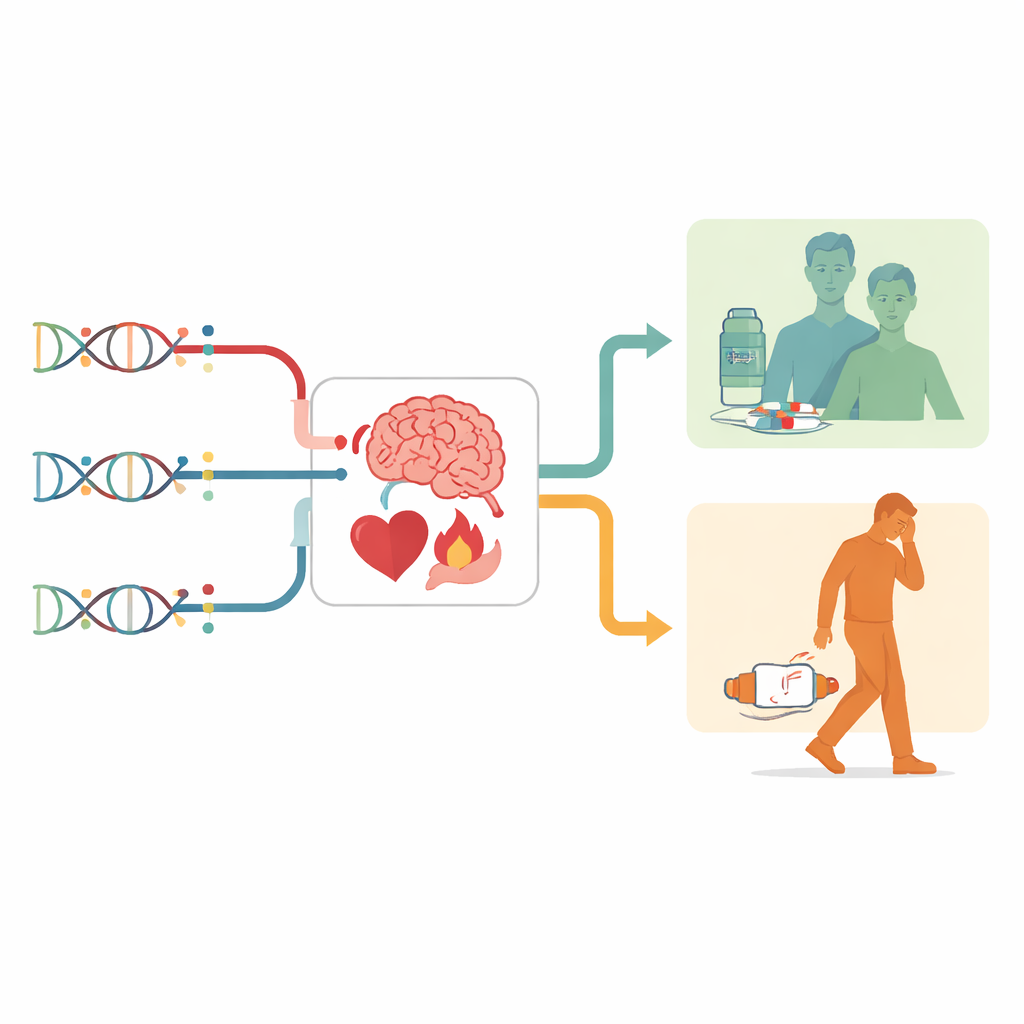
The authors then turned to “polygenic scores”—summary measures that combine the effects of many common variants linked to a particular trait, such as depression, schizophrenia, intelligence, body weight, or education. Ten of 36 scores showed reliable links to stopping stimulants. People with higher genetic loading for several psychiatric conditions tended to discontinue more often, regardless of age. In contrast, genetic tendencies toward higher education and higher intelligence were tied to lower stopping rates in older teens and adults, but not in younger children, where the pattern could even go in the opposite direction. A higher genetic tendency to higher body mass index was associated with a lower chance of stopping, especially in children, possibly because weight‑loss side effects may be less problematic for those predisposed to higher weight.
Rare genetic changes and dopamine‑related genes
Beyond common variants, the team examined rare, disruptive changes in protein‑coding genes, focusing on sets of genes linked to general brain development, stimulant drug targets, and the brain’s dopamine system—the main pathway affected by ADHD stimulants. Overall, there was no clear link between rare disruptive variants in broad gene sets and discontinuation. However, people who stopped treatment tended to have fewer disruptive changes in dopamine response genes, especially among older teens and adults. One possible interpretation is that individuals with more serious disruption of dopamine pathways may have more to gain from stimulants and are therefore more likely to continue, although this remains speculative and needs further testing.
What this means for patients and families
For people living with ADHD, the study’s message is both reassuring and grounding. Genes do play a role in whether someone continues stimulant treatment, but that role is modest and spread across many parts of the genome. Early stopping is not determined by a single “on–off” gene and is still heavily shaped by everyday factors—side effects, personal preferences, family input, stigma, and access to care. The findings hint that genetic tendencies related to broader mental health, body weight, and thinking skills may subtly influence treatment paths, and that these influences can differ between children and adults. In the long run, larger genetic studies could help identify who might need closer follow‑up, alternative medications, or extra support during the critical first months of treatment. For now, the results underscore the importance of careful monitoring, open communication, and flexible, patient‑centered care when starting stimulant medication.
Citation: Thirstrup, J.P., Duan, J., Ribases Haro, M. et al. Common and rare variant contributions to discontinuation of stimulant treatment in ADHD. Transl Psychiatry 16, 144 (2026). https://doi.org/10.1038/s41398-026-03925-7
Keywords: ADHD medication adherence, stimulant discontinuation, pharmacogenomics, polygenic risk, dopamine genetics