Clear Sky Science · en
Evaluating the potential of acupuncture for Alzheimer’s disease treatment: A meta-analysis and systematic review of mouse model studies
Why tiny needles matter for a big brain problem
Alzheimer’s disease robs people of memory and independence, and despite decades of effort, there is still no cure. At the same time, interest is growing in non-drug approaches that might slow or soften the disease. This study asks a simple but important question: when scientists use electroacupuncture—a modern, mild electrical form of acupuncture—on mice bred to develop Alzheimer-like changes, do their brains and behavior actually improve in a measurable way?
What the researchers set out to test
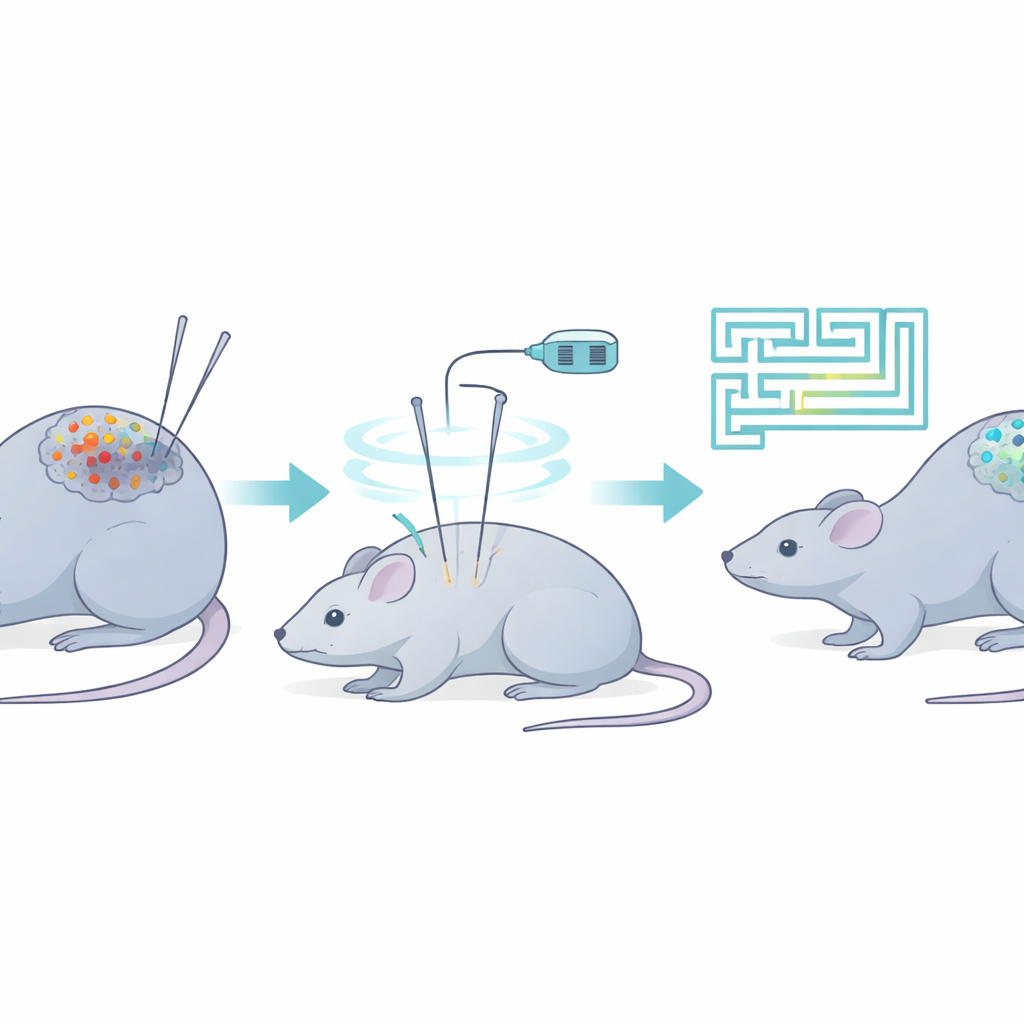
The authors gathered 29 laboratory studies published between 2014 and 2025 that all used genetically engineered mice showing key features of Alzheimer’s disease, such as sticky protein deposits and memory problems. In these experiments, mice received electroacupuncture at specific points on the body that correspond to traditional human acupoints. Because mice do not have expectations about treatment, and their genes and housing can be carefully controlled, these models allow researchers to test whether electroacupuncture truly changes disease markers and behavior, beyond any placebo effects that complicate human trials.
How they combined many small experiments
Each study reported measurements such as levels of amyloid-beta and abnormal tau proteins in the brain, signs of brain inflammation, and performance in maze-like memory tests. The team used a statistical approach called meta-analysis to pool results across experiments while accounting for differences in mouse strain, age, and stimulation settings. They transformed each comparison between treated and untreated mice into a common “effect size,” allowing them to see whether electroacupuncture had a consistently helpful, harmful, or neutral impact across the body of evidence.
Changes inside the brain
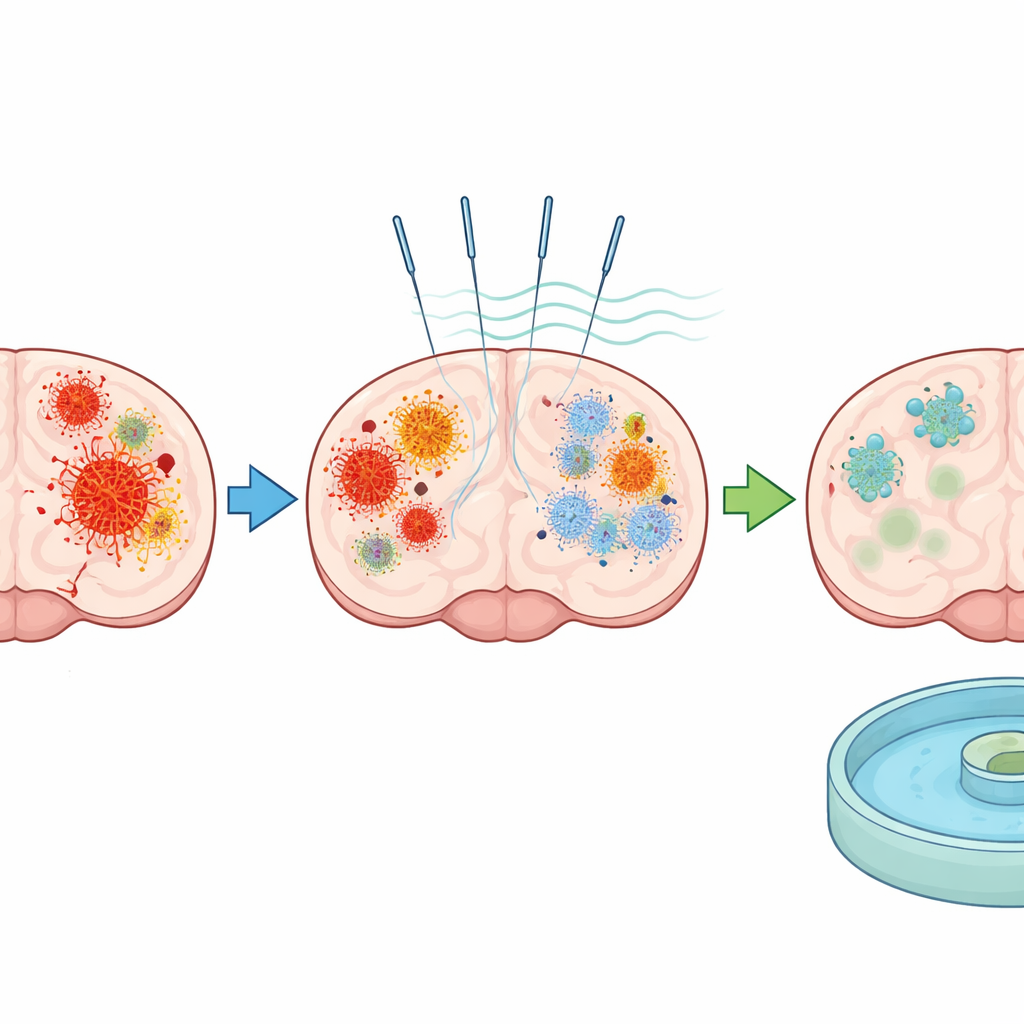
Across the collected studies, electroacupuncture was linked to clear reductions in several hallmarks of the diseased brain. Mice receiving treatment showed lower levels of amyloid-beta deposits and reduced amounts of phosphorylated tau, the altered form of tau protein that forms tangles in Alzheimer’s disease. In addition, markers of overactive immune cells in the brain—microglia and astrocytes—were generally lower after treatment, suggesting a calmer, less inflamed environment. One inflammatory molecule, IL-1β, also decreased, although closer checks for publication bias suggest this particular result is less certain and will require more balanced data to confirm.
Improvements in learning and memory
Brain chemistry is only meaningful if it translates into how an animal thinks and behaves. In standard water-maze tests, treated mice spent more time searching in the correct target area, crossed the former platform location more often, and learned to find the escape platform faster over several days. Another task that measures how well mice tell new objects from familiar ones also pointed to better memory in electroacupuncture groups. Together, these patterns indicate that electroacupuncture is not just shifting lab values; it is associated with noticeably better learning and recall in animals that otherwise show Alzheimer-like deficits.
Which needle locations seem most promising
Different studies targeted different combinations of acupoints, making direct head-to-head comparisons difficult. To address this, the authors used a network-style analysis that can infer relative rankings from many indirect comparisons. A point on the top of the head known as GV20 emerged as a particularly influential site: stimulation there, alone or in combination with nearby points such as GV26 and GV29, was consistently tied to stronger reductions in Alzheimer-related brain changes and better memory test scores. In contrast, some other points, especially when used alone, showed weaker or more uncertain benefits, highlighting that where the needles go may matter as much as the decision to use electroacupuncture at all.
What this means—and what it doesn’t
For lay readers, the message is cautiously hopeful: in rigorously controlled mouse studies, electroacupuncture often shifted Alzheimer-like brains toward fewer protein deposits, less inflammation, and sharper memory performance. This does not prove that acupuncture can prevent or cure Alzheimer’s disease in people, and the authors stress that publication bias and differences among studies mean that larger, well-designed experiments are still needed. But the results strengthen the case for viewing electroacupuncture as a serious, testable candidate within integrative medicine—one that may someday complement drug therapy by nudging vulnerable brains toward a healthier, more resilient state.
Citation: Yang, M., Tong, L., Guo, Z. et al. Evaluating the potential of acupuncture for Alzheimer’s disease treatment: A meta-analysis and systematic review of mouse model studies. Transl Psychiatry 16, 153 (2026). https://doi.org/10.1038/s41398-026-03923-9
Keywords: Alzheimer’s disease, electroacupuncture, neuroinflammation, mouse models, cognitive function