Clear Sky Science · en
Effects of 40 Hz transcranial alternating current stimulation on neural synchronization and cognitive correlates in schizophrenia: An EEG study
Why tinkering with brain waves matters
People living with schizophrenia often struggle not only with hallucinations or delusions, but also with day-to-day thinking skills such as holding information in mind, focusing, and learning new things. These difficulties are strongly tied to long-term independence and quality of life, yet current medications do little to fix them. This study asked a strikingly direct question: if we gently nudge the brain’s natural rhythms from the outside using weak electrical currents, can we restore more normal communication between brain regions involved in memory and attention—and might that eventually help thinking in schizophrenia?
Gentle electrical rhythms to guide the brain
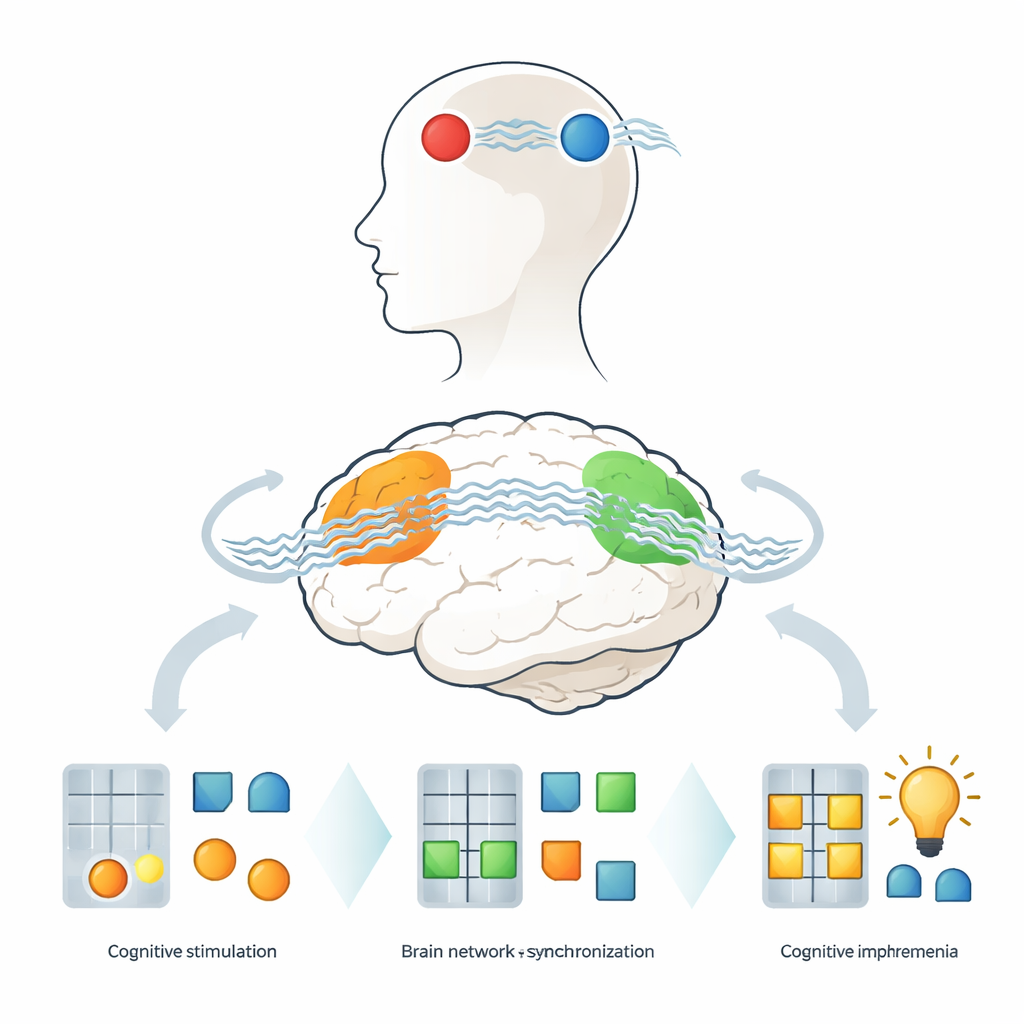
The researchers used a noninvasive method called transcranial alternating current stimulation, or tACS. Small sponge-covered electrodes were placed on the scalp over the left front of the brain and the right side towards the back—areas that form a key network for working memory, the mental “scratchpad” we use to hold and update information. For ten sessions over two weeks, one group of hospitalized patients with schizophrenia received a faint, rhythmic current pulsing at 40 cycles per second, a frequency linked to fast “gamma” brain waves. Another group had the same setup but received only a brief sham stimulation, helping to keep everyone blind to which treatment they received.
Listening in on brain activity during a memory challenge
To see what this stimulation did inside the brain, the team recorded electrical activity from the scalp using EEG while patients performed a simple memory game called the n-back task. In one version, people only had to recognize a specific digit, which mainly tests attention. In a harder version, they had to decide whether the current digit matched the one shown just before, placing more demand on working memory. The scientists focused on fast gamma waves and how well the front and back of the brain stayed in step with each other, as well as how slower and faster rhythms nested together—features thought to support clear, coordinated thinking.
Brain connections strengthened more than behavior
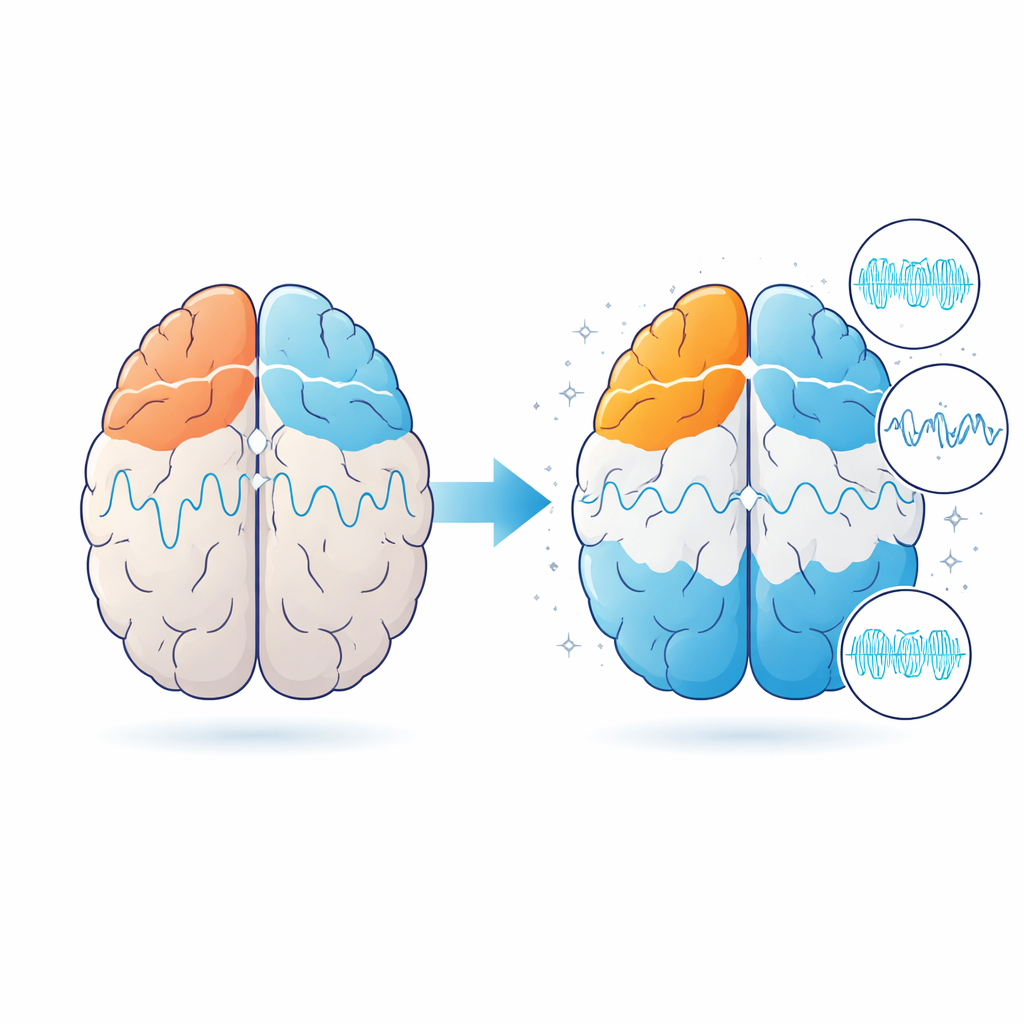
After ten sessions, patients who received real 40 Hz stimulation showed stronger synchronization of fast activity between the front and back of the brain during the more demanding memory condition, compared with the sham group. In other words, the timing of their brain waves in these two regions became more tightly coupled when the task required holding information in mind. The stimulation also seemed to stabilize a special relationship in the left frontal area where very slow waves set the stage for bursts of very fast activity, a pattern that in the sham group weakened over time. These changes suggest that tACS can shore up fragile communication in brain circuits that are often disrupted in schizophrenia.
Small signs of sharper thinking, but no major boost yet
When it came to actual performance, the picture was more modest. Standard cognitive tests covering multiple thinking skills did not show clear advantages for the active stimulation group over the four weeks after treatment. During EEG testing, however, accuracy on the easiest version of the memory task held steady in the stimulated group but slipped in the sham group, hinting that tACS might help maintain basic attention under certain conditions. In exploratory analyses, patients whose brain coupling patterns were better preserved also tended to show some improvement in visual learning weeks later, but this effect was small and needs to be confirmed in larger studies.
What this means for future brain-based treatments
To a lay observer, this work shows that it is now possible not only to monitor disturbed brain rhythms in schizophrenia, but also to nudge them in a more normal direction from the outside. Ten sessions of 40 Hz tACS strengthened and preserved key patterns of brain synchronization tied to working memory, even though clear, broad improvements in thinking skills did not yet appear. The findings suggest that brain-wave–based treatments may help repair underlying communication in critical circuits, but that turning these neural shifts into everyday cognitive gains will likely require longer, more tailored stimulation or combination with cognitive training. This study is an early but important step in learning how to tune the brain’s rhythms to support clearer thought in a challenging psychiatric illness.
Citation: Liu, Y., Cao, X., Jin, H. et al. Effects of 40 Hz transcranial alternating current stimulation on neural synchronization and cognitive correlates in schizophrenia: An EEG study. Transl Psychiatry 16, 145 (2026). https://doi.org/10.1038/s41398-026-03917-7
Keywords: schizophrenia, brain stimulation, gamma oscillations, working memory, EEG