Clear Sky Science · en
Sleep to remember, sleep to protect: increased sleep spindle and theta activity predict fewer intrusive memories after analogue trauma
Why a Good Night’s Sleep Matters After Something Scary
Many people who live through a frightening or shocking event find that the worst moments return later as sudden mental “flashbacks.” These intrusive memories are a core feature of post-traumatic stress disorder (PTSD). This study asks a hopeful question: can the way our brain works during sleep help protect us from such unwanted memories? By looking closely at brain rhythms overnight after an upsetting experience, the researchers show that certain types of sleep activity may reduce how often these intrusive images and thoughts pop back into mind.
A Movie Stand-In for Real-Life Trauma
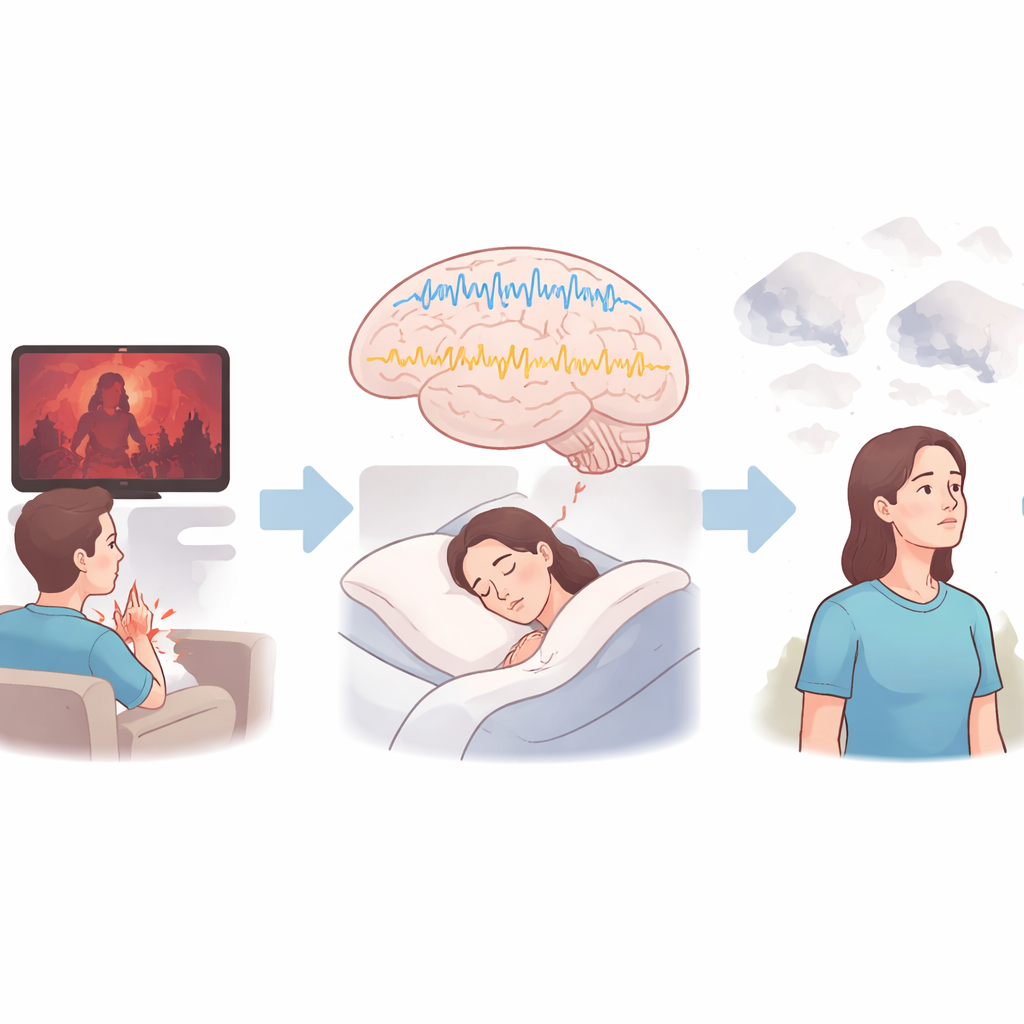
Studying real trauma in the lab is neither ethical nor practical, so scientists often use a powerful substitute: a short, highly distressing film that reliably triggers strong emotions. In this study, 22 healthy young women each spent three nights in a sleep laboratory. On one test night they watched a neutral film with everyday scenes; on the other, they watched a disturbing film showing sexual violence. The order was randomized. Right after the films, participants went to bed while their brain activity, heart activity, eye movements, and muscle tone were carefully recorded all night with a dense set of electrodes.
Tracking Flashbacks in Daily Life
To capture intrusive memories, the researchers asked participants to keep a six-day “intrusion diary” after the trauma-film night. Using their phones, they logged every sudden, unwanted memory of the film—whether as images, sounds, or thoughts—making sure to exclude memories they brought to mind on purpose. Participants also returned to the lab a week later for an “intrusion provocation” task. They saw pictures that resembled the film’s themes and reported any intrusions that occurred, while also rating how negative they felt before and after. On average, people reported a small but clear number of intrusions, often describing vivid sensory fragments of the most upsetting scenes.
What the Sleeping Brain Was Doing
The scientists focused on three well-known sleep rhythms: slow waves during deep non-REM sleep, brief bursts called sleep spindles, and theta waves during rapid eye movement (REM) sleep. These patterns are thought to help stabilize memories and calm emotional reactions. Surprisingly, when the researchers simply compared average brain activity after the trauma versus neutral films, they did not see big group differences. However, looking at each person’s changes told a different story. People whose heart rate rose more during the disturbing film tended to show a stronger “envelope” of spindle activity—the overall strength of these bursts—across large parts of the brain that night. This suggests that stronger emotional arousal can be followed by a targeted increase in certain sleep rhythms.
Sleep Rhythms That Shield Against Intrusions
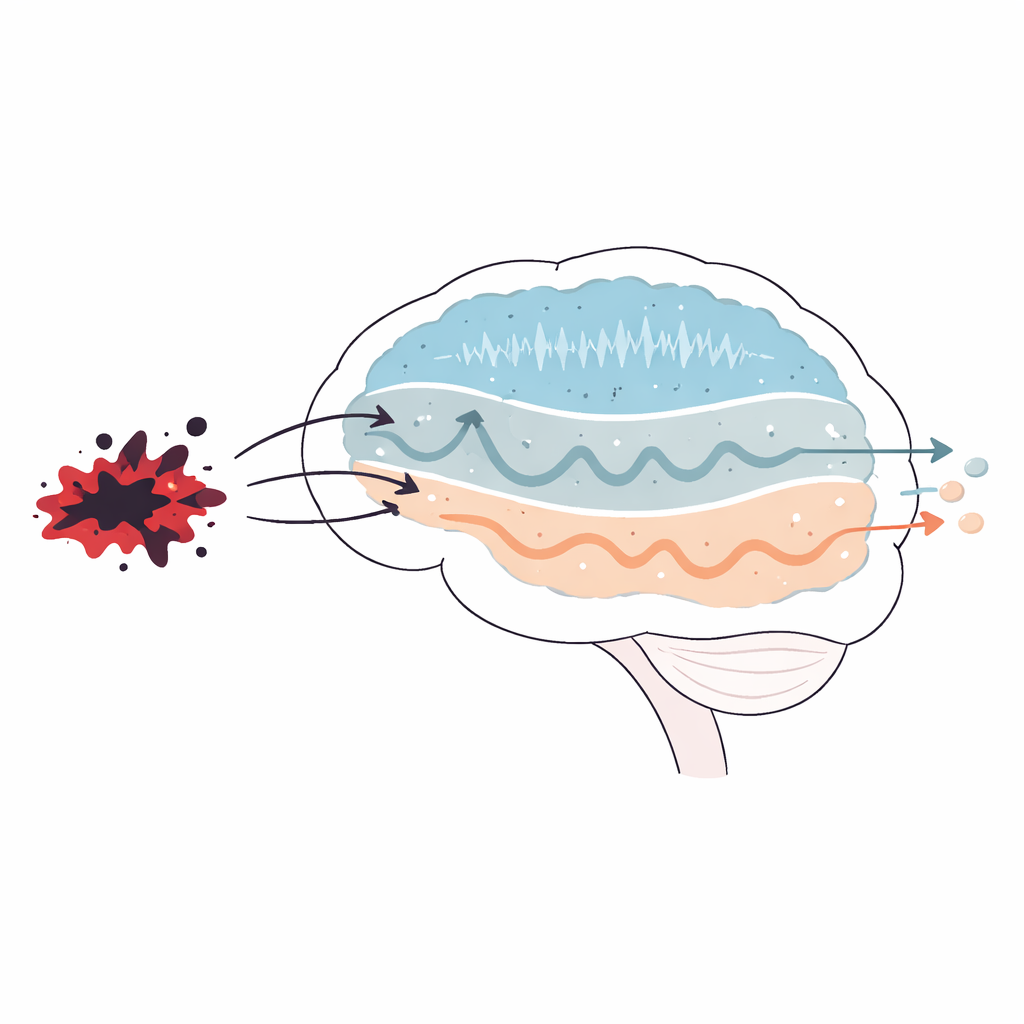
The most important findings came from linking sleep patterns to real-world outcomes. Participants who showed a bigger rise in theta activity during REM sleep after the trauma film later reported fewer intrusive memories in their diaries and felt less negative when reminded of the film a week later. Similarly, those whose sleep produced more spindles after the trauma film experienced fewer intrusions during the following days. In other words, when these specific brain rhythms ramped up in response to the upsetting experience, the disturbing memories seemed less likely to break through into waking life.
What This Means for Protecting the Mind
For a layperson, the takeaway is straightforward: how your brain sleeps after something upsetting may influence whether that experience turns into distressing flashbacks. In this study of an experimental “mini-trauma,” people whose brains showed more REM theta waves and more sleep spindles were better protected against intrusive memories and negative feelings later on. This suggests that the sleeping brain may actively reshape emotional memories, softening their impact. In the future, treatments that stabilize sleep and gently boost these protective rhythms—through behavioral methods or subtle stimulation during sleep—could help lower the risk of PTSD after real-life trauma.
Citation: Azza, Y., Kammerer, M.K., Ngo-Dehning, HV.V. et al. Sleep to remember, sleep to protect: increased sleep spindle and theta activity predict fewer intrusive memories after analogue trauma. Transl Psychiatry 16, 147 (2026). https://doi.org/10.1038/s41398-026-03910-0
Keywords: sleep and trauma, intrusive memories, PTSD risk, REM theta activity, sleep spindles