Clear Sky Science · en
Early abstinence in severe alcohol use disorder: MCP-1 decline, choroid plexus shrinkage, and region-specific grey-matter volume changes
Why this study matters for people who drink
Many people know that heavy drinking harms the brain, but far fewer realize how quickly some of that damage can begin to ease once drinking stops. This study followed men and women with severe alcohol use disorder through their first three weeks of supervised detox. By looking at both the brain and the immune system, the researchers show that early abstinence is a time of rapid and uneven healing, where inflammation cools down, some brain regions plump back up, and others actually shrink as hidden swelling subsides.
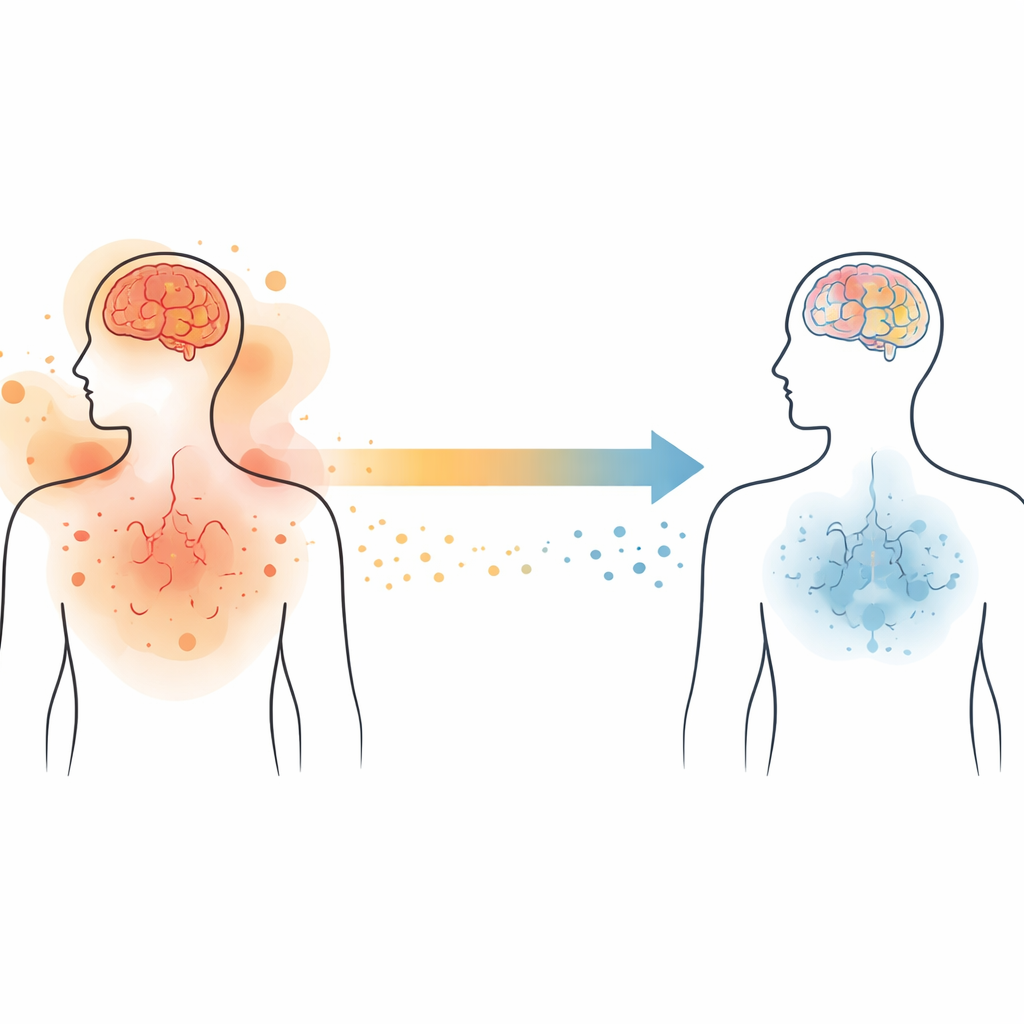
A closer look at early detox
The team studied 37 adults who had been drinking heavily right up to their hospital admission. All entered a three-week detox program. Within the first two days (time point T1), participants had brain scans, blood tests, and questionnaires measuring mood, anxiety, craving, and withdrawal. The same assessments were repeated around day 19 (time point T2), just before discharge. A comparison group of light-drinking volunteers provided reference values for the blood markers and psychological measures. This design allowed the researchers to track how each person’s brain structure and inflammation changed over a short but critical window of sobriety.
Mind, mood, and immune signals
At the start of detox, patients showed high levels of depression, anxiety, and craving compared with light drinkers. Their blood also contained elevated amounts of several immune messengers, signaling a low-grade, body-wide inflammatory state. One of these messengers, called MCP-1, stood out: its level was closely tied to how intense people’s withdrawal symptoms were, suggesting that inflammation may help drive the discomfort of coming off alcohol rather than simply mirroring how much they drank. Over the three weeks, depression and anxiety eased and craving dropped, while MCP-1 and two other inflammatory molecules fell toward normal, although not all fully normalized.
The brain’s quick rebound
Magnetic resonance imaging revealed that the brain’s grey matter – the outer “thinking” layers and deep nuclei – gained volume over the three weeks of abstinence, especially in frontal, parietal, and occipital regions and in the cerebellum. At the same time, the fluid-filled spaces inside the brain, the ventricles, shrank. These paired changes suggest a broad recovery pattern in which brain tissue re-expands after the toxic and dehydrating effects of long-term alcohol use. People who showed larger grey-matter gains in particular regions, including parts of the frontal and parietal lobes and the back of the brain, also tended to report bigger drops in craving, hinting that structural recovery in control and attention networks may help loosen alcohol’s grip.
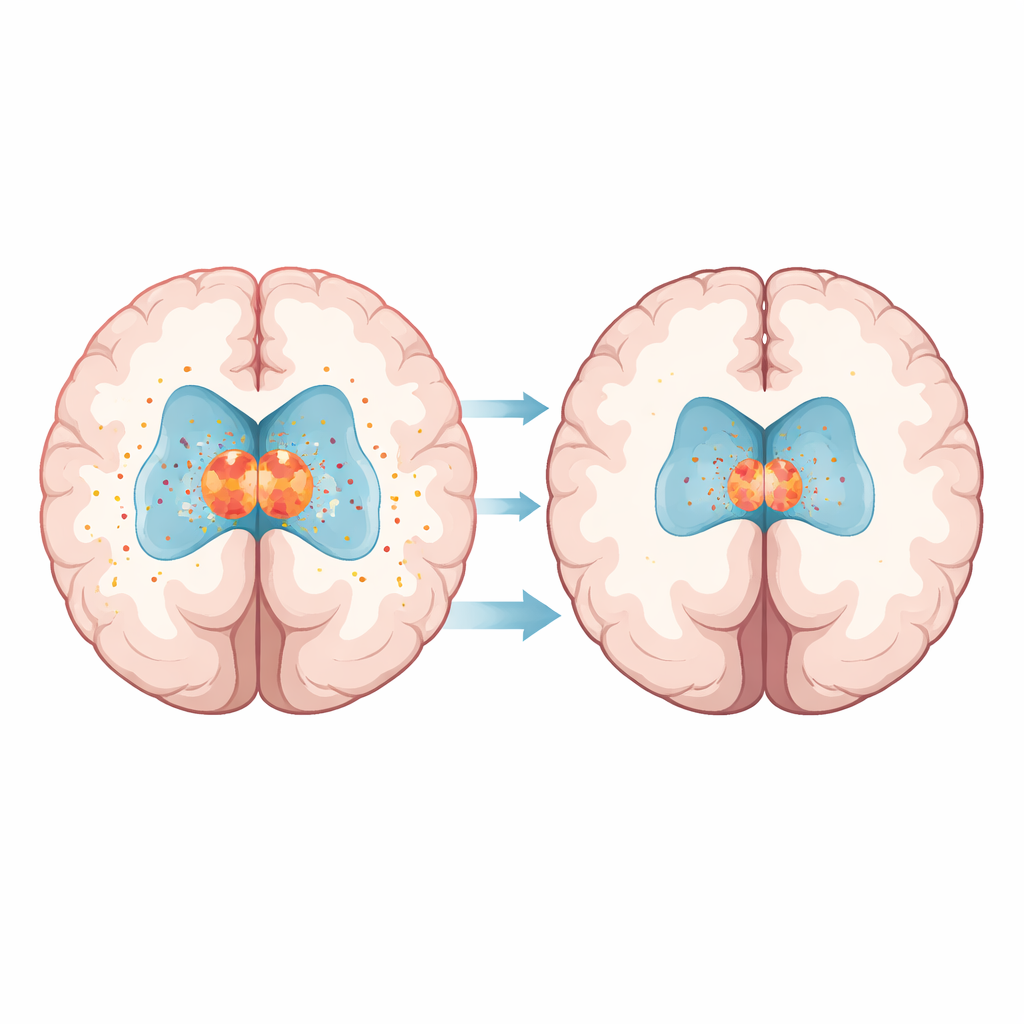
A hidden gateway between body and brain
The researchers paid special attention to the choroid plexus, a soft, folded tissue inside the ventricles that produces cerebrospinal fluid and acts as a gatekeeper for immune signals entering the brain. At the start of detox, people with larger choroid plexus volume also had higher levels of MCP-1 and another immune messenger, a pattern seen in other inflammatory brain conditions. Over three weeks, the choroid plexus shrank while many inflammatory signals declined. Strikingly, drops in MCP-1 were linked to shrinking grey matter in certain limbic and frontal areas and to slight enlargement of the nearby ventricles. The authors interpret this not as damage, but as “deflation” – the easing of subtle inflammation-related swelling and microglial activation that had previously made these regions look bulkier than they truly were.
Two kinds of healing happening at once
Taken together, the results suggest that early abstinence from severe alcohol use disorder is marked by two overlapping brain processes. In many regions, grey matter volume increases as tissue rehydrates, blood flow improves, and neural connections begin to recover, tracking with reductions in craving. In more inflammation-sensitive areas, especially in the temporal and inferior frontal lobes and insula, volumes may instead shrink as immune activity subsides and swollen support cells return to a calmer state. The choroid plexus appears to sit at the crossroads of these changes, linking blood-borne inflammation to brain structure. For people struggling with alcohol, these findings offer a hopeful message: within just a few weeks of stopping drinking, the brain can begin to reorganize in measurable ways, and calming the immune system seems to be a key part of that early recovery.
Citation: Petit, G., Selim, M.K., Canals, S. et al. Early abstinence in severe alcohol use disorder: MCP-1 decline, choroid plexus shrinkage, and region-specific grey-matter volume changes. Transl Psychiatry 16, 154 (2026). https://doi.org/10.1038/s41398-026-03907-9
Keywords: alcohol use disorder, brain recovery, neuroinflammation, detoxification, choroid plexus