Clear Sky Science · en
Brain network features predating early alcohol initiation in adolescence
Why some kids start drinking earlier
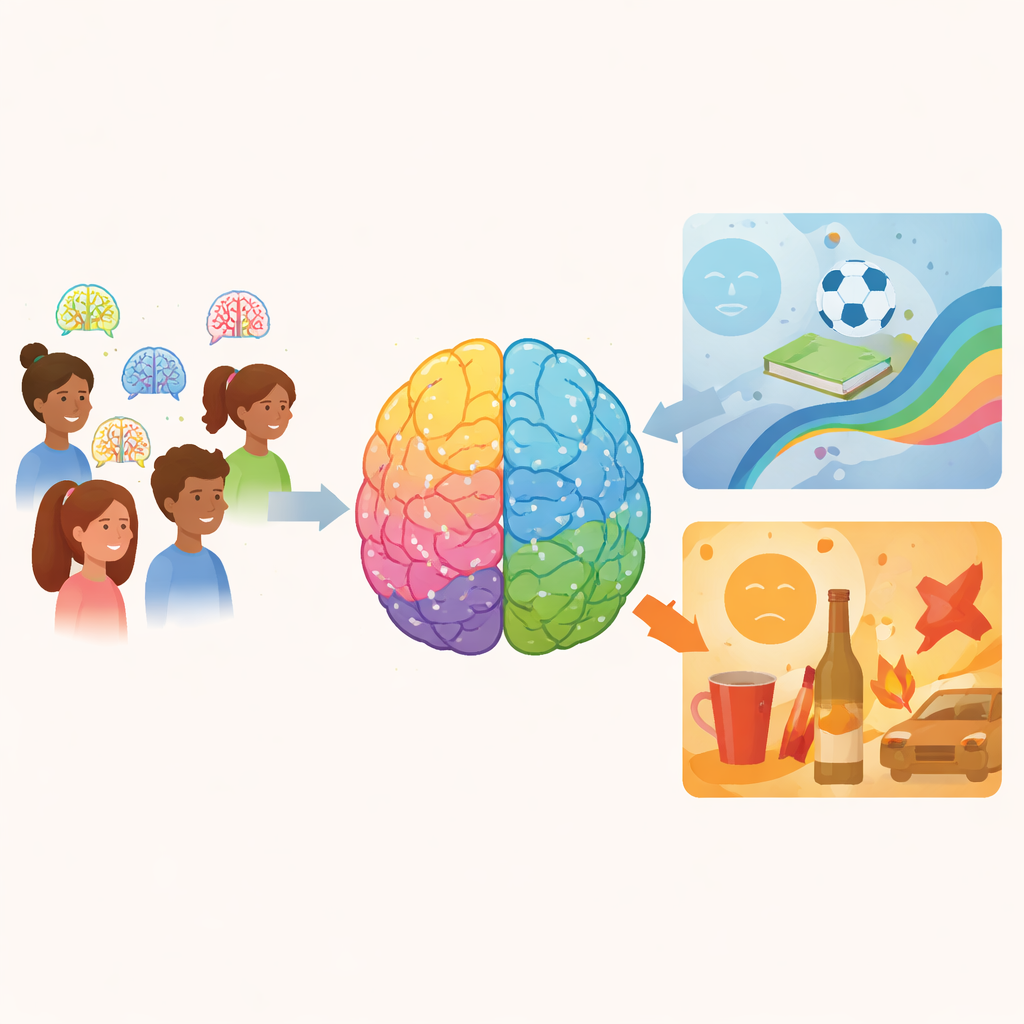
Most parents worry about when their children will first try alcohol. This study asks a striking question: long before a teenager ever takes a first full drink, could the wiring pattern of their brain already hint at who is more likely to start earlier? By following thousands of children from age 9–10 into their mid-teens, the researchers looked at brain scans to see whether the way different brain areas develop together is linked to taking that first full drink of alcohol before age 15.
Looking at the brain as a connected whole
Instead of focusing on single “hot spots” in the brain, the team treated the brain more like a citywide transit system. They used MRI scans to measure the thickness of the outer layer of the brain (the cortex) in 68 regions in children aged 9–10 who had not yet had a full alcoholic drink. Then they asked: which brain areas tend to grow and change together across many children? When regions show similar patterns, they are treated as part of a shared network. This approach, called structural covariance, captures how well different parts of the brain are marching in step as children grow.
Who started drinking and who did not
The researchers drew on data from the large Adolescent Brain Cognitive Development (ABCD) Study, which is tracking more than 10,000 young people across the United States. From this pool, they identified 160 teens who went on to have their first full drink before age 15 and matched them to 160 peers who remained alcohol-free through the same period. The two groups were carefully balanced on age, sex, family education, prenatal alcohol exposure, early sipping of alcohol, and other background factors, so that brain differences would be less likely to simply reflect family or social circumstances.
Hidden patterns in brain wiring
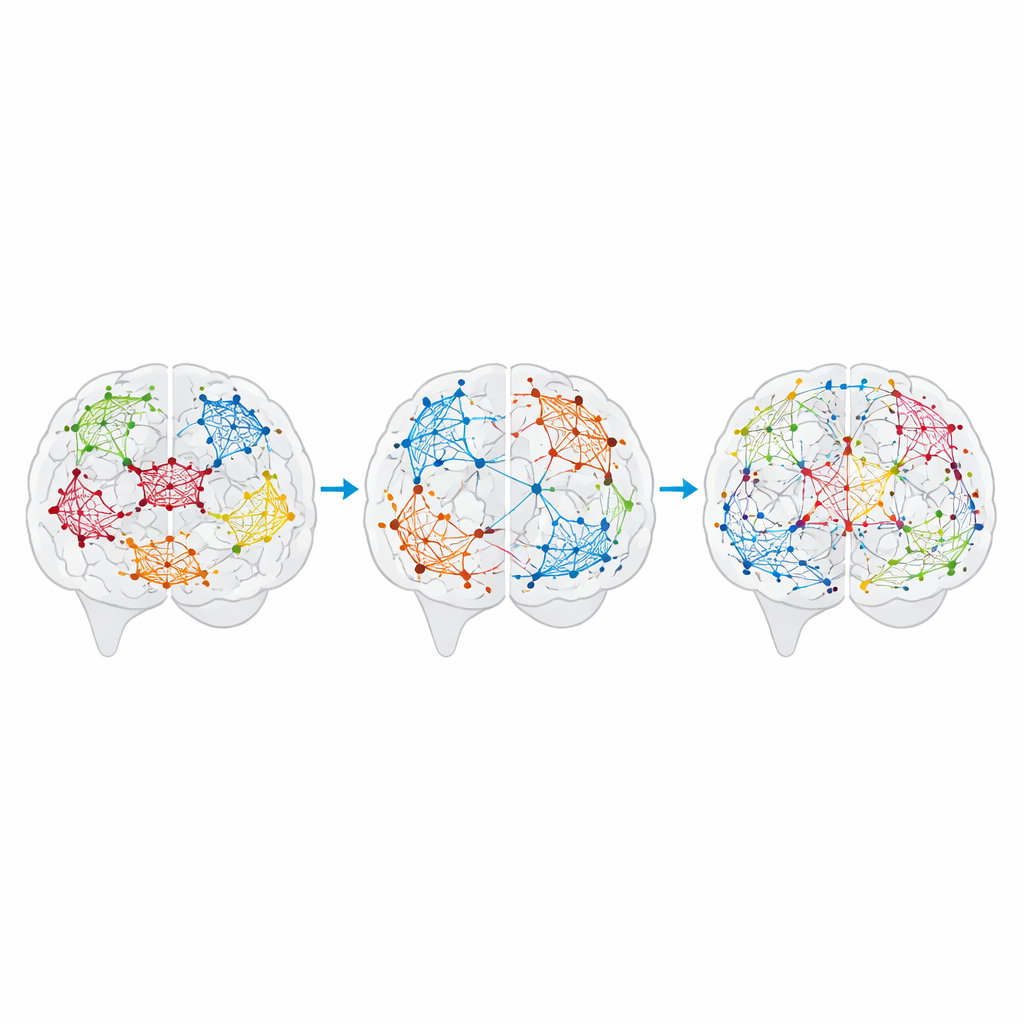
When the team compared the basic thickness of individual brain regions, they found no clear, reliable differences between early drinkers and non-drinkers. But when they examined the brain as a network, a distinct pattern emerged. Children who later started drinking earlier showed brains that were less divided into tight local clusters and more globally connected. In everyday terms, their brain “neighborhoods” were less self-contained, while long‑distance links were more prominent. This suggests a form of atypical maturation in how nearby and far‑flung brain areas coordinate their development.
How brain networks may relate to behavior
To understand what these wiring differences might mean in real life, the researchers also looked at behavior and thinking skills measured at ages 9–10. On most measures, such as general thinking ability, emotional symptoms, and rule‑breaking behavior, the early drinkers and non‑drinkers looked very similar. One notable exception was sensation seeking: children who later had an early first drink tended to score higher on a desire for exciting and novel experiences. Although the study could not directly link individual brain network patterns to these scores, the combination of more globally connected brain networks and higher sensation seeking fits with other work tying unusual brain development to risk‑taking in adolescence.
What this means for prevention
The findings point to the possibility that the risk for early alcohol use may be rooted partly in how the brain is organized years beforehand, not just in peer pressure or parenting style. Brains that are less clearly divided into local communities and more tightly linked across distant regions may be especially sensitive to rewards and new experiences, nudging some children toward trying alcohol earlier. Importantly, these differences were seen before any full drink was reported, suggesting they are not simply the result of alcohol’s effects on the brain. While the study cannot predict with certainty which individual child will drink early, it raises the hope that, as science learns more about these patterns, we might better identify vulnerable young people and tailor early education and support to help them steer clear of harmful drinking.
Citation: Byrne, H., Visontay, R., Devine, E.K. et al. Brain network features predating early alcohol initiation in adolescence. Transl Psychiatry 16, 150 (2026). https://doi.org/10.1038/s41398-026-03906-w
Keywords: adolescent alcohol use, brain networks, structural MRI, risk factors, sensation seeking