Clear Sky Science · en
Netrin-5 Preserves Blood-Brain Barrier Integrity via Wnt3a/β-Catenin Pathway Activation in Murine Cerebral Ischemia
Why This Matters for Stroke and Brain Health
When a person has a stroke, the injury does not stop with the initial loss of blood flow. A hidden part of the damage happens at the brain’s protective border, called the blood–brain barrier, which normally keeps harmful substances in the bloodstream from leaking into delicate brain tissue. This study explores a little-known natural protein, Netrin-5, and shows that it can help shore up this barrier in the aftermath of a stroke in mice and human cells. Understanding how Netrin-5 works could open the door to new treatments that protect the brain and improve recovery after stroke.
The Brain’s Protective Wall Under Attack
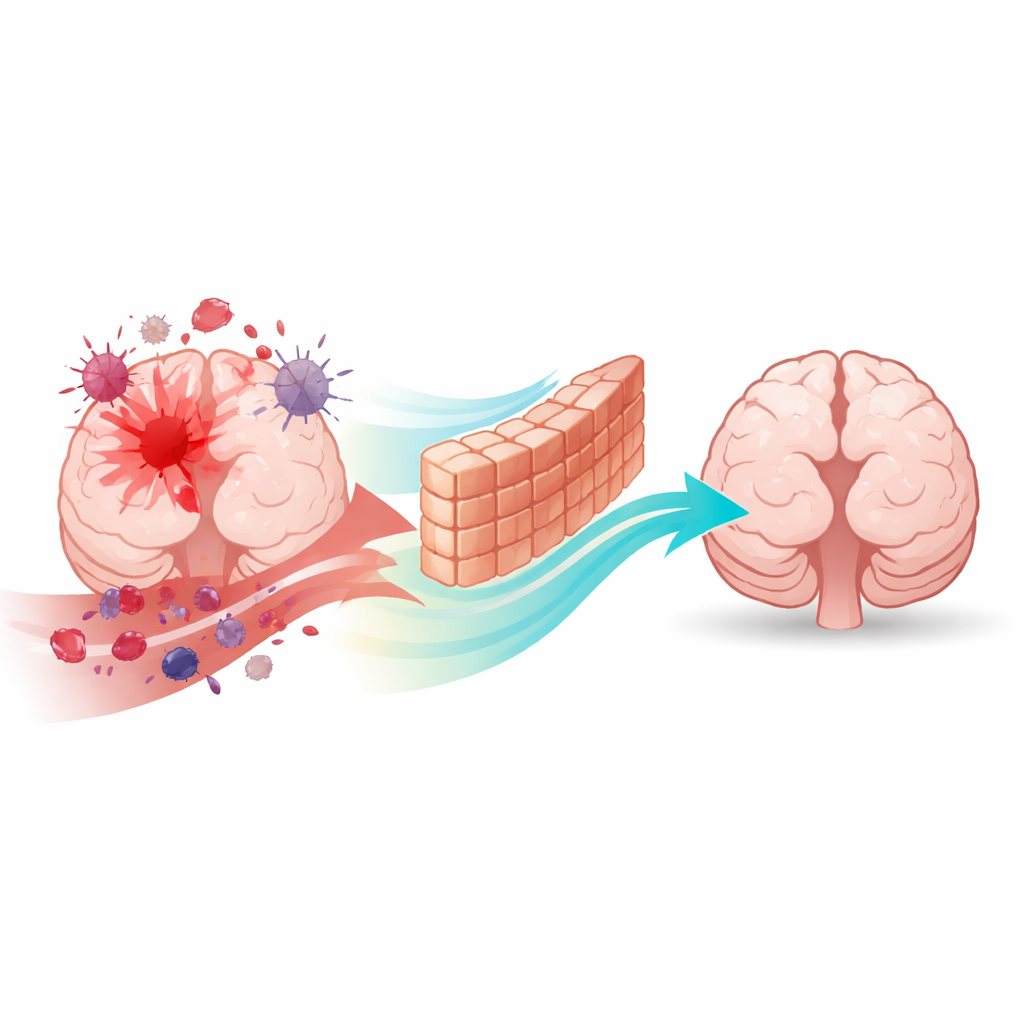
The blood–brain barrier is built mainly from tightly joined cells lining brain blood vessels, forming a selective wall that lets in nutrients while blocking toxins and excess fluid. During an ischemic stroke—when a blood vessel is blocked—this barrier begins to fail. Gaps open between the cells, allowing blood proteins and inflammatory molecules to seep into brain tissue, worsening swelling and nerve cell death. The authors focused on a family of guidance proteins known as netrins, already known for helping nerve fibers grow during development, and asked whether one member, Netrin-5, might also act as a guardian of the blood–brain barrier when stroke strikes.
A Hidden Helper Protein Goes Quiet After Stroke
Using a standard mouse model of stroke, where a major brain artery is briefly blocked and then reopened, the researchers first measured how much Netrin-5 was present in the brain. They found that both the genetic message and the protein itself dropped to roughly half of normal levels after stroke, while another family member, Netrin-4, stayed steady. In a complementary dish experiment with human brain blood-vessel cells exposed to a stroke-like lack of oxygen and sugar, Netrin-5 levels also fell sharply. These results suggest that the brain loses an important protective factor right when it is needed most.
Boosting Netrin-5 Protects the Barrier and the Brain
To test whether restoring Netrin-5 could help, the team used a viral delivery method to raise Netrin-5 levels in the brains of mice before inducing stroke. Animals with extra Netrin-5 had dramatically smaller areas of dead tissue, less brain swelling, and better movement scores compared with untreated stroke mice. Crucially, tests that track leakage of dye and the blood protein albumin showed that their blood–brain barriers were far less leaky. Microscopic and protein measurements revealed that Netrin-5 brought back near-normal levels of a key “sealing” component between vessel cells known as ZO-1, helping to close the gaps that otherwise open after a stroke.
Zooming In on How the Protection Works
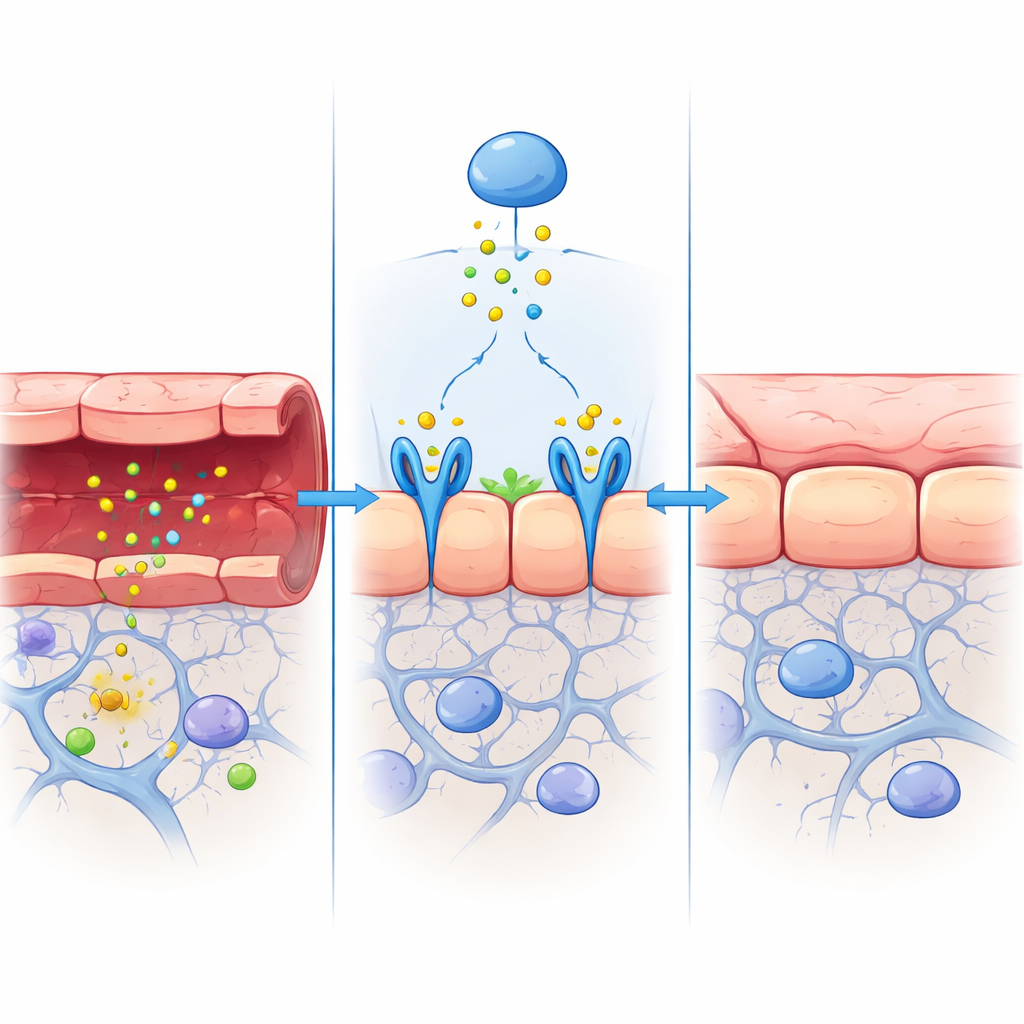
In human brain vessel cells, the researchers recreated stroke-like stress and measured how easily a fluorescent sugar probe crossed a cell layer and how well the layer resisted electrical current—two standard readouts of barrier strength. Stress alone made the layer leaky and weak, but pre-treating cells with Netrin-5 cut leakage and restored resistance close to normal. At the same time, Netrin-5 reversed the stress-induced drop in ZO-1 and switched back on a signaling route known as Wnt3a/β-catenin, previously linked to healthy brain vessels. When the team deliberately silenced Wnt3a, Netrin-5 could no longer tighten the barrier or raise ZO-1, showing that this signaling route is a necessary middleman between Netrin-5 and barrier repair.
What Happens When Netrin-5 Is Taken Away
The authors then asked whether Netrin-5 is not only helpful when added, but also essential under normal conditions. They used a genetic tool to dial down Netrin-5 in mice and in human vessel cells. In mice, lowering Netrin-5 before stroke made everything worse: larger injured areas, more brain swelling, more dye and albumin leakage, and poorer movement. In the cell model, Netrin-5 loss under stroke-like stress made the barrier leakier and electrically weaker than stress alone. Together, these findings support the idea that Netrin-5 is a built-in defender of the blood–brain barrier that becomes dangerously scarce during stroke.
What This Could Mean for Future Stroke Therapies
Overall, the study paints Netrin-5 as a critical guardian of the brain’s protective wall, acting through the Wnt3a/β-catenin pathway to keep the junctions between vessel cells intact and limit secondary damage after stroke. While the current work was done in mice and cell cultures, and used viral tools that would need refinement before use in people, the concept is clear: boosting Netrin-5 or mimicking its action could complement existing stroke treatments that restore blood flow, by also protecting the barrier and surrounding brain tissue. If future research can safely harness this natural protein, Netrin-5–based approaches may one day help reduce disability and improve recovery for stroke survivors.
Citation: Chen, Y., Liu, L., Ming, Y. et al. Netrin-5 Preserves Blood-Brain Barrier Integrity via Wnt3a/β-Catenin Pathway Activation in Murine Cerebral Ischemia. Transl Psychiatry 16, 155 (2026). https://doi.org/10.1038/s41398-026-03903-z
Keywords: ischemic stroke, blood-brain barrier, Netrin-5, endothelial protection, Wnt signaling