Clear Sky Science · en
Dissecting the shared genetic landscape of schizophrenia and hippocampal subfields: A genome-wide cross-trait analysis
Why This Matters for Mental Health
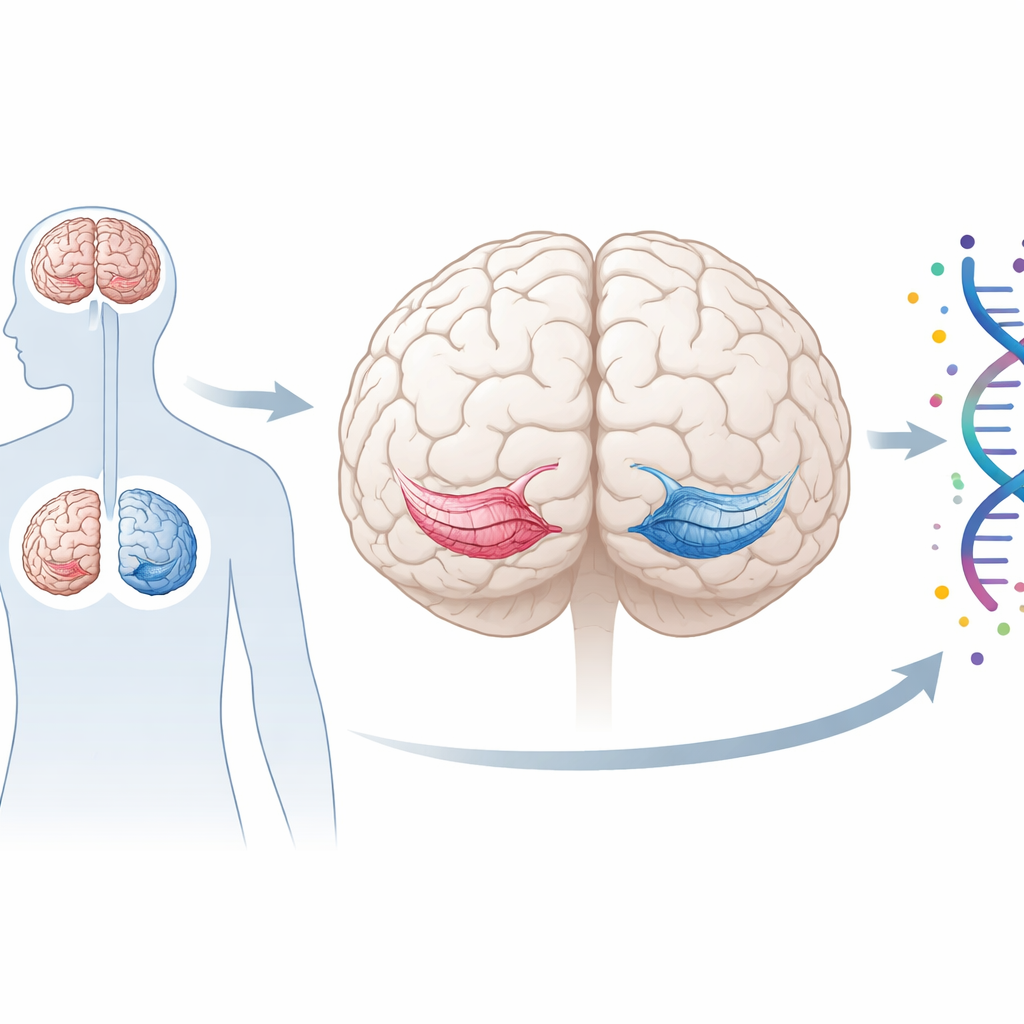
Schizophrenia is a severe mental disorder that can disrupt thinking, emotions, and daily life. Scientists have long suspected that changes in a small brain structure called the hippocampus, which helps us remember events and navigate the world, play a key role. This study asks a simple but important question: do the same genes that raise a person’s risk for schizophrenia also influence the size and shape of different parts of the hippocampus? By answering this, researchers hope to better understand how inherited factors shape the brain in ways that may contribute to the illness.
The Brain Area Under the Microscope
The hippocampus is not a single uniform lump of tissue. It is made up of many smaller zones, or subfields, each thought to support slightly different mental functions, from forming new memories to tying emotions to past experiences. Earlier brain-scanning studies repeatedly found that some of these subfields are smaller in people with schizophrenia compared with healthy individuals. However, most genetic work had treated the hippocampus as one structure, or combined the left and right sides, potentially hiding important differences. The new study set out to look at these subfields in much finer detail, and to treat the left and right hippocampus separately.
Mining Huge Genetic Databases
The researchers drew on very large genetic studies that had already been carried out in tens of thousands of people: one set focused on who had schizophrenia and who did not, and another measured the volumes of 44 hippocampal traits, including the overall structure, its head and body, and 19 individual subfields on each side of the brain. For each tiny DNA difference scattered across the genome, previous work had already estimated how much it related to schizophrenia or hippocampal volume. The team re-analyzed these data using advanced statistical tools designed to detect when the same genetic variants are quietly pulling on both traits at once, even if their effects are too small to stand out in each study alone.
Shared Genetic Roots Emerge
At first glance, looking at broad patterns across the whole genome, the link between schizophrenia and hippocampal size seemed surprisingly weak. Only small overall negative relationships were seen, mostly suggesting that variants tied to higher schizophrenia risk were slightly associated with smaller volumes in certain left-sided subfields. But when the team zoomed in to the level of individual genetic sites, a very different picture appeared. They uncovered 171 specific regions of the genome that influence both schizophrenia and at least one hippocampal trait, including a handful that had never before been connected to either the illness or hippocampal structure. Some variants tended to increase both illness risk and hippocampal volume, while others paired higher risk with smaller subfields, underscoring a complex and mixed genetic landscape.
Left and Right Sides Tell Different Stories
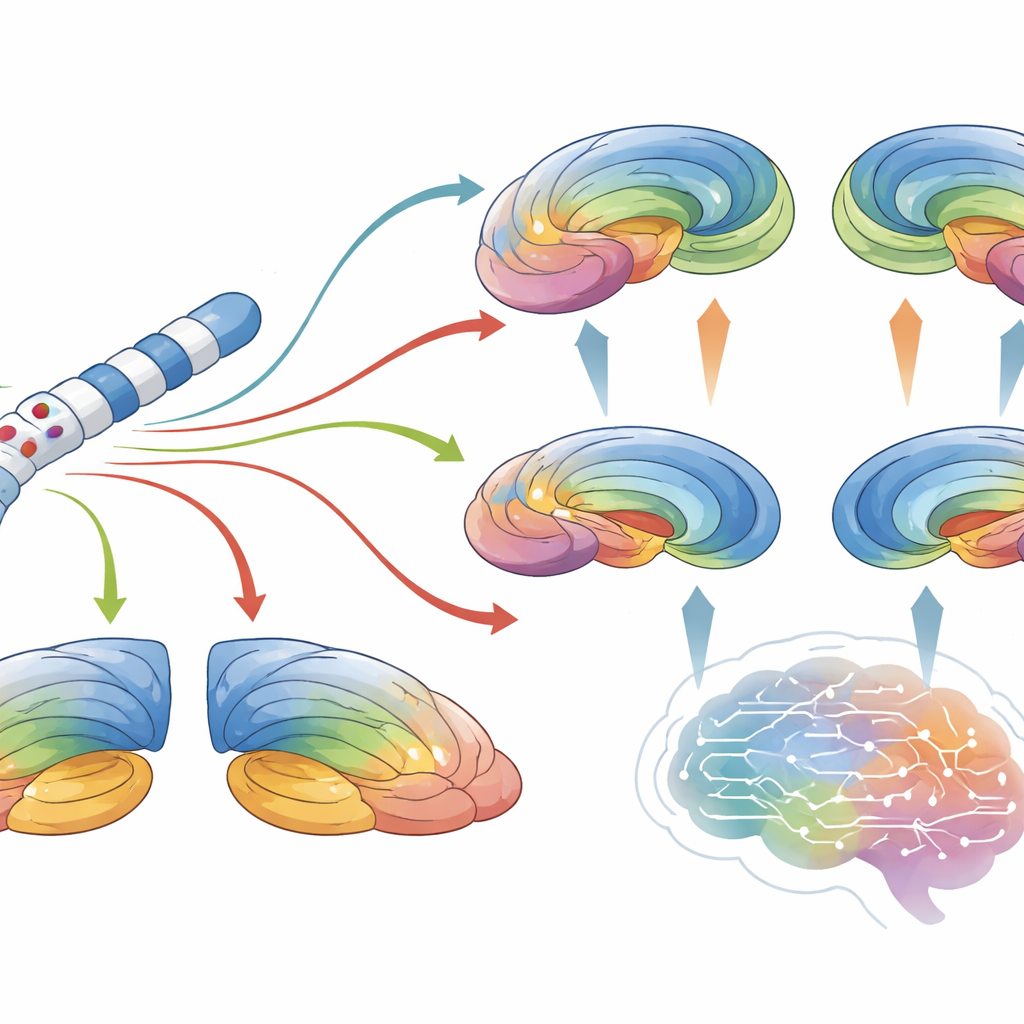
A striking feature of the results was that many genetic effects differed between the left and right hippocampus. The researchers found more than a hundred shared genetic regions for each hemisphere, and about half of these were unique to one side. This supports the idea that the two halves of the hippocampus are not interchangeable: they may be shaped by partly different genes and may contribute differently to thinking and behavior in schizophrenia. Some of the strongest signals fell in gene regions involved in nerve cell structure and survival. When the team mapped all the affected variants onto genes and biological pathways, they found strong enrichment for processes related to building the nervous system, generating new neurons, and guiding immature nerve cells to their final roles in the brain.
What This Means for Understanding Schizophrenia
For non-specialists, the main message is that schizophrenia and the structure of the hippocampus are linked through a web of shared genes, but that web is subtle and uneven rather than simple and uniform. Instead of a single “schizophrenia gene” shrinking the hippocampus, many genetic variants nudge different subfields and hemispheres in different directions, and some may even have protective or compensatory effects. By charting this shared genetic landscape in far greater detail than before, the study offers a clearer map of where to look next for the biological steps that connect DNA to brain changes and, ultimately, to symptoms. Over time, such work may guide more precise ways to detect risk early and, eventually, to design treatments that target the most vulnerable circuits in the hippocampus.
Citation: Guo, L., Zhao, J., Qin, Q. et al. Dissecting the shared genetic landscape of schizophrenia and hippocampal subfields: A genome-wide cross-trait analysis. Transl Psychiatry 16, 169 (2026). https://doi.org/10.1038/s41398-026-03897-8
Keywords: schizophrenia, hippocampus, brain imaging, genetics, neurodevelopment