Clear Sky Science · en
Genome-wide association study of social isolation in 63,497 Japanese individuals from the general population
Why Feeling Cut Off Matters
Spending too much time alone is more than a passing mood—it can quietly raise the risk of depression, heart disease, and even early death. Yet people do not all respond to lonely circumstances in the same way. This study asks a surprising question: could some of our tendency to be socially isolated be written into our DNA? By examining tens of thousands of adults in Japan, the researchers explore how small differences in genes might help explain why some people end up with fewer connections to family and friends.
Looking at Social Life with a Fine-Toothed Comb
Most earlier research on the genetics of social isolation used very simple questions such as “Do you often feel lonely?” or “How often do you see others?” Those rough tools make it hard to compare results across studies or cultures. In this project, scientists instead used a well-tested questionnaire called the Lubben Social Network Scale. It asks six concrete questions about how many relatives and friends a person sees, trusts with private matters, or can call on for help. From these answers, the team could separately gauge overall isolation, isolation from family, and isolation from friends, giving a more detailed picture of people’s social worlds.
Following Genes Across a Region Hit by Disaster
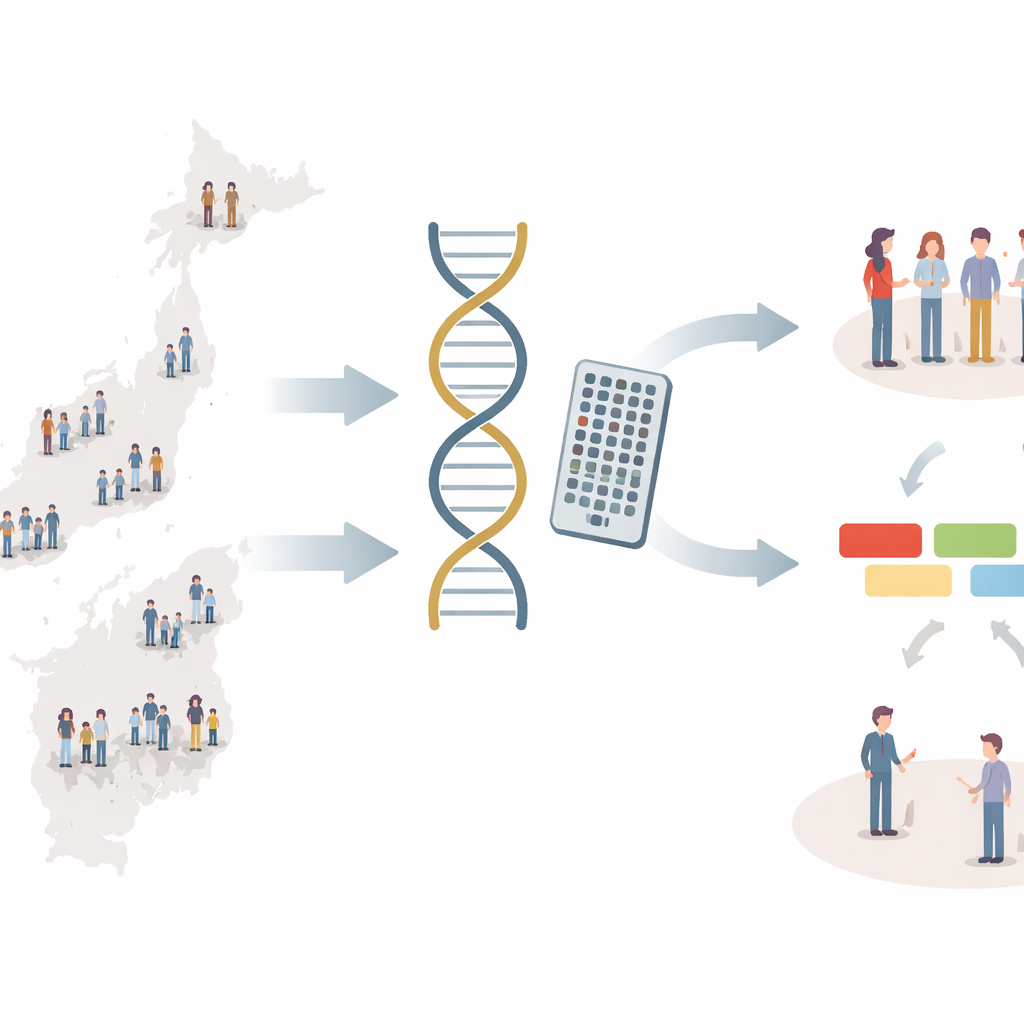
The study drew on the Tohoku Medical Megabank Community-Based Cohort, created after the Great East Japan Earthquake to better understand health in the affected region. More than 63,000 adults from Miyagi and Iwate Prefectures gave blood samples and completed the social network questionnaire. Their DNA was scanned at millions of sites across the genome, and advanced statistical models were used to test whether any of these genetic variants were more common in people who were socially isolated, while accounting for age, sex, and subtle ancestry differences.
Two Genetic Clues to Being Alone
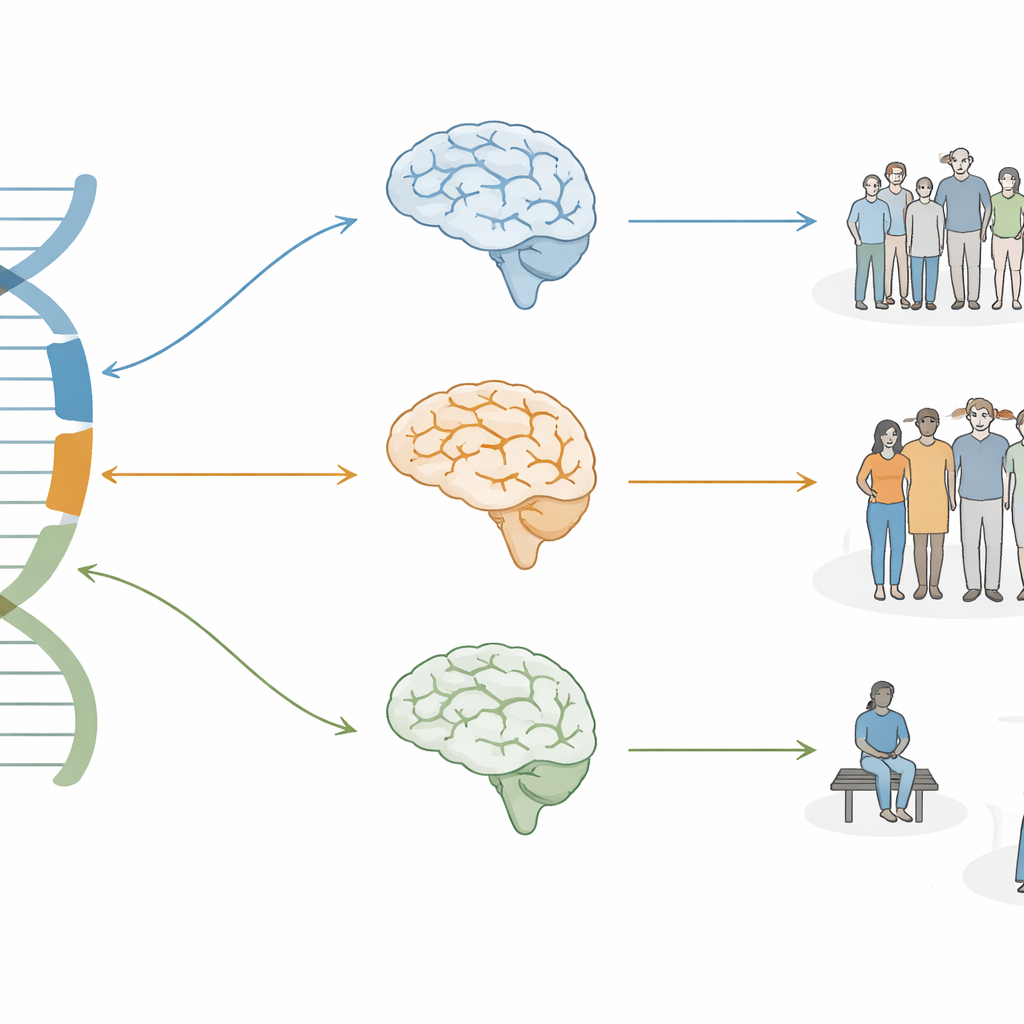
The analysis revealed two stretches of the genome that stood out. One variant, located between genes called ACADSB and HMX3, was linked to being isolated overall. Another, sitting near a long noncoding RNA and a brain-related gene known as LRFN5, was tied specifically to having fewer friends. LRFN5 helps organize connections between nerve cells, and nearby variants have previously been associated with traits like depression, anxiety, and autism. People carrying the friend-related variant were also more likely to report depressive symptoms in this study, hinting that the same genetic factors that shape mood and thinking may also influence how easily we form or maintain social ties.
Small Genetic Effects, Big Social Questions
Each of these genetic variants had only a modest impact on the odds of being socially isolated, and together all common genetic factors explained at most about 4 percent of the differences between people. That means environment, life history, culture, and personal choices still do the heavy lifting in determining how connected someone is. The findings also did not match earlier studies from the United Kingdom, likely because of differences in ancestry, social norms, and how isolation was measured. Even so, the Japanese data confirm that social isolation is partly influenced by biology and that different types of isolation—such as from family versus friends—may have partly distinct genetic roots.
What This Means for Health and Society
For everyday readers, the message is not that loneliness is inevitable or “in your genes,” but that biology can gently tilt the playing field. The newly discovered genetic signals point researchers toward brain pathways that may link social life with conditions like depression and dementia. Over time, such insights could help tailor prevention and support—for example, by identifying people who might benefit most from social programs or mental health care. Yet the authors stress that genes are only one small piece of the puzzle. Strengthening communities, creating chances to connect, and supporting those at risk remain the most powerful tools for ensuring that fewer people face the health toll of going through life alone.
Citation: Ohseto, H., Inoue, K., Takahashi, I. et al. Genome-wide association study of social isolation in 63,497 Japanese individuals from the general population. Transl Psychiatry 16, 156 (2026). https://doi.org/10.1038/s41398-026-03896-9
Keywords: social isolation, genetics, Japanese population, psychiatric health, social networks