Clear Sky Science · en
Early-life sleep disruption in Shank3-deficient rats: A preclinical model for autism-related sleep mechanisms and interventions
Why restless nights in young brains matter
Many children on the autism spectrum struggle with sleep from a very young age, often years before a diagnosis is made. Parents see bedtime battles, frequent night awakenings, and children who seem tired but unable to switch off. This study asks a key question: are these sleep problems just a side effect of autism, or are they built into the biology from the start? By focusing on a single high‑risk autism gene in rats, the researchers trace how early‑life sleep disruption may grow directly out of changes in the developing brain—and how that insight could guide future treatments.
A single gene and a restless brain
Scientists centered their work on Shank3, a gene that helps build connections between nerve cells. Changes in Shank3 are among the strongest known genetic risk factors for autism, and people carrying such changes often have severe sleep difficulties. The team used young rats bred to completely lack Shank3 and compared them with their typical littermates. Because rats have richer, more human‑like behavior than mice at similar ages, they offer a practical window into how a child’s brain might be affected. The researchers monitored movement, brain waves, and muscle activity around the clock, and also measured key timekeeping molecules in brain regions that regulate sleep and daily rhythms. 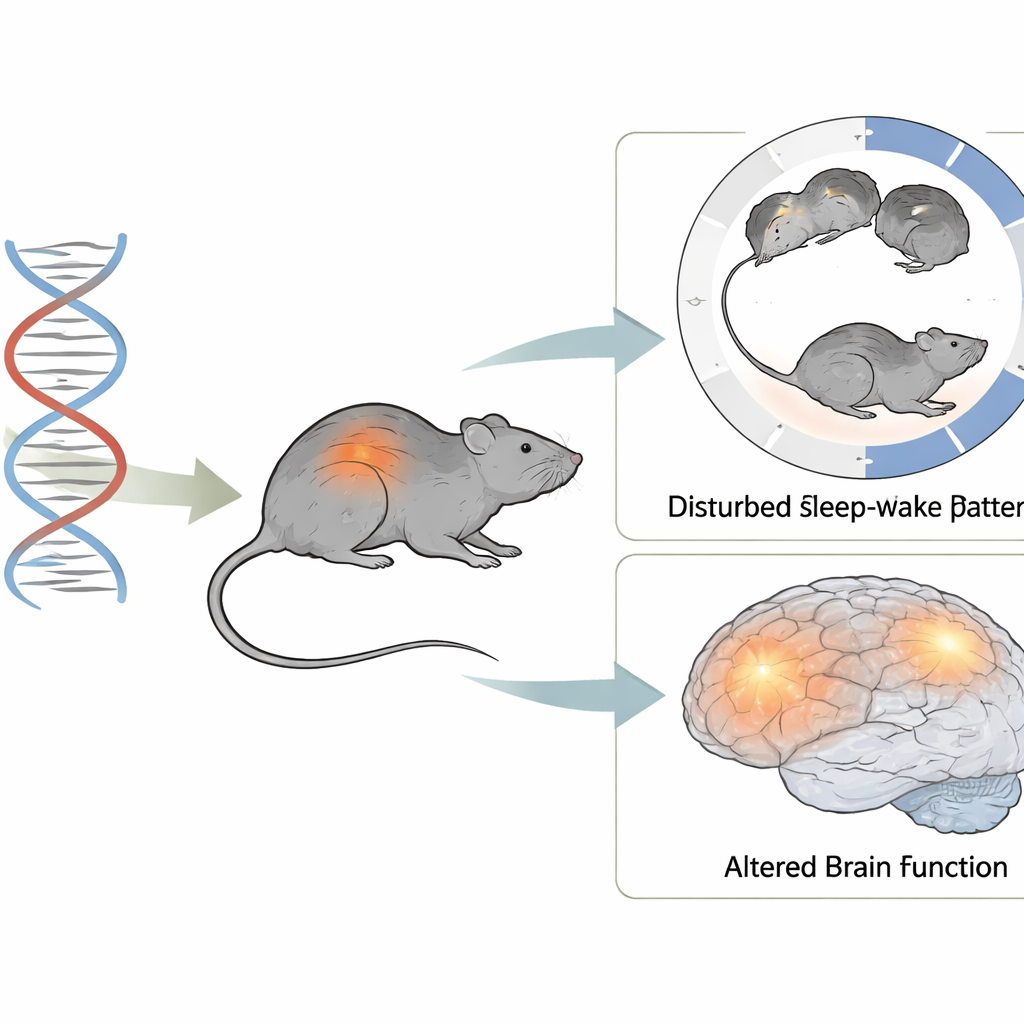
Less sleep, lighter sleep, and gender‑specific patterns
The altered rats slept less overall and showed clear signs of constant over‑arousal. Young males with the mutation moved less during the day but had sleep that broke into many short pieces at night, as if they could not stay asleep. Young females, in contrast, strung together unusually long stretches of wakefulness, suggesting difficulty falling asleep or returning to sleep once awake. Despite these differences, both males and females spent more time awake than their healthy peers, especially during the rats’ normal active period in the dark. The pattern echoes reports from autistic children, where some mainly fight sleep onset and others wake repeatedly through the night.
When deep sleep becomes shallow
Looking at the rats’ brain waves, the team found that sleep was not just shorter; it was shallower. During the phase of sleep that normally contains the slow, high‑amplitude “deep sleep” waves thought to restore the brain, Shank3‑deficient rats showed markedly reduced slow activity and relatively more fast rhythms. This signature appeared in both males and females and across the day, indicating a persistent loss of sleep depth rather than a brief disturbance. When the animals were kept awake for six hours—a standard way to build up sleep pressure—healthy rats responded with a strong burst of deep sleep and slow brain waves. Mutant rats, however, showed only a weak recovery: they gained less extra sleep and failed to boost their deep‑sleep waves in the same way, suggesting a blunted ability to rebound from sleep loss.
Body clocks and brain circuits out of tune
To probe what might underlie these changes, the researchers examined molecules that make up the brain’s internal clockwork. In two key areas that help control motivation and thinking—the prefrontal cortex and the striatum—the Shank3‑deficient rats had substantially lower levels of Clock and Bmal1, core “starter” components of the daily rhythm machinery. Other clock components were largely unchanged. This pattern hints that the wiring built by Shank3 in these circuits could feed into how the brain keeps time, influencing when we feel sleepy or alert. Even though the overall day–night pattern of rest and activity was preserved, this internal mis‑tuning may help explain why sleep in these animals was so fragile and unrewarding. 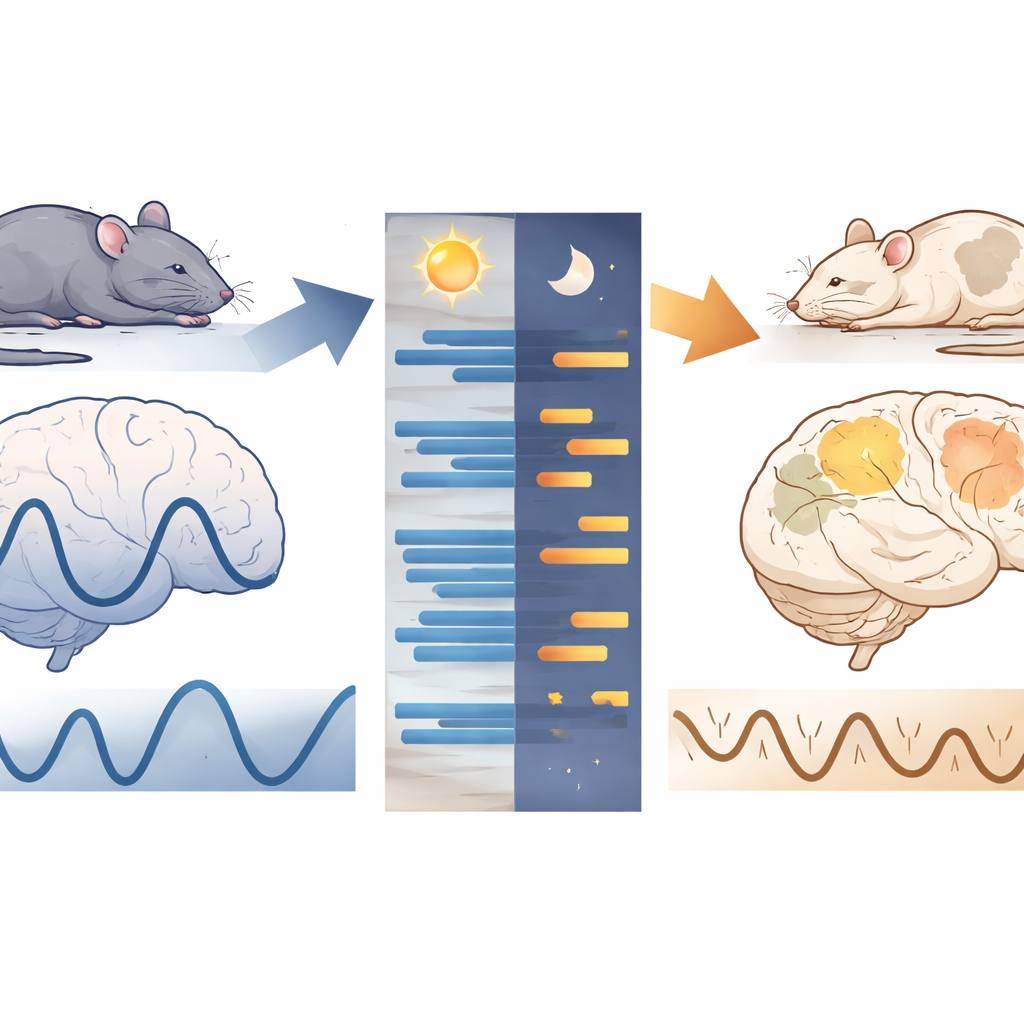
What this means for children and future treatments
Put together, the findings show that removing Shank3 in rats is enough to produce early, persistent sleep problems that closely resemble those seen in children with autism linked to this gene: less sleep, lighter sleep, and poor recovery after sleep loss. These disruptions appear before any long history of stress, medication, or learned behavior, arguing that sleep difficulties can be a core feature of the underlying biology, not just a by‑product of living with autism. By providing a detailed, sex‑aware model of how a specific genetic change disturbs sleep circuits and body clocks, this work lays the groundwork for testing therapies that target sleep early in life. Improving sleep in such conditions may not only ease nights for families but could also support healthier brain development and, in turn, daytime behavior and learning.
Citation: Qiu, MH., Zhong, ZG., Song, PW. et al. Early-life sleep disruption in Shank3-deficient rats: A preclinical model for autism-related sleep mechanisms and interventions. Transl Psychiatry 16, 161 (2026). https://doi.org/10.1038/s41398-026-03891-0
Keywords: autism and sleep, Shank3, circadian rhythms, deep sleep, neurodevelopment