Clear Sky Science · en
Oxytocin attenuates isolation-evoked emotional and social behavioral dysregulation through neural, immune, and microbiota mechanisms
Why Time Alone Can Hurt the Growing Brain
Lonely teenagers are not just sad; their brains and bodies are still under construction, making them especially vulnerable to long stretches of social isolation. This study in mice asks a hopeful question: can oxytocin, often nicknamed the “social” hormone, help undo the emotional and social damage of growing up alone? By tracking behavior, brain activity, immune responses, and gut bacteria, the researchers show how isolation derails multiple body systems—and how a simple nose-delivered dose of oxytocin can bring them closer to normal.
Growing Up Alone Versus Growing Up Together
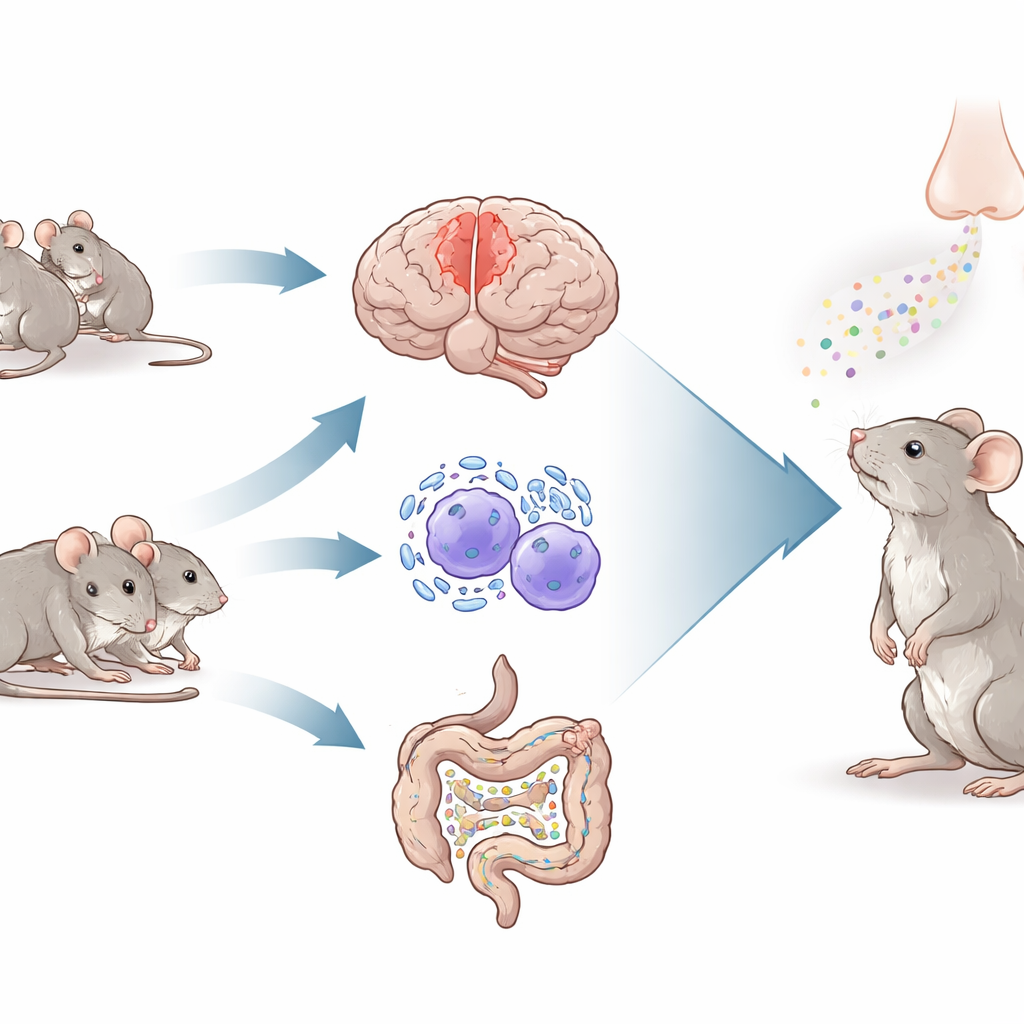
The researchers raised young male mice either in groups or completely alone from early adolescence into adulthood—a period that in humans would span the tumultuous teen years. When the mice reached adulthood, those that grew up in isolation were far more anxious and showed signs of despair in standard lab tests. They also struggled with social skills that group-housed mice handled easily: recognizing new mice, remembering familiar ones over a day, and exploring novel social situations. In other words, long-term isolation during a key developmental window left lasting emotional scars and dulled the animals’ curiosity about others.
How Isolation Alters the Brain, Immunity, and the Gut
To understand what was happening inside, the team focused on the prefrontal cortex, a brain region crucial for decision-making, emotional control, and social judgment. Using a calcium-based optical technique to track live neural activity, they found that isolated mice showed blunted or mistimed responses in this region when facing social encounters or stressful situations. Microscopic examination revealed fewer structural and synaptic markers that support healthy communication between brain cells, suggesting that isolation had weakened the physical wiring of this control center. At the same time, immune cells in the brain were more numerous and likely more reactive, and the community of gut microbes—tiny organisms that talk to the brain via the gut–brain axis—shifted toward a less favorable balance.
The Social Hormone Under Stress
Oxytocin naturally supports bonding, trust, and social recognition. In the isolated mice, the number of oxytocin-producing cells in a key brain hub did not change, but the amount of oxytocin measured in the blood and prefrontal cortex dropped. Meanwhile, receptors that sense oxytocin were unusually abundant in the prefrontal cortex, hinting at a stressed system trying to compensate for low signal. These combined changes suggested that isolation had knocked the oxytocin system out of tune, potentially contributing to the animals’ emotional and social difficulties as well as their heightened brain inflammation and disrupted gut microbiota.
Oxytocin Through the Nose: A Multi-System Reset
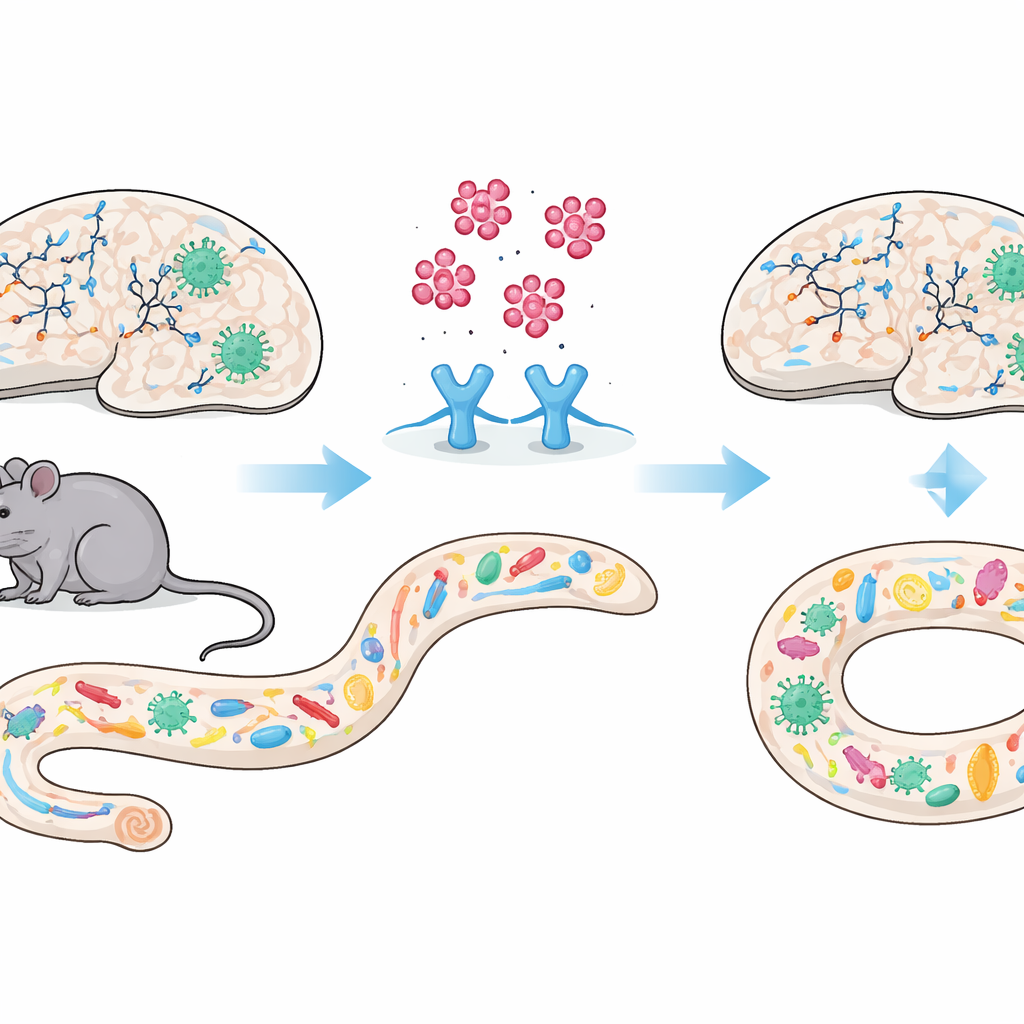
The scientists then tested whether gently boosting oxytocin could help. Isolated mice received oxytocin via nasal drops several times over a few weeks. This approach raised oxytocin levels in both blood and brain. Behaviorally, treated mice became less anxious, struggled more and froze less in despair-like tests, and regained much of their ability to recognize and prefer new social partners, both immediately and after a day’s delay. In the prefrontal cortex, neural activity patterns during social and stress-related tasks began to resemble those of never-isolated mice, and structural markers of healthy synapses rebounded. Brain immune cells calmed down, inflammatory molecules in blood and brain dropped, and the composition of gut microbes shifted again, suggesting a partial restoration of microbial balance along with changes in predicted metabolic functions.
What This Could Mean for Human Mental Health
Taken together, the findings paint adolescent social isolation as a whole-body stressor that reshapes the brain’s social circuits, stirs up immune activity, and disturbs the gut community—changes that persist into adulthood. Nasal oxytocin did not simply lift mood in a narrow sense; it acted across brain, immune, and gut systems to ease anxiety, depression-like behavior, and social memory problems in these mice. While mouse results cannot be applied directly to people, the work strengthens the idea that oxytocin-based treatments, carefully timed and dosed, could one day complement other therapies for mental health conditions linked to loneliness and social withdrawal, especially those emerging from difficult teenage years.
Citation: Li, J., Wu, C., Li, Y. et al. Oxytocin attenuates isolation-evoked emotional and social behavioral dysregulation through neural, immune, and microbiota mechanisms. Transl Psychiatry 16, 159 (2026). https://doi.org/10.1038/s41398-026-03888-9
Keywords: social isolation, oxytocin, adolescent brain, gut microbiota, mental health