Clear Sky Science · en
Sex and dose-dependent effects of cannabidiol on cocaine consumption in mice
Why this research matters to everyday life
Cocaine addiction remains stubbornly hard to treat, and there are still no approved medicines that reliably help people stop using the drug. At the same time, interest has surged in cannabidiol (CBD) — a non-intoxicating compound from the cannabis plant — as a possible aid for addiction, anxiety, and other mental health conditions. This study uses mice to ask a practical question with big real-world implications: can CBD curb cocaine use, does dose matter, and do females respond differently from males?
A closer look at cocaine and the brain’s reward system
Cocaine powerfully boosts dopamine, a brain chemical involved in reward and motivation, particularly in a circuit linking the prefrontal cortex, striatum, hippocampus, and amygdala. Over time, this system reshapes itself, driving compulsive drug seeking and making it hard to stop even in the face of serious risks. Another signaling network, the endocannabinoid system, helps regulate this reward circuitry and emotional responses. CBD interacts with many parts of these systems, including cannabinoid and serotonin receptors, which has made it an intriguing candidate for treating substance use disorders — but most work until now has focused on male animals.
Testing CBD’s effects on anxiety and basic memory
Before looking at cocaine use, the researchers first checked how different CBD doses affected female mice on two simple tasks. In an elevated plus maze, which gauges anxiety-like behavior, a moderate CBD dose (10 milligrams per kilogram of body weight) made females more willing to explore open, exposed arms, a sign of reduced anxiety. Higher and lower doses did not show the same benefit, and none of the doses impaired movement. In a separate object recognition test that depends on short-term memory, CBD did not disrupt the animals’ ability to distinguish a new object from a familiar one, suggesting that at these doses CBD was not broadly dulling thinking or attention. 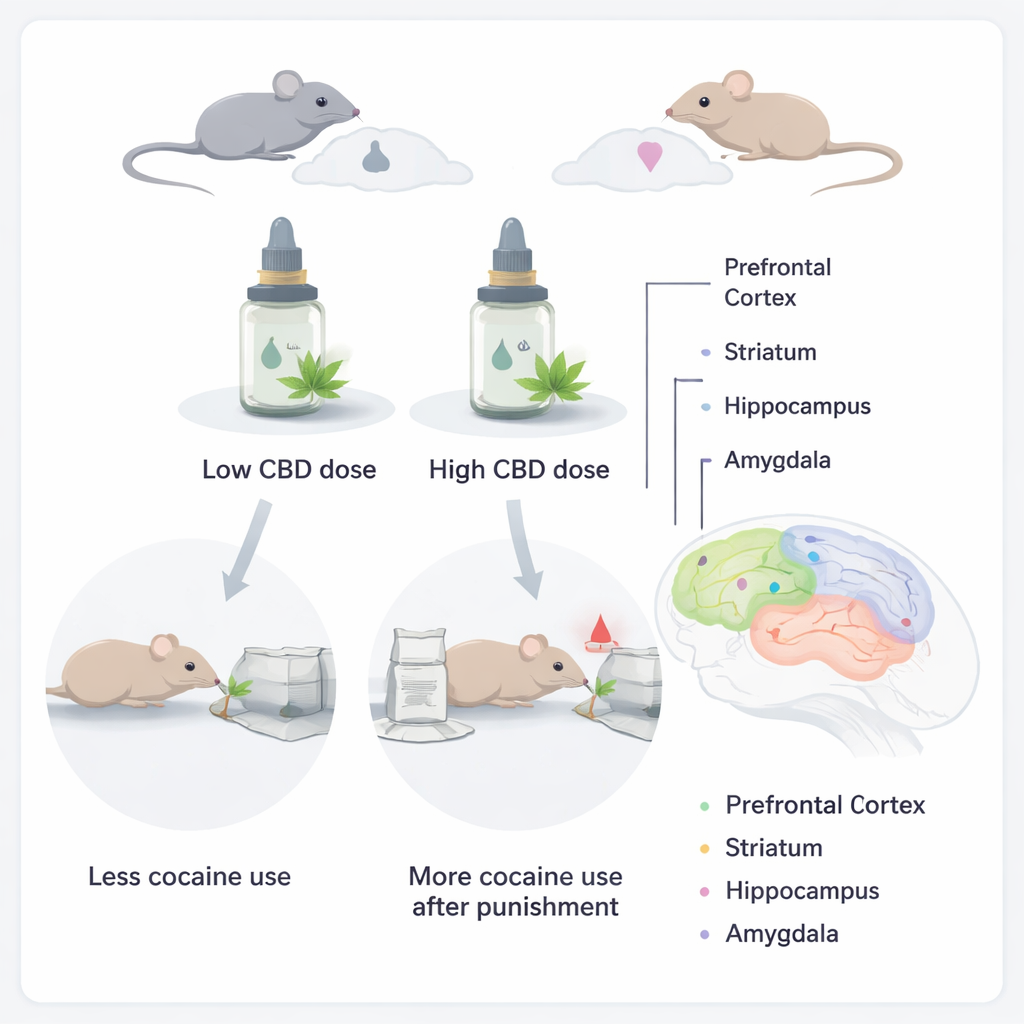
How CBD changes cocaine self-administration
The team then allowed female mice to self-administer cocaine by nose-poking for an intravenous dose, mimicking voluntary drug taking. When the animals received 10 mg/kg CBD before each session, they took fewer cocaine infusions, pressed less on the active port, and overall consumed less drug than untreated animals. A higher dose, 20 mg/kg, did not show this clear reduction during the initial learning phase, and the two doses produced opposite patterns in a motivation test where the effort required for each cocaine dose steadily increased. By examining brain tissue, the scientists found that 10 mg/kg CBD shifted activity-related gene expression in key reward and learning hubs: it appeared to dampen cocaine’s dopamine impact in the ventral striatum and alter glutamate and cannabinoid signaling in the prefrontal cortex and hippocampus, changes consistent with weaker drug reward and drug-linked memories.
Punishment, relapse cues, and a surprising high-dose effect
To model a more advanced stage of addiction — using cocaine despite negative consequences — mice first learned to self-administer cocaine, then experienced mild foot shocks tied to drug-taking. This punishment phase reduced their drug-seeking. Afterward, when CBD treatment was started, females given the higher 20 mg/kg dose showed an escalation of cocaine intake over several days compared with their own earlier behavior. Yet when these same mice were later tested in a “cue-only” situation, where the light that had signaled shock appeared without any shock, they showed reduced cocaine-seeking compared with the previous day. Molecular tests pointed to an explanation: the high CBD dose selectively boosted expression of the serotonin 5-HT1A receptor in the prefrontal cortex, a change linked to stress and anxiety regulation. In males, however, this high dose did not have clear effects on cocaine seeking after punishment, underscoring that sex and dose both matter.
What this means for CBD as a future treatment
Taken together, the findings paint a nuanced picture. In female mice, a moderate CBD dose can reduce cocaine taking and appears to weaken some of the brain changes that support strong drug reward and drug-related memories. A higher dose, by contrast, may encourage greater cocaine use after punishment yet help restrain drug seeking when animals face reminders of past negative consequences. These complex, sometimes opposite effects — and the differences between females and males — suggest that if CBD is to be used to support treatment of cocaine use disorder, careful attention to dose, timing, addiction stage, and sex will be essential. Rather than a simple anti-addiction pill, CBD may act as a flexible modulator of brain circuits that underlie reward, stress, and self-control. 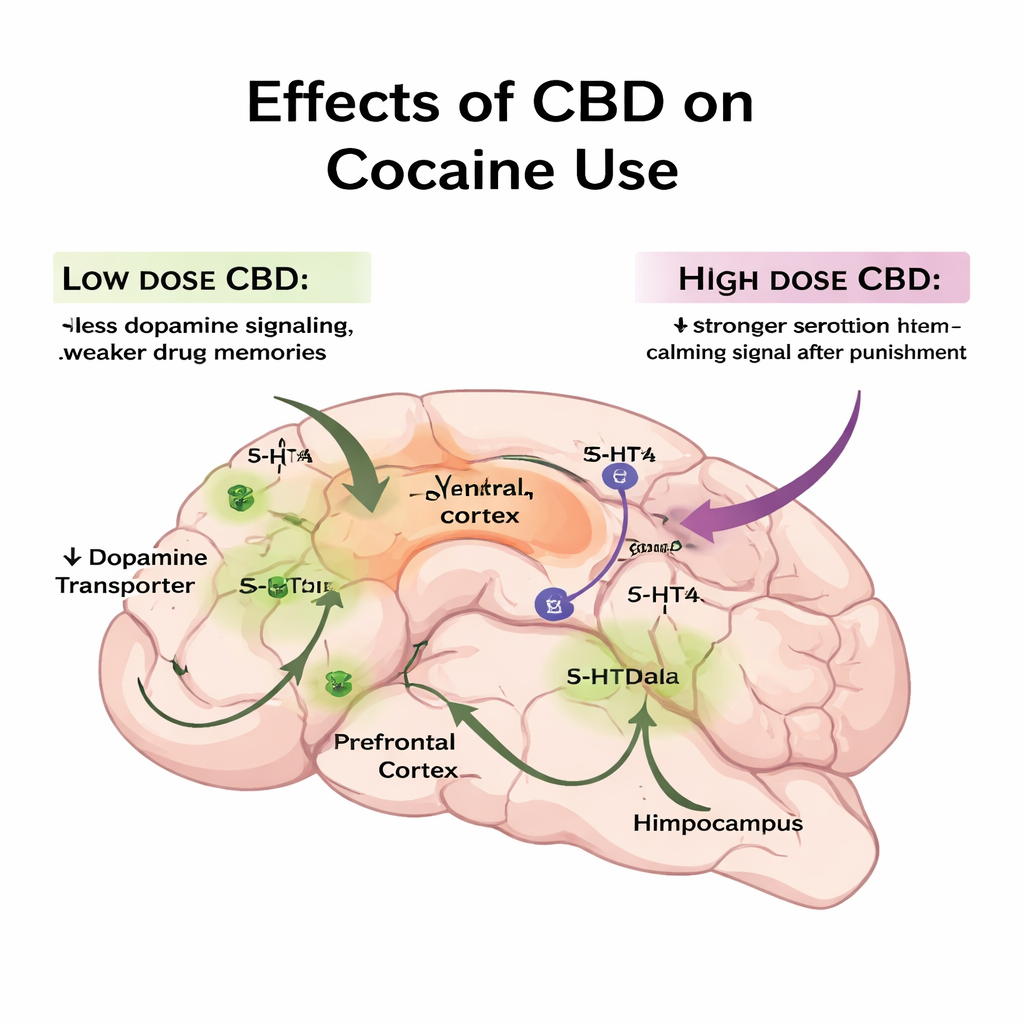
Citation: Llerena, V., Tic, I., Llach-Folcrà, M. et al. Sex and dose-dependent effects of cannabidiol on cocaine consumption in mice. Transl Psychiatry 16, 80 (2026). https://doi.org/10.1038/s41398-026-03880-3
Keywords: cannabidiol, cocaine addiction, sex differences, mouse model, brain reward system