Clear Sky Science · en
Intra-familial dynamics of mental distress during the Covid-19 lockdown
Families Under Pressure
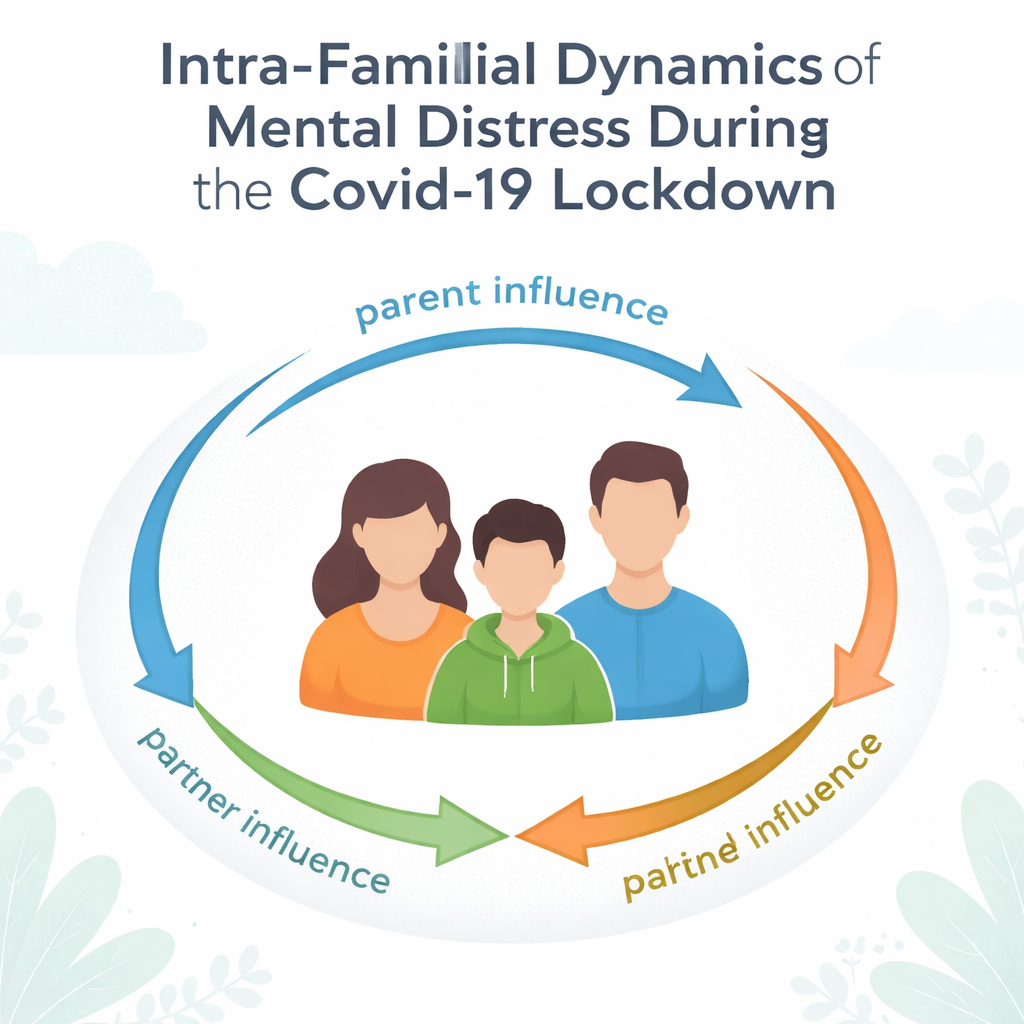
The Covid-19 lockdown forced many families to spend more time together than ever before. For some, this meant welcome closeness; for others, it brought extra strain, worry, and tension. This study asks a deceptively simple question with big implications: when parents or teenagers feel mentally distressed, how much of that distress is shaped by the other people under the same roof—and how much is tied to their own built‑in tendencies?
Looking Inside the Modern Family
Researchers in Norway drew on a large, long-running study that has followed more than 100,000 children and their parents since before birth. During the first two months of the country’s Covid-19 lockdown in 2020, mothers, fathers, and teens aged roughly 15 to 18 answered short questionnaires about how anxious or depressed they felt. Many also had their DNA analyzed. Those genetic data allowed the team to go beyond surface similarities and tease apart how much of each person’s distress was linked to their own biology versus the subtle ways family members influence one another.
Two Ways to Trace Hidden Influences
The scientists used two complementary approaches. One, a “variance” method, treated each family’s genetic information as a web of connections and estimated how much of the ups and downs in mental distress could be traced to three kinds of family influence: parents affecting their child, the child affecting parents, and partners affecting each other. The second, a “trait” method, focused on specific genetic patterns known to be related to conditions like anxiety, depression, ADHD, and anorexia, and asked whether these patterns in one family member were linked to distress in another. Together, these tools offered a window into how inherited tendencies ripple through everyday family life.
Mothers, Teens, and the Emotional Climate at Home
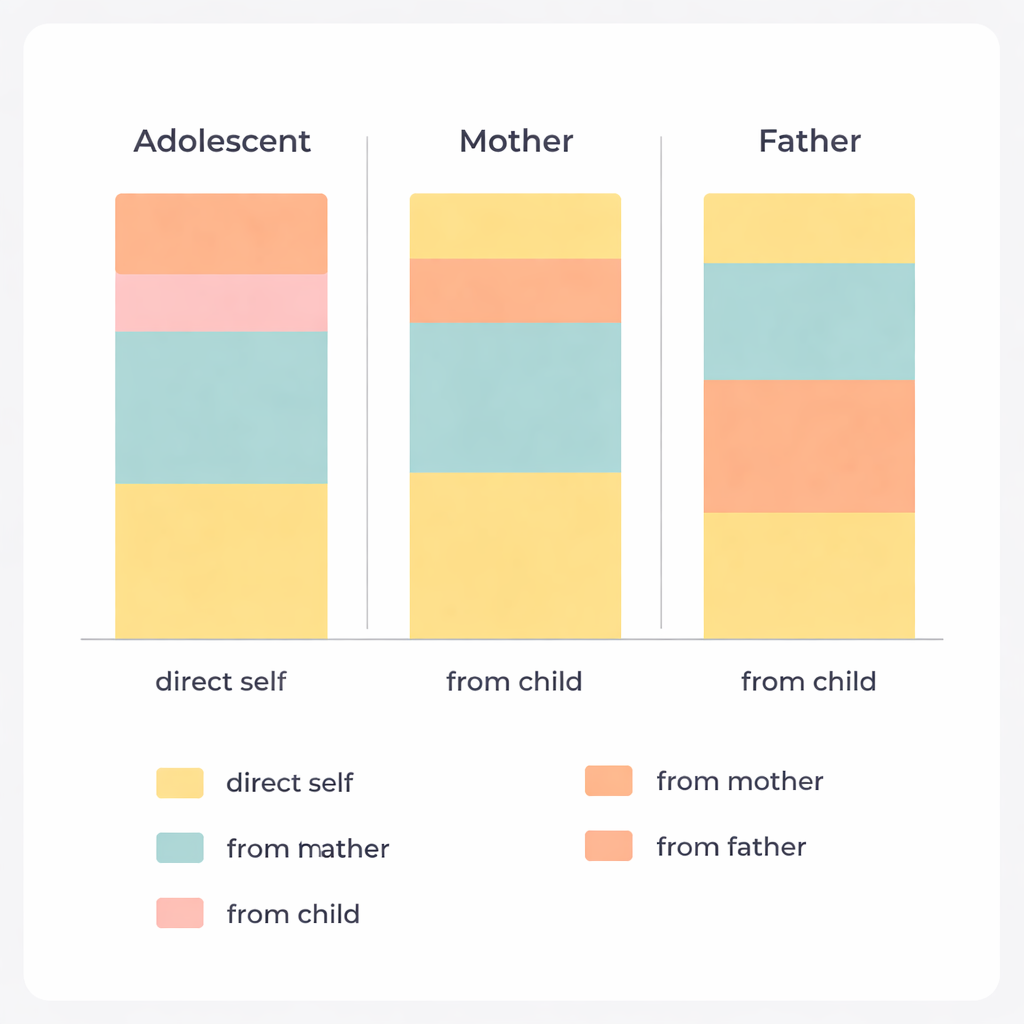
One striking finding was how important mothers appeared to be for adolescents’ mental distress. The models suggested that more than 10 percent of the variation in teen distress was tied not to the teens’ own genes, but to genetic influences running through their mothers. These “mother-driven” effects likely operate through the emotional climate mothers help create—how they cope with stress, communicate, and respond to their children. Notably, these patterns emerged even though teenagers reported on their own feelings, ruling out the simple explanation that anxious mothers merely rate their children as more distressed.
When Children and Partners Shape Parents’ Minds
The influence also ran in the other direction. As the lockdown wore on, the data hinted that children’s characteristics contributed to fathers’ mental distress, and that partners affected each other as well. By later timepoints, child-driven influences explained around 5 percent of the variation in fathers’ distress, and partner-driven influences explained a few percent of mothers’ distress. In simpler trait-based analyses, mothers’ genetic tendency toward depression or ADHD was linked to slightly higher distress in fathers, and fathers’ genetic tendency toward depression was linked to mothers’ pre-pandemic distress. These effects were small, but they highlight how one person’s vulnerabilities can weigh on the well-being of those closest to them.
Built-In Risk and Shared Stress
Across all family members, about 9–10 percent of mental distress was tied directly to their own genetic makeup. Some of this reflected known genetic risk for anxiety, depression, ADHD, neurotic personality traits, and anorexia. Yet genetics did not tell the whole story. The shared shock of the pandemic and the day-to-day realities of lockdown also mattered. Interestingly, the very first weeks of lockdown seemed dominated by broad external stress, while genetic influences flowing between family members became more visible as time passed and families settled into a new routine.
What This Means for Families and Care
For non-specialists, the main message is both sobering and hopeful. Our genes do not just shape our own mental health; through our behavior, moods, and ways of coping, they can also affect the people we live with. Mothers appear especially important for teens’ distress, and children and partners can meaningfully influence parents, particularly fathers. But these are tendencies, not destinies. By recognizing that mental distress is a family affair, health services and policymakers can design support that involves whole households—offering help not only to the person who is struggling most, but to the relatives whose emotional worlds are tightly intertwined with theirs.
Citation: Pettersen, J.H., Eilertsen, E., Hegemann, L. et al. Intra-familial dynamics of mental distress during the Covid-19 lockdown. Transl Psychiatry 16, 116 (2026). https://doi.org/10.1038/s41398-026-03876-z
Keywords: family mental health, COVID-19 lockdown, adolescent distress, genetic influences, parent–child relationships