Clear Sky Science · en
Genetic risk of chronic pain conditions associated with risk of suicide death through an integrative analysis of EHR and genomics data
Why Pain and Suicide Are More Connected Than We Think
Chronic pain and suicide may seem like separate tragedies, but this study suggests they are often rooted in some of the same inherited biology. By looking at DNA and medical records from people in Utah who died by suicide, researchers found that certain genetic patterns tied to long-lasting pain are also linked to a higher risk of suicide death. For readers, this work offers a deeper, less blame-focused way to think about both pain and suicide—as intertwined conditions with shared biological roots, not just matters of willpower or mood.
Looking at DNA and Medical Histories Together
To explore this connection, scientists combined two powerful data sources: whole-genome sequencing and electronic health records. They studied nearly 1,000 individuals of European ancestry who died by suicide and compared them with more than 400 people from the general population who did not die by suicide and were selected for having no known major diseases. From large international genetics studies of chronic pain, they built “polygenic scores”—numbers that summarize a person’s inherited risk—for several pain conditions. These scores were then tested to see whether they were higher in those who died by suicide than in the control group. 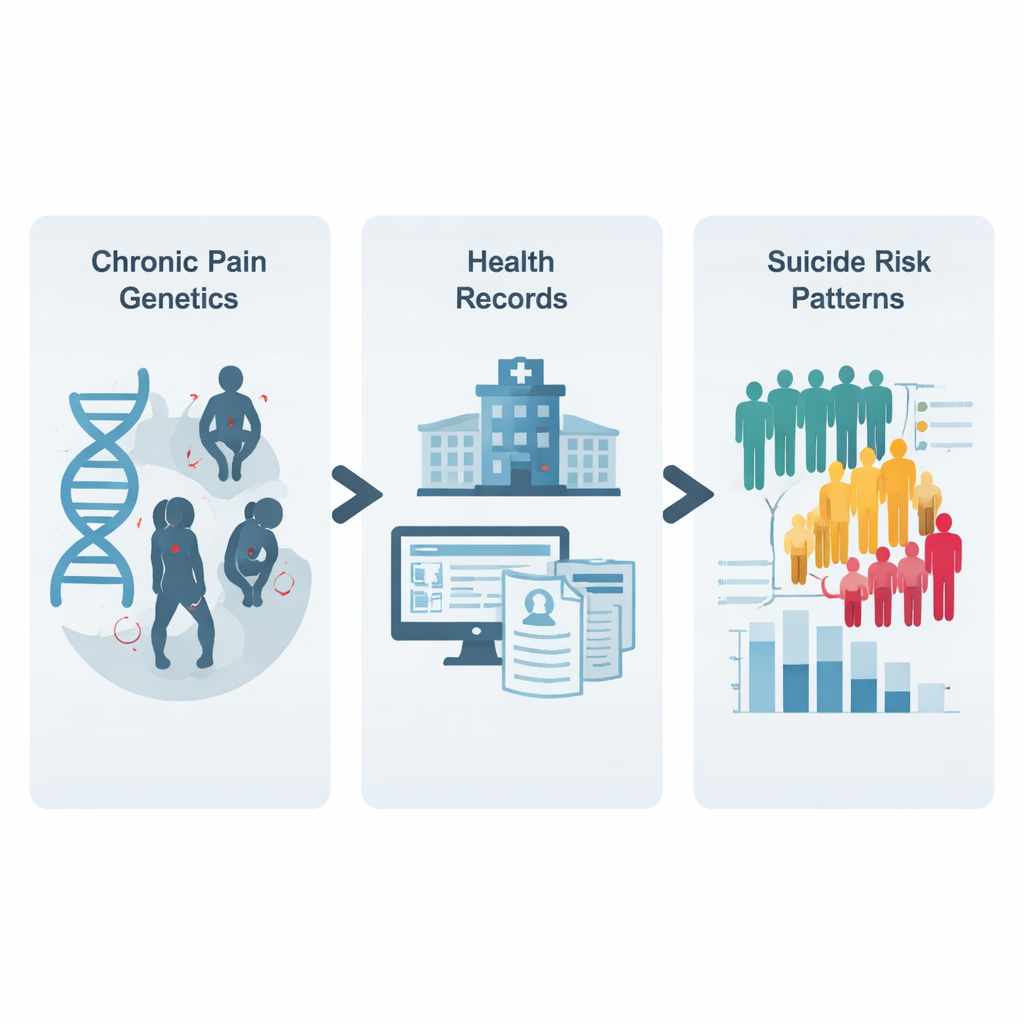
Genetic Signatures of Widespread and Multisite Pain
The team first focused on two broad pain patterns: multisite chronic pain, where a person has ongoing pain in several parts of the body, and chronic widespread pain, in which pain is felt nearly all over. People who died by suicide had higher genetic risk scores for both types than those in the control group. This was true for men and women alike. Importantly, the link held even for suicide deaths who had no recorded diagnosis of chronic pain in their medical charts. In other words, the genetic tendency toward these pain patterns appears to overlap with suicide risk, whether or not doctors ever formally labeled the person as having chronic pain.
Specific Pain Conditions and Distinct Risk Subgroups
Next, the researchers broadened their view to more specific pain-related diagnoses, such as monoarticular arthritis (pain in a single joint), back pain, chronic inflammatory demyelinating polyneuropathy (a serious nerve disorder that often causes burning or electric-like pain), irritable bowel syndrome, and knee pain. They found that higher genetic risk for arthritis, back pain, and this particular nerve disease was linked to greater odds of suicide death in the whole sample, and that irritable bowel syndrome genetic risk was associated with suicide death in men. When they modeled all seven pain-related genetic scores together, four stood out as independently tied to suicide: multisite pain, widespread pain, arthritis, and the nerve condition. This suggests that there are different biological “subgroups” of suicide risk, some more related to body-wide pain sensitivity, others to certain kinds of joint or nerve pain. 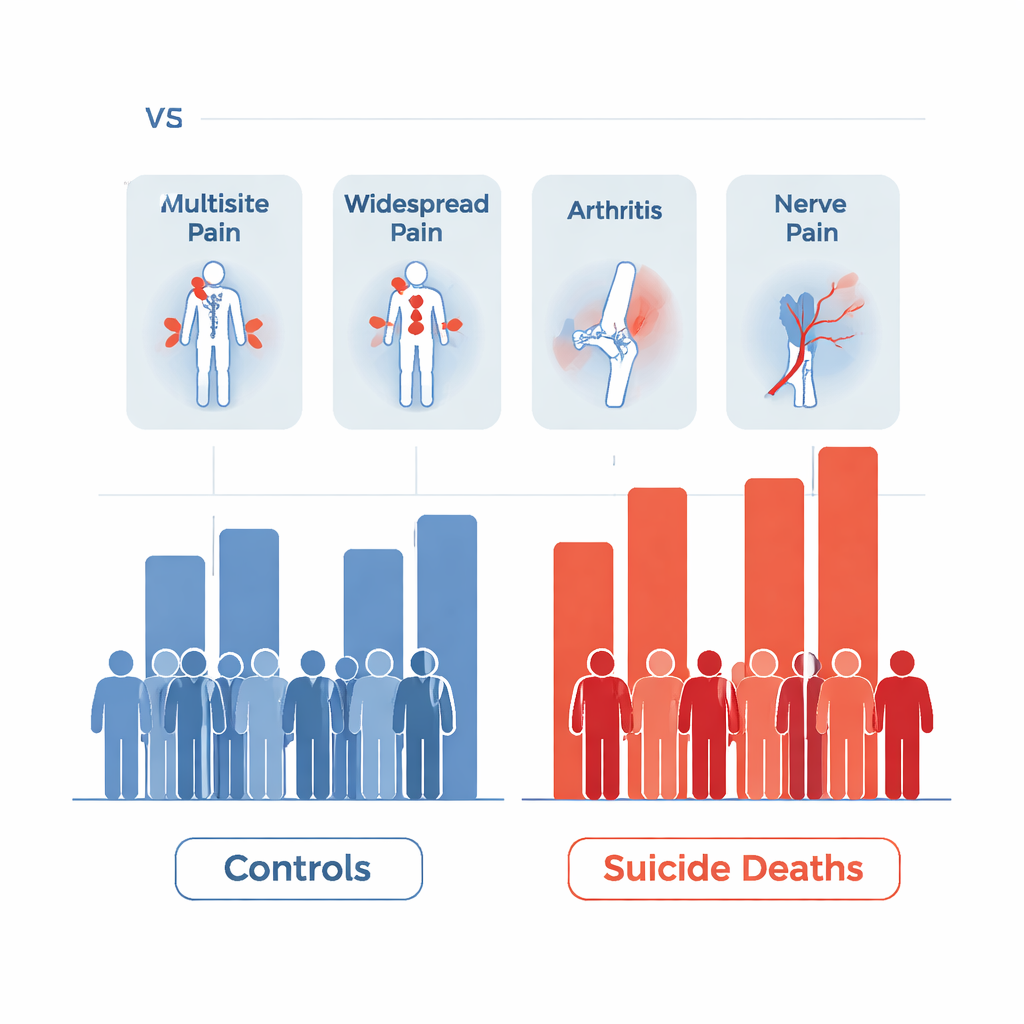
Beyond Diagnoses: What the Patterns Reveal
One striking message from the study is that the shared genetic risk between chronic pain and suicide is not simply a side effect of being in pain. Even in the absence of a chronic pain diagnosis, people who died by suicide tended to carry more of the DNA variants that increase risk for multisite and widespread pain. At the same time, having an actual clinical diagnosis of chronic pain added still more risk. Psychiatric conditions like depression and anxiety did explain part—but not all—of the connection, meaning that pain-related biology and mental health problems likely interact rather than acting alone. Attempts to test whether pain directly causes suicide, using a technique called Mendelian randomization, did not find clear evidence of a one-way causal chain, hinting that underlying shared genetics may be more important than a simple “pain leads to suicide” story.
What This Means for Prevention and Care
For the general public and for clinicians, these findings reinforce that chronic pain and suicide risk are deeply intertwined at the biological level. They suggest that some people may be born with nervous systems that are more sensitive to both physical and emotional pain, and that this inherited vulnerability can show up as widespread pain, nerve problems, or joint issues long before a crisis occurs. While we are far from using genetic scoring in everyday practice, combining DNA information with health records could one day help flag individuals whose pattern of pain risk and mental health history places them in a higher-risk group. Ultimately, the study encourages a more compassionate, integrated approach to care—one that treats pain and suicide risk as connected problems needing early recognition, better support, and coordinated treatment.
Citation: Han, S., DiBlasi, E., Monson, E.T. et al. Genetic risk of chronic pain conditions associated with risk of suicide death through an integrative analysis of EHR and genomics data. Transl Psychiatry 16, 117 (2026). https://doi.org/10.1038/s41398-026-03861-6
Keywords: chronic pain, suicide risk, genetic risk, polygenic scores, mental health