Clear Sky Science · en
Biological underpinnings and genetic predisposition to schizophrenia within microrna-137 regulatory pathways across brain development
How a Tiny Molecule May Shape the Risk of Schizophrenia
Schizophrenia is often thought of as a mysterious brain disorder that appears in late adolescence or early adulthood, but its roots may stretch back to before birth. This article explores how a small regulatory molecule, called microRNA-137 (miR-137), may influence the way brain cells develop and communicate, shaping both the likelihood of developing schizophrenia and the types of symptoms people experience. By tracing miR-137’s effects from the prenatal brain to adulthood, the researchers aim to clarify why some individuals are more vulnerable to psychosis and related mental illnesses.
A Tiny Regulator with Big Influence
MiR-137 is a short piece of RNA that does not code for proteins itself, but instead acts as a fine-tuner of other genes. It helps decide when and how strongly many brain-related genes are switched on or off. Earlier genetic studies showed that common variants near the MIR137 gene are among the strongest known risk factors for schizophrenia. Many of the genes under miR-137’s control are involved in building neurons, shaping their branches, and forming synapses—the junctions through which brain cells communicate. However, most previous work relied on computer predictions or simplified cell models, which can miss the fact that miR-137 may act differently at various stages of brain development and in different brain regions.
Looking Directly in the Human Brain
To capture a more realistic picture, the authors focused on “direct targets” of miR-137 that were identified in actual human brain tissue using a method that physically maps where miRNAs bind their partner genes. They combined data from two key periods: early prenatal development and adulthood. This allowed them to build two distinct gene sets: a prenatal target group and an adult target group. They then compared these to several more traditional sets derived from computer prediction tools or lab manipulations of cells. Using a range of statistical methods, they examined how each gene set was expressed across brain regions and life stages, which cell types it appeared in, and how strongly it overlapped with genetic risk for schizophrenia and related conditions.
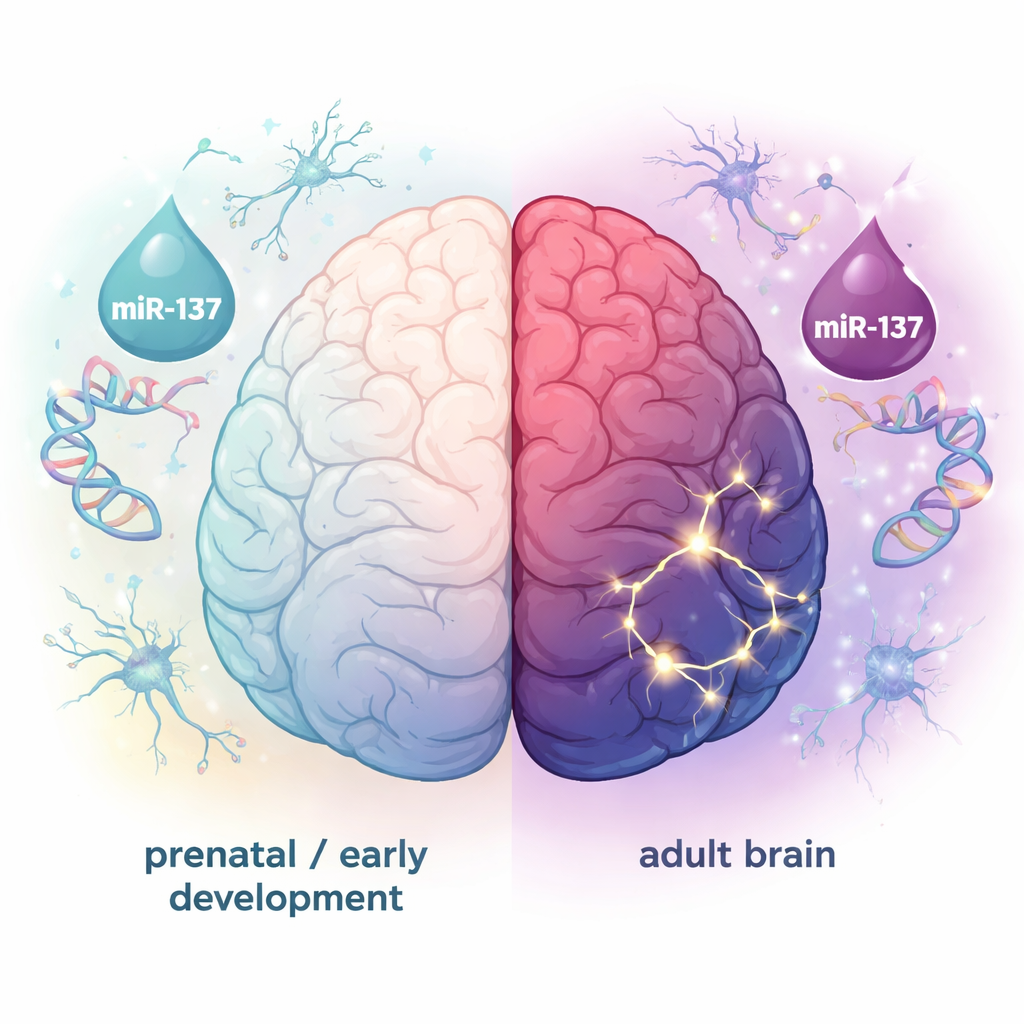
Different Stages, Different Brain Jobs
The prenatal and adult miR-137 target groups turned out to be largely distinct, sharing only a handful of genes. Prenatal targets were most strongly linked to early brain-building tasks, such as generating new neurons and glial cells and guiding their initial development. Their activity was relatively high early in life and then declined, with a notable exception in the adult cerebellum. In contrast, adult targets were enriched for genes involved in synapses, neuron projections, and cell-to-cell communication. These genes were highly active across many adult brain regions, especially in neurons and oligodendrocytes, and their expression tended to peak in young adulthood—the very time when schizophrenia often first appears. Other, more broadly predicted gene sets did not show this clear developmental and cell-type specific pattern.
Linking Gene Regulation to Illness and Symptoms
When the team compared people with schizophrenia to unaffected individuals, they found that many adult miR-137 target genes were consistently less active in patient brain tissue. Similar downshifts appeared in bipolar disorder and autism, suggesting a shared molecular signature across major psychiatric illnesses. Genetic analyses supported this pattern: both prenatal and adult miR-137 targets carried an unusually high load of common risk variants for schizophrenia, and adult targets also captured shared genetic risk spanning schizophrenia, bipolar disorder, depression, and autism. Importantly, when the researchers calculated polygenic scores limited to these target genes in a large Spanish sample, scores based on adult targets helped distinguish patients from controls, while scores based on prenatal targets were especially linked to the severity of “negative” symptoms such as emotional flatness, lack of motivation, and social withdrawal.
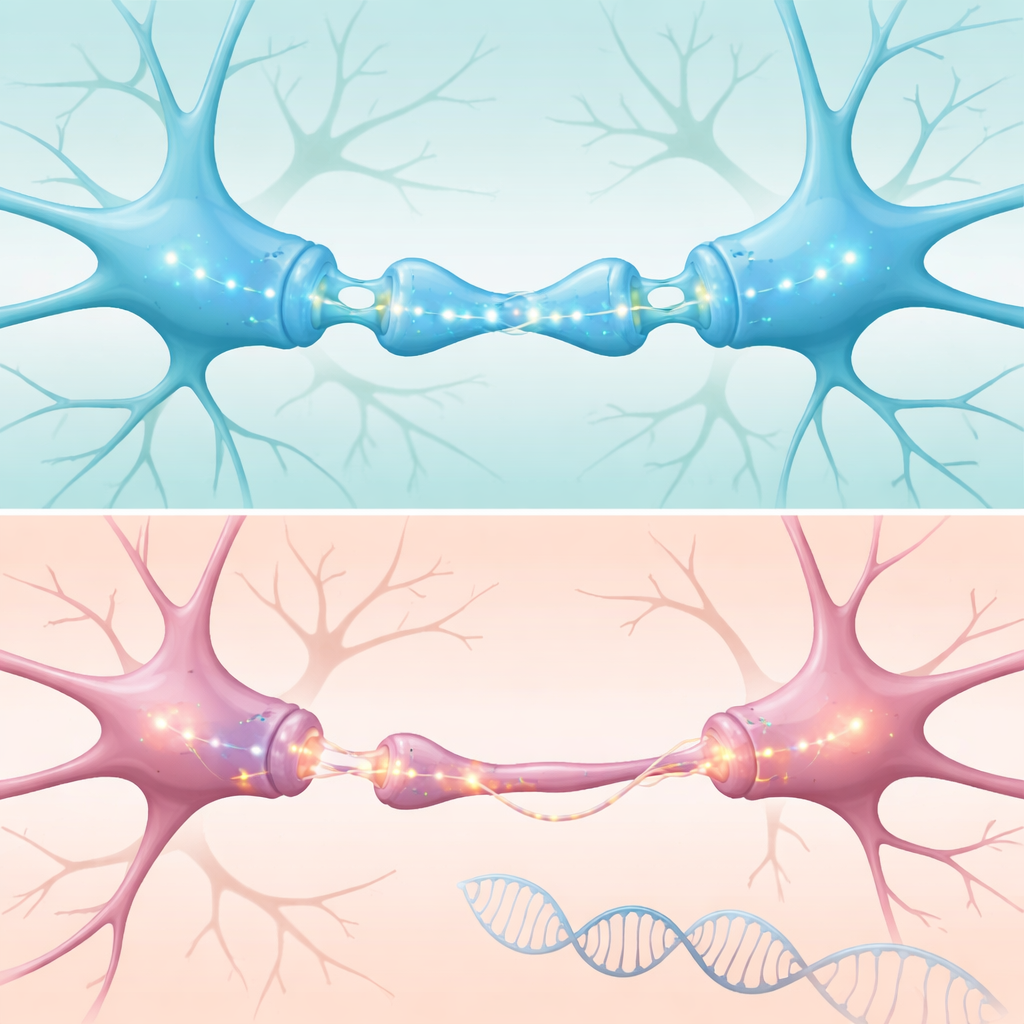
What This Means for Understanding Schizophrenia
For non-specialists, the take-home message is that miR-137 does not act as a simple on/off switch for schizophrenia, but as part of a moving control panel that changes its influence from prenatal life into adulthood. In early development, miR-137 appears to shape the basic layout of brain circuits, and inherited variation in its prenatal targets may predispose some individuals to more severe negative symptoms later on. In the adult brain, miR-137’s targets cluster in synapses and communication pathways that are genetically shared across several psychiatric conditions. By focusing on direct, time-specific targets in human brain tissue, this work sharpens our view of how a single regulatory pathway can contribute to both the risk of psychosis and the particular way it manifests, opening avenues for more tailored prevention and treatment strategies.
Citation: Stella, C., De Hoyos, L., Mora, A. et al. Biological underpinnings and genetic predisposition to schizophrenia within microrna-137 regulatory pathways across brain development. Transl Psychiatry 16, 91 (2026). https://doi.org/10.1038/s41398-026-03859-0
Keywords: schizophrenia, microRNA-137, brain development, genetic risk, synaptic function