Clear Sky Science · en
Effects of chronic ethanol consumption on brain GLP-1R gene expression in mice and humans
Why This Research Matters
Many people know that heavy drinking can damage the brain, but how exactly this happens at the molecular level is still being uncovered. This study looks at a surprising player: a hormone receptor better known for controlling blood sugar and appetite. By examining brains from both mice and people with long-term alcohol problems, the researchers show that this receptor and two other key brain molecules are consistently turned down in areas that control reward, memory, and decision making. The work could help explain why some diabetes drugs that act on this receptor may also reduce drinking, and suggests new ways to diagnose and treat alcohol use disorder.
A Hormone Link Between Gut and Brain
The focus of the study is the glucagon-like peptide-1 receptor, or GLP-1R, which normally responds to signals from the gut and helps regulate appetite, metabolism, and brain activity. GLP-1R is spread throughout the brain, including regions that process pleasure, motivation, and memory. Earlier work in animals and humans suggested that drugs activating this receptor can reduce alcohol intake and craving, and that genetic differences in the GLP-1R gene are linked to heavy drinking. Yet it was not clear whether long-term alcohol use itself changes how much of this receptor is present in the brain, or how those changes might interact with other molecules involved in addiction.
Studying Brains From Mice and People
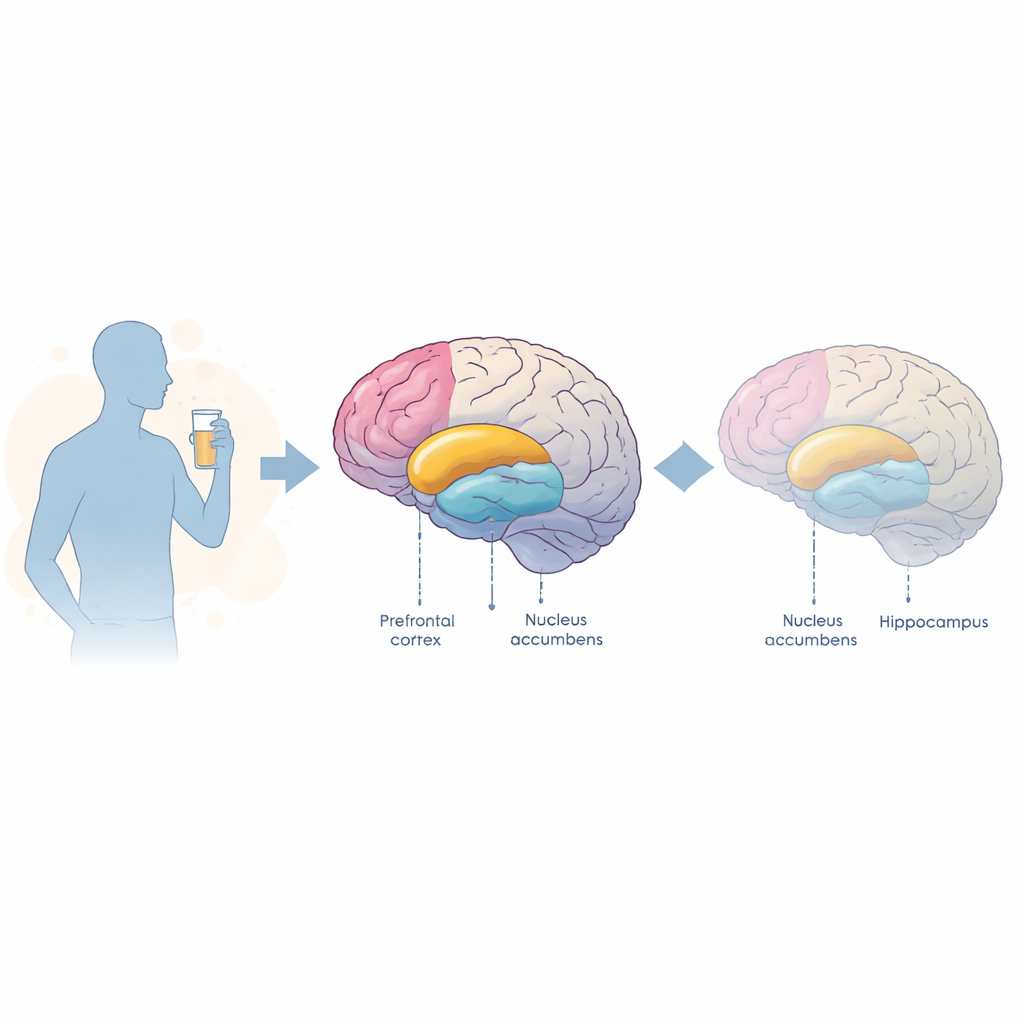
To answer these questions, the team used a two-pronged approach. First, they allowed male mice to drink alcohol voluntarily for six weeks using a two-bottle setup, in which animals could choose between water and a gradually stronger alcohol solution. After this long exposure, the scientists carefully dissected three brain regions: the prefrontal cortex, which helps with planning and self-control; the nucleus accumbens, a core reward hub; and the hippocampus, crucial for learning and memory. They measured how much GLP-1R gene activity remained in each area, along with two other important markers: the gene for the mu-opioid receptor, which shapes the pleasure and motivational effects of alcohol, and the gene for brain-derived neurotrophic factor (BDNF), a growth-supporting protein important for healthy circuits and cognition.
Consistent Molecular Changes Across Species
The second part of the study examined postmortem brain samples from 18 men who had alcohol use disorder and 18 similar men without it. The same three brain regions were analyzed. Careful quality checks ensured that the RNA in these tissues was intact enough for reliable measurements. In both mice and humans, the pattern was strikingly similar: GLP-1R gene expression was significantly lower in all three regions in those exposed to long-term alcohol. In addition, the mu-opioid receptor gene was reduced in the nucleus accumbens, and BDNF was reduced in the hippocampus, again in both species. These changes did not meaningfully track with age, body weight, smoking, brain pH, or the length of time people had been drinking, suggesting they are robust features of heavy alcohol exposure rather than side effects of other factors.
What These Changes May Mean for the Brain
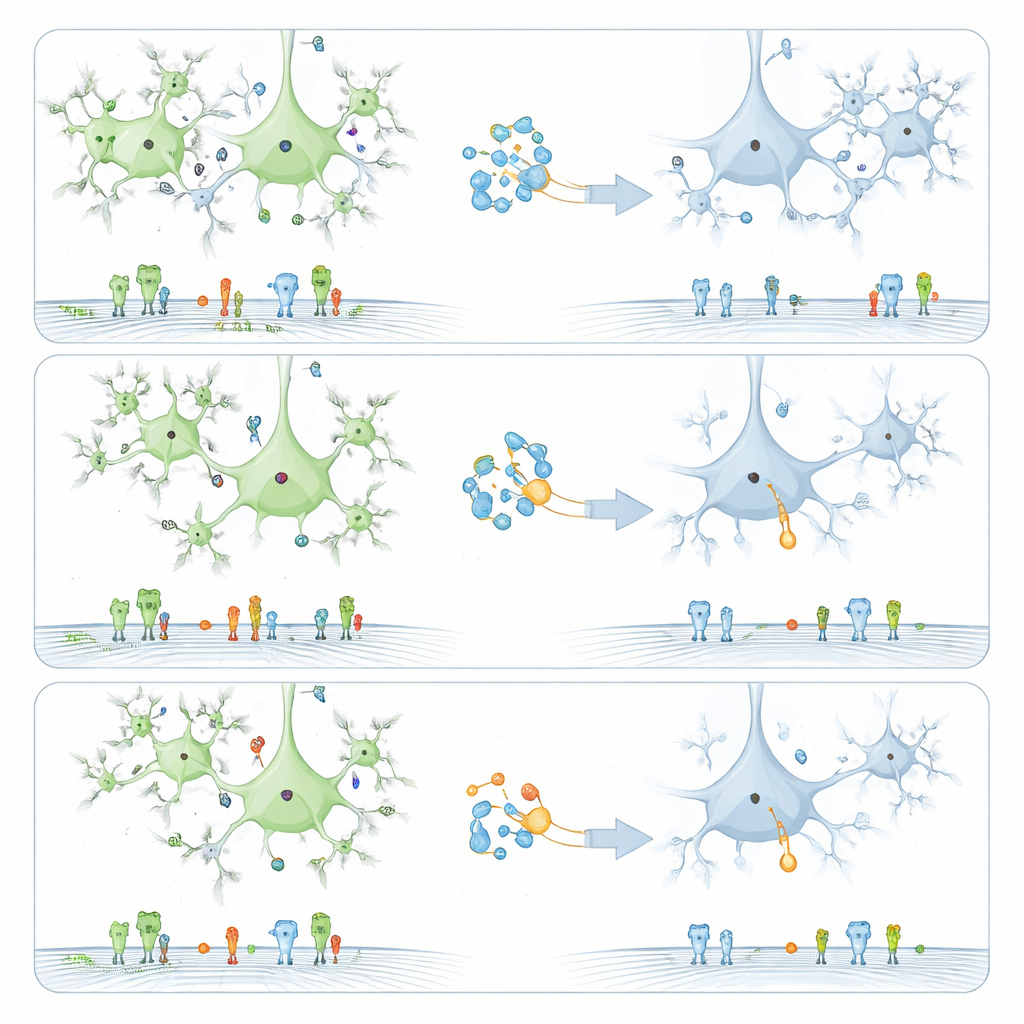
The coordinated drop in GLP-1R, mu-opioid receptor, and BDNF suggests a broad weakening of systems that normally regulate reward signals and support healthy brain structure and function. In the reward centers, fewer GLP-1 and mu-opioid receptors could blunt the brain’s ability to properly balance the pleasurable and aversive effects of alcohol, possibly favoring compulsive use. In the hippocampus and prefrontal cortex, reduced GLP-1R and BDNF may contribute to the cognitive problems and poor decision making often seen in people with alcohol dependence. The authors also found hints that, in individuals without alcohol problems, GLP-1R levels in some regions are linked to BDNF levels in others, and that these relationships are altered in alcohol use disorder, pointing to disrupted communication between brain areas.
Looking Ahead to New Tools and Treatments
Overall, the study shows that chronic alcohol consumption in both mice and humans is associated with a consistent decrease in GLP-1R, along with key reward and growth-related molecules, in brain regions that underlie the pull of alcohol and the thinking problems that follow. For a lay reader, the takeaway is that heavy drinking does not simply “wear out” the brain in a general way; it leaves a specific molecular fingerprint that may be detectable and, importantly, may be reversible. Because GLP-1R is already a drug target in diabetes and obesity, these findings strengthen the idea that such medications could be repurposed or refined to treat alcohol use disorder, and that GLP-1R itself might ultimately serve as a biomarker to identify risk, track disease progression, or monitor treatment response.
Citation: Torregrosa, A.B., García-Gutiérrez, M.S., Ortuño-Miquel, S. et al. Effects of chronic ethanol consumption on brain GLP-1R gene expression in mice and humans. Transl Psychiatry 16, 123 (2026). https://doi.org/10.1038/s41398-026-03838-5
Keywords: alcohol use disorder, GLP-1 receptor, brain reward system, hippocampus and memory, mu-opioid and BDNF