Clear Sky Science · en
Human approach-avoidance conflict behaviour relates to transdiagnostic psychiatric symptom dimensions
Why everyday risk-taking and worry matter
Everyday life is full of trade-offs: we cross busy streets to get to work faster, take on demanding projects for a promotion, or decide whether to confront a difficult conversation. In each case we balance possible rewards against potential harm. Scientists call this a “approach-avoidance conflict.” This study asks a deceptively simple question with big implications: when people are more or less cautious in these kinds of trade-offs, does that reflect how anxious they say they feel—or is something else going on under the surface?
Turning danger and reward into a simple game
To study these decisions, the researchers used an online computer game that strips the problem down to its basics 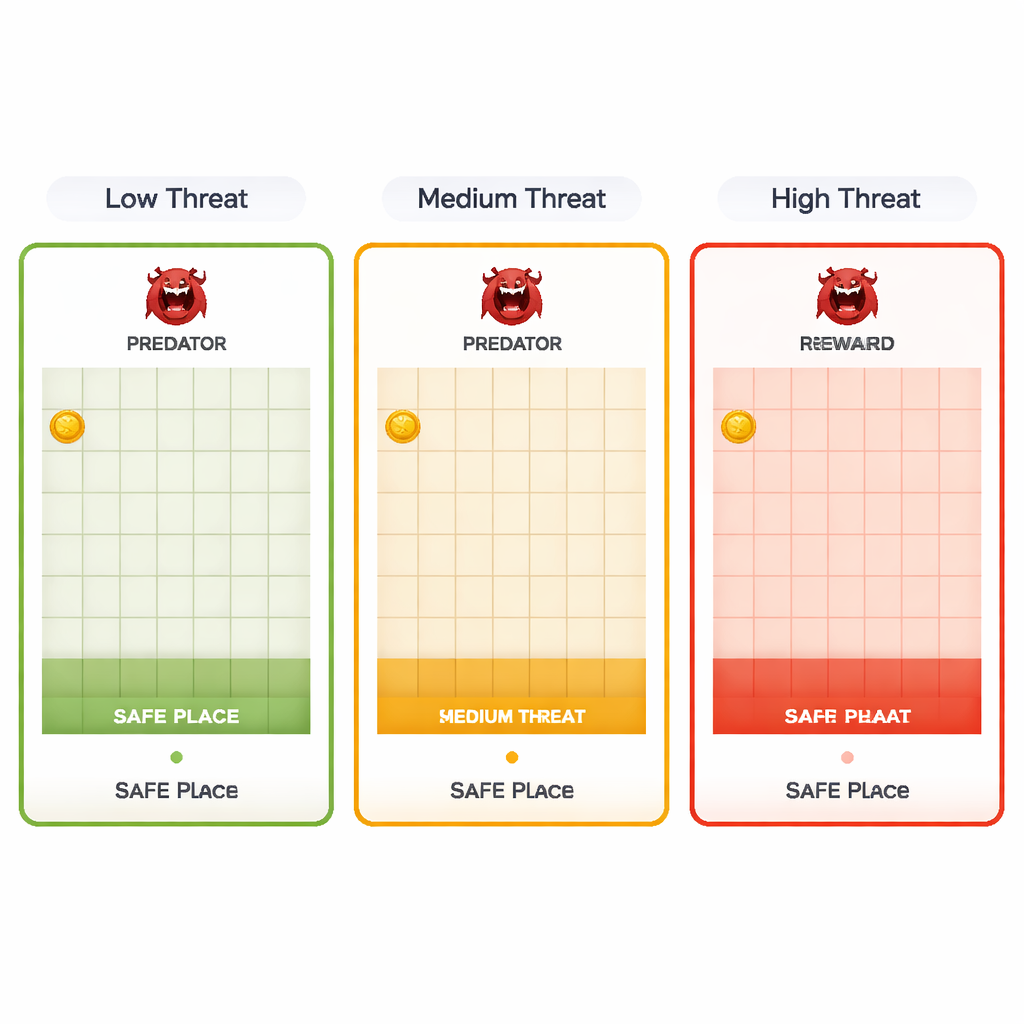
Linking cautious choices to broad mental health traits
More than a thousand adults from an online workforce completed this task and then answered a wide range of questionnaires about mood, anxiety, compulsive habits, impulsivity, social fears, and other symptoms. Instead of treating each questionnaire separately, the authors looked for deeper “dimensions” that cut across traditional diagnoses. They recovered three such dimensions: one dominated by compulsive behavior, intrusive thoughts, impulsivity, substance use and eating problems; one capturing anxious mood and depression; and one reflecting social withdrawal and shyness. The central discovery was that cautious behavior in the game was most strongly related to the broad compulsive/impulsive dimension, and barely related at all to the anxiety–depression dimension the task is often assumed to tap.
When being both bold and slow becomes risky
The pattern of results is striking 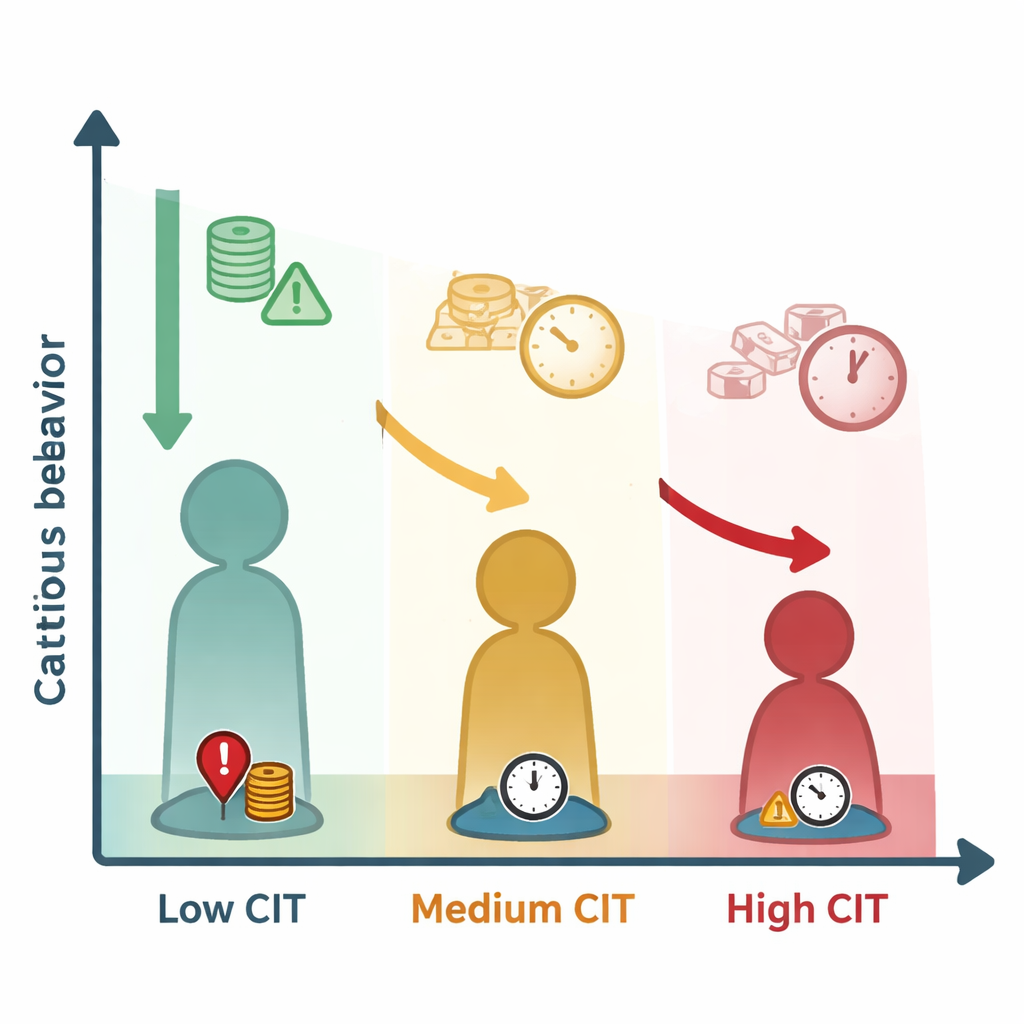
How distorted beliefs shape memory for danger
The study went a step further by probing people’s mental model of the game’s dangers. In a separate task, participants repeatedly checked whether the predator was awake, and later rated how likely each predator was to catch them. On average, everyone overestimated how risky the predators were—seeing the world as more dangerous than it really was. But those high on the compulsive/impulsive dimension did this to a greater extent, and their estimates were less sensitive to the true differences between “safer” and “riskier” predators. They seemed to form a fuzzier, more distorted picture of threat, even though their frequent approaches gave them more chances to learn the statistics of the game.
Why this changes how we think about anxiety tests
Putting these pieces together, the authors argue that cautious behavior in approach-avoidance games does not specifically mirror how anxious or depressed people say they feel. Instead, it aligns more closely with a broad mix of traits involving compulsivity, impulsivity, and related problems, and with how clearly people can represent and use information about danger. This raises doubts about using such tasks as simple “anxiety tests,” even though they are very sensitive to anti-anxiety drugs in animals and humans. It also highlights a more nuanced picture: our real-world cautiousness may emerge from long-standing decision styles and learning habits that shape how we perceive threats and rewards, rather than from momentary feelings of worry alone.
Citation: Sporrer, J.K., Melinscak, F. & Bach, D.R. Human approach-avoidance conflict behaviour relates to transdiagnostic psychiatric symptom dimensions. Transl Psychiatry 16, 61 (2026). https://doi.org/10.1038/s41398-026-03835-8
Keywords: approach-avoidance conflict, cautious behavior, compulsive symptoms, risky decision-making, threat learning