Clear Sky Science · en
Contactless depression screening via facial video-derived heart rate variability
Checking Mood with Just a Camera
Many people living with depression never receive help, often because it is hard to talk about mental health or find time for a clinic visit. This study explores a surprisingly simple idea: could an ordinary webcam, pointed at someone’s face for a few minutes, help flag who might be struggling with depression by tracking tiny changes in their heartbeat?
How the Heart Signals Our Inner State
Our hearts do not beat like a metronome. The small, natural changes in the time between beats—known as heart rate variability, or HRV—reflect how flexibly our nervous system responds to stress and emotion. Earlier research has shown that people with depression tend to have less of this healthy variation. The authors of this paper asked whether HRV, measured in a quick and comfortable way, could be used for large-scale depression screening outside of specialized labs.
A Contactless Checkup Using Facial Video
Instead of attaching sensors to the chest or wrist, the team used facial video recordings from more than 1,400 adults visiting hospitals in South Korea. A standard webcam captured each person’s face while they sat quietly for several minutes. Subtle shifts in skin color, invisible to the naked eye but detectable by the camera, were translated into a pulse signal and then into detailed HRV measurements. At the same visit, participants filled out a brief questionnaire (the PHQ-9) that rated their depressive symptoms over the previous two weeks. Those scoring 5 or above were grouped as having depressive symptoms, while lower scores were treated as non-depressed for the purposes of this study. 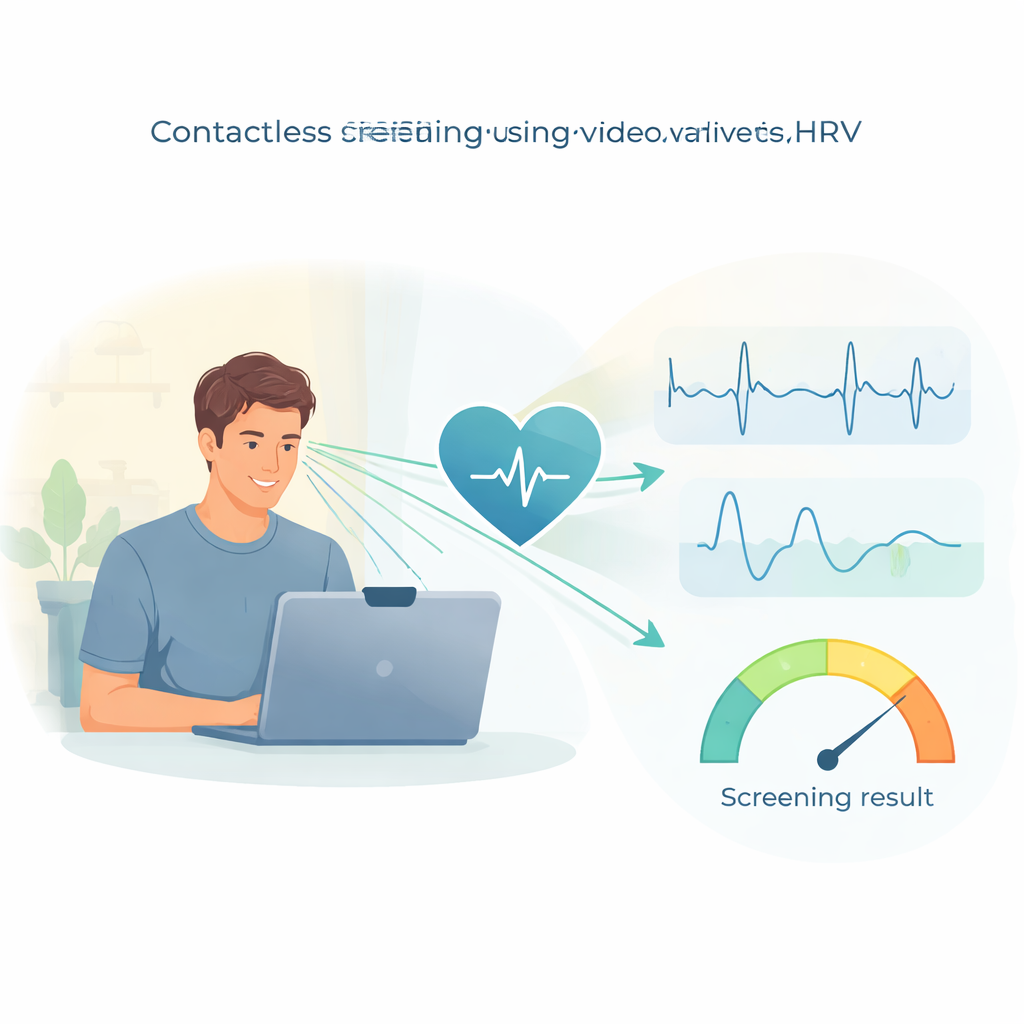
Training a Computer to Spot Patterns
The researchers then built a machine-learning system to learn patterns that distinguish people with and without depressive symptoms. They combined many pieces of information: multiple HRV measures (such as average heart rate and different frequency bands of variability) and basic personal details like age, sex, smoking status, body mass index, and whether someone had other medical conditions. Several different algorithms were stacked together so that a final model could draw on the strengths of each. The team judged performance using measures that are especially suited to yes/no decisions in medicine, including how well the system separated likely depressed from non-depressed cases across repeated testing.
What the System Got Right—and Where It Fell Short
The model could tell the two groups apart better than chance, but not with the accuracy needed for a stand‑alone diagnostic tool. Its overall discrimination was modest: on standard scales used in medicine, its performance sat in a “medium” rather than “high” range. An important finding was that simple demographic factors—especially whether someone smoked, their sex, and whether they had medical illnesses—were stronger predictors than any single HRV measure. Still, HRV added useful extra information when combined with these basics. People with more depressive symptoms tended to have slightly faster resting heart rates and lower HRV, signs of a less flexible stress response system. The model worked somewhat better in certain subgroups, such as people with obesity or current smokers, where physiological differences between depressed and non-depressed participants were more pronounced. 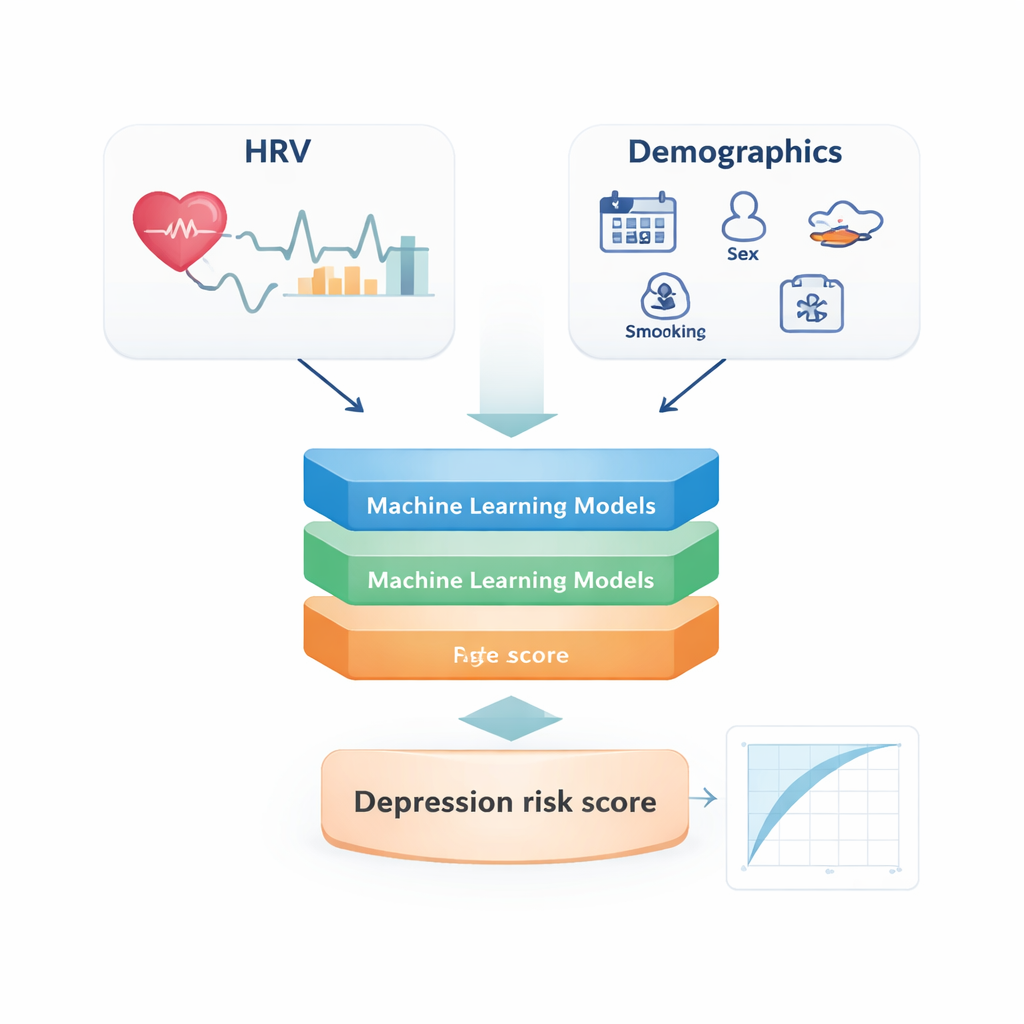
Why This Matters for Everyday Life
This work shows that a short, contactless recording with an ordinary camera can capture heart rhythm signals linked to mood and that these signals, paired with a few simple questions, can moderately flag people who may be experiencing depression. While the current system is not accurate enough to replace a professional evaluation, it could one day serve as an easy first step—perhaps embedded in a smartphone or telehealth visit—to nudge at‑risk individuals toward more thorough care. In plain terms, your face and heartbeat, measured safely at a distance, may offer a gentle early warning that it is time to talk to someone about how you are feeling.
Citation: Jhon, M., Kim, JW., Lee, K. et al. Contactless depression screening via facial video-derived heart rate variability. Transl Psychiatry 16, 49 (2026). https://doi.org/10.1038/s41398-026-03831-y
Keywords: depression screening, heart rate variability, facial video, machine learning, mental health technology