Clear Sky Science · en
Sex-Specific patterns of vulnerability to alcohol addiction-like behaviors in rats
Why Some Drinkers Become Addicted
Most people who drink alcohol never develop a full-blown addiction, yet a vulnerable minority do. Understanding why is crucial for preventing alcohol use disorder and improving treatment. This study used rats to model human drinking patterns and asked a timely question: do males and females differ in how easily they slide from casual drinking into addiction-like behavior?
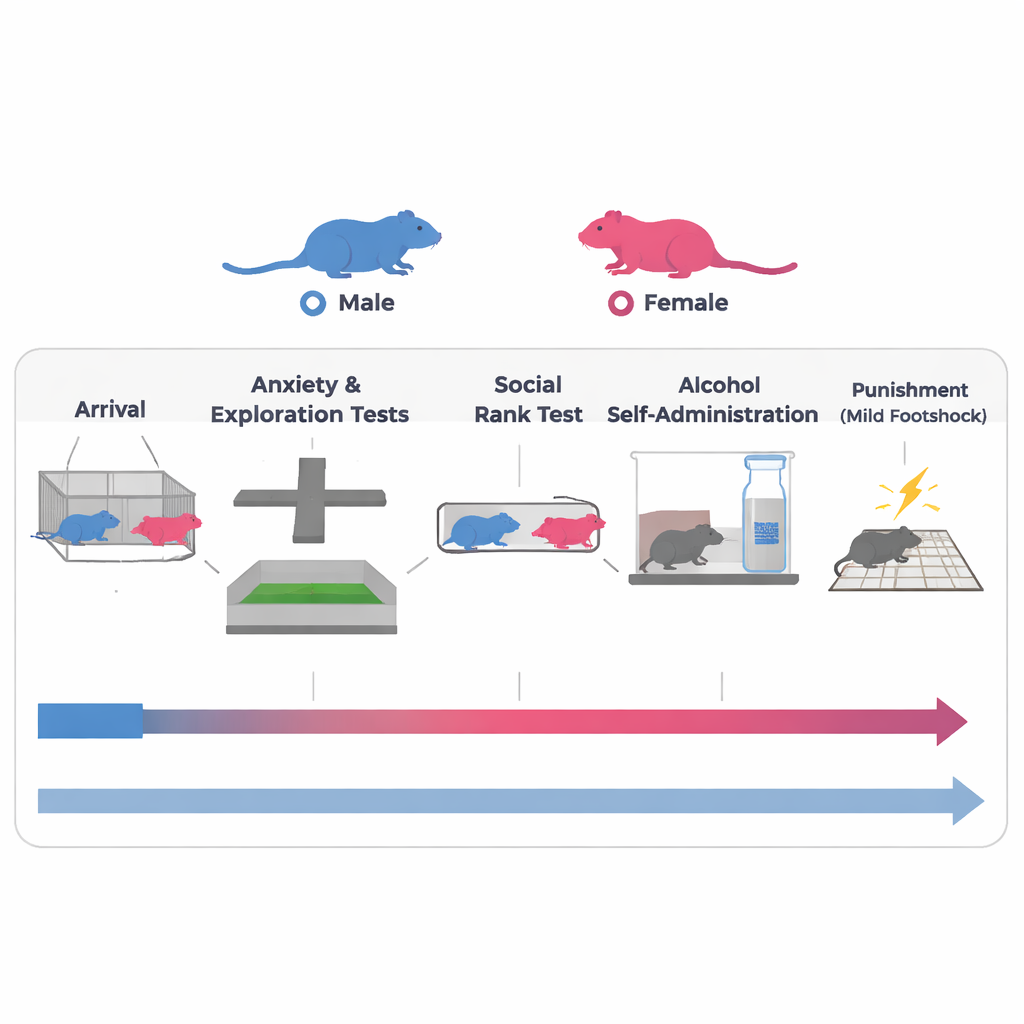
Turning Rat Drinking into a Model of Human Addiction
The researchers worked with equal numbers of male and female rats and exposed them to a long-lasting, carefully controlled alcohol regimen. The animals first went through simple behavioral tests: an elevated plus maze to gauge anxiety, an open field test to measure exploration, and a tube test to establish who was socially dominant or subordinate in their group. Then, over many weeks, the rats learned to press a lever to obtain alcohol. This setup allowed the team to track not just how much they drank, but how strongly they worked for alcohol and how they behaved when alcohol was unavailable.
Three Warning Signs of Addiction-Like Drinking
Rather than labeling any heavy drinker as “addicted,” the scientists focused on three specific addiction-like signs that mirror clinical criteria in humans. First, they looked at persistence in seeking alcohol: rats that kept pressing the lever even when alcohol was not available. Second, they measured motivation by seeing how many times a rat would press the lever as the “price” for each drink steadily increased. Third, they tested continued alcohol use despite negative consequences: would rats keep pressing for alcohol even when some lever presses resulted in a mild footshock? Each rat was scored on these three signs, and animals that landed in the top third for a given sign were considered positive for that criterion.
Females Showed Higher Vulnerability, but Not Because They Drank More
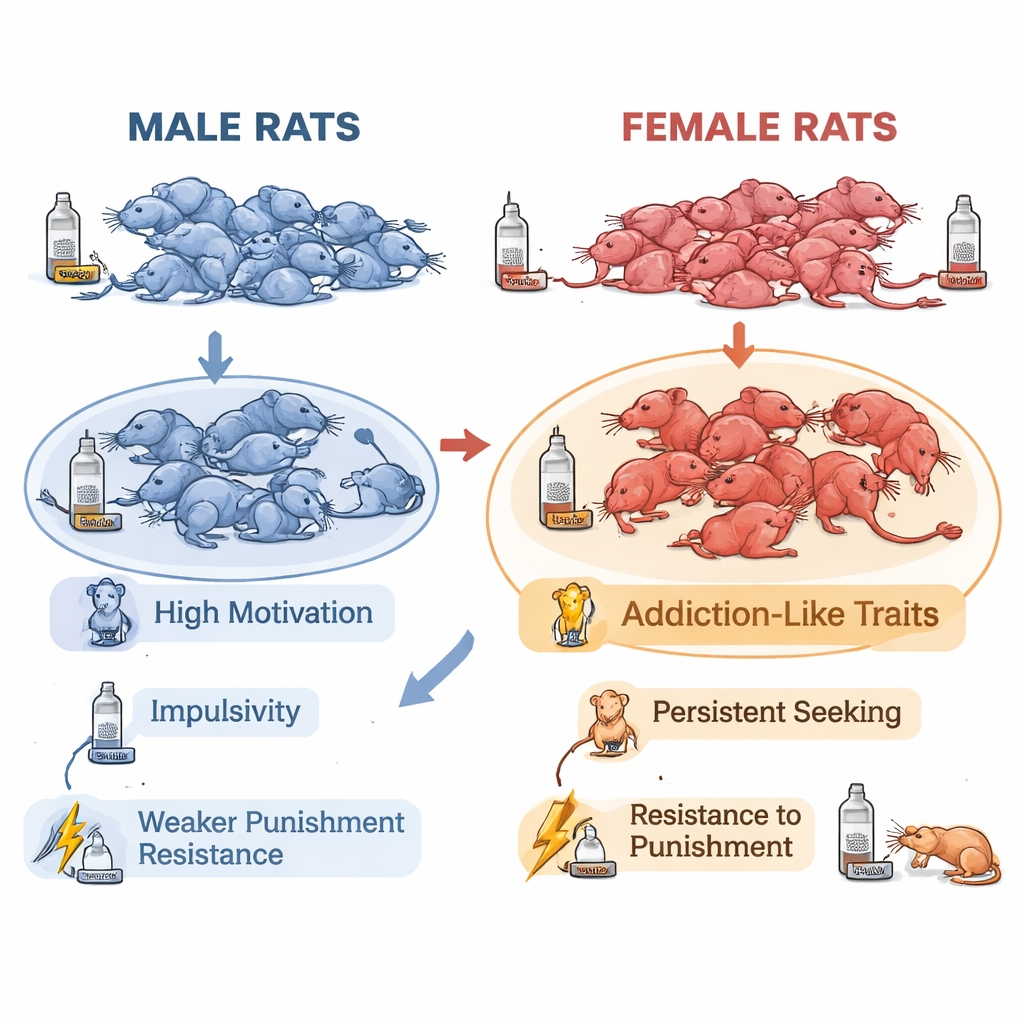
Both male and female rats learned to self-administer alcohol, and when intake was adjusted for body weight, they ended up consuming similar amounts. Yet only a subset of animals in each sex developed an addiction-like profile. In males, just over 6 percent met all three criteria, while in females nearly 13 percent did. Importantly, these sex differences could not be explained by simple factors such as how much alcohol they had consumed overall, how sensitive they were to the footshock, or how anxious they appeared at baseline. Instead, the data suggest that males and females reach the same end point—loss of control over alcohol—in partly different ways.
Different Behavioral Paths to the Same Problem
When the researchers examined patterns across all the behaviors, they found one shared “core” dimension in both sexes: high alcohol intake, strong motivation to drink, and frequent pressing during brief pauses in alcohol availability, which together tracked closely with the overall addiction score. But another behavioral dimension behaved very differently in males and females. In females, resistance to punishment—continuing to drink despite shocks—was strongly tied to higher addiction-like scores, suggesting a more pronounced tendency to drink through adversity. In males, this same measure pointed in the opposite direction and did not clearly separate the most vulnerable animals. Traits that are often suspected as risk factors, such as anxiety levels, general activity in a new environment, or being socially dominant versus subordinate, did not predict who became addiction-prone in either sex.
What This Means for People Who Drink
To a layperson, the key message is that addiction is not simply about how much alcohol someone consumes. In this rat model, males and females drank comparable amounts, yet females were twice as likely to show a full addiction-like pattern, largely because they were more likely to keep drinking despite negative outcomes. Males who became vulnerable did so more through strong drive and impulsive responding than through punishment resistance. These findings support the idea that men and women may reach alcohol addiction through partly different behavioral routes. Recognizing these differences could help guide more tailored prevention and treatment strategies, such as focusing more on stress and adverse consequences in women and on impulsivity and reward drive in men.
Citation: Borruto, A.M., Coppola, A., Höglund, L. et al. Sex-Specific patterns of vulnerability to alcohol addiction-like behaviors in rats. Transl Psychiatry 16, 59 (2026). https://doi.org/10.1038/s41398-026-03825-w
Keywords: alcohol use disorder, sex differences, addiction vulnerability, impulsivity, compulsive drinking