Clear Sky Science · en
Finding the forest in the trees: Using machine learning and online cognitive and perceptual measures to predict adult autism diagnosis
Why spotting adult autism is so hard
Many autistic adults wait years, even decades, before receiving a diagnosis, in part because the tools used to identify autism in grown‑ups are blunt instruments. Short questionnaires and interviews can miss people who have learned to "blend in" socially, and they are vulnerable to bias and guesswork. This study asks whether a different approach—objective, online tests of thinking and perception combined with modern machine learning—can better flag who is likely to be autistic and do so in a way that could be delivered at scale over the internet.
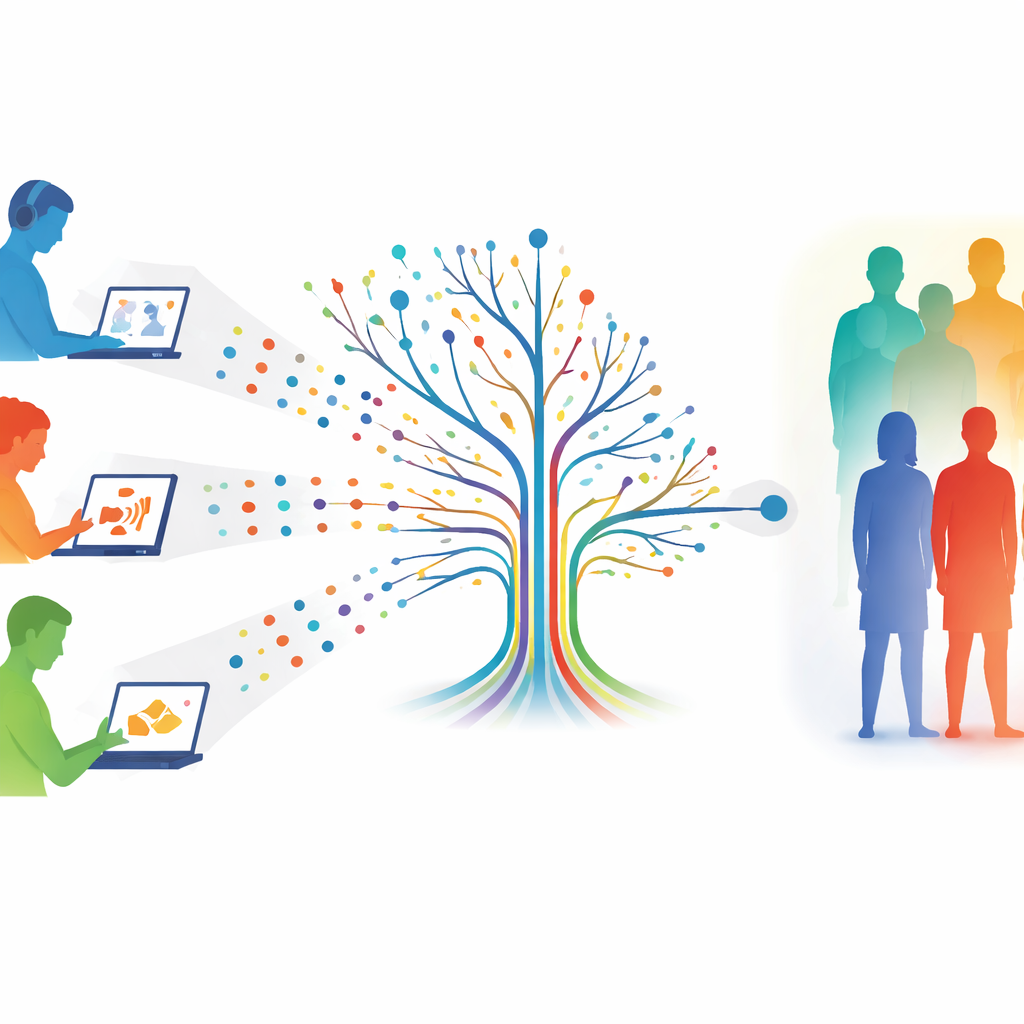
From simple quizzes to rich digital footprints
Traditional autism screening in adults leans heavily on self‑report forms that ask about habits, preferences, and social experiences. These can be helpful, but they also depend on a person’s insight into their own behavior and on cultural expectations. The authors of this paper took another route. They reused data from earlier online experiments in which hundreds of autistic and non‑autistic Dutch adults completed a battery of computer tasks. These tasks tapped three areas that often differ in autism: how people combine sights and sounds, how they recognize emotions from faces and voices, and how they plan, switch, and inhibit actions—a bundle known as executive functioning.
Measuring how people see, feel, and think
Across these studies, participants watched and listened to short clips, identified emotions from photographs of faces or from tone of voice, and performed classic reaction‑time games that require quick responses or deliberate restraint. Rather than focusing only on whether answers were right or wrong, the researchers extracted 54 detailed measures describing how each person performed. These included how fast they responded, how their accuracy changed over time, what kinds of mistakes they made, and how consistently they performed across trials. Age and gender were also included to fairly account for their known influence on these abilities.
Letting machine learning find the patterns
To make sense of this high‑dimensional data, the team used a popular machine learning method called a random forest, which builds many decision trees and combines their votes. They trained the model to distinguish autistic from non‑autistic adults and then tested how well it could classify new individuals it had not seen before. Even when the groups were carefully matched on age and gender—making the task harder—the model, using only the performance‑based measures, correctly identified autism in roughly three out of four cases. When the researchers then added one extra ingredient—the total score from a widely used autism questionnaire—the combined model’s accuracy jumped to about 92 percent, with both few missed autistic individuals and few false alarms.
Hidden clues in the way tasks are performed
Interestingly, the model’s success did not rest solely on the most obvious group differences. Reaction times, especially in emotion recognition tasks, were strong contributors, echoing earlier work showing that autistic adults often recognize emotions accurately but more slowly. But the algorithm also discovered value in measures that, on their own, did not differ significantly between groups when averaged in the usual way. These included particular kinds of errors in inhibition and working‑memory tasks and subtle fluctuations in performance across time. In other words, autism‑related differences emerged from a constellation of interacting features rather than from any single dramatic deficit, underscoring that the “tune” of behavior matters more than any one “note.”
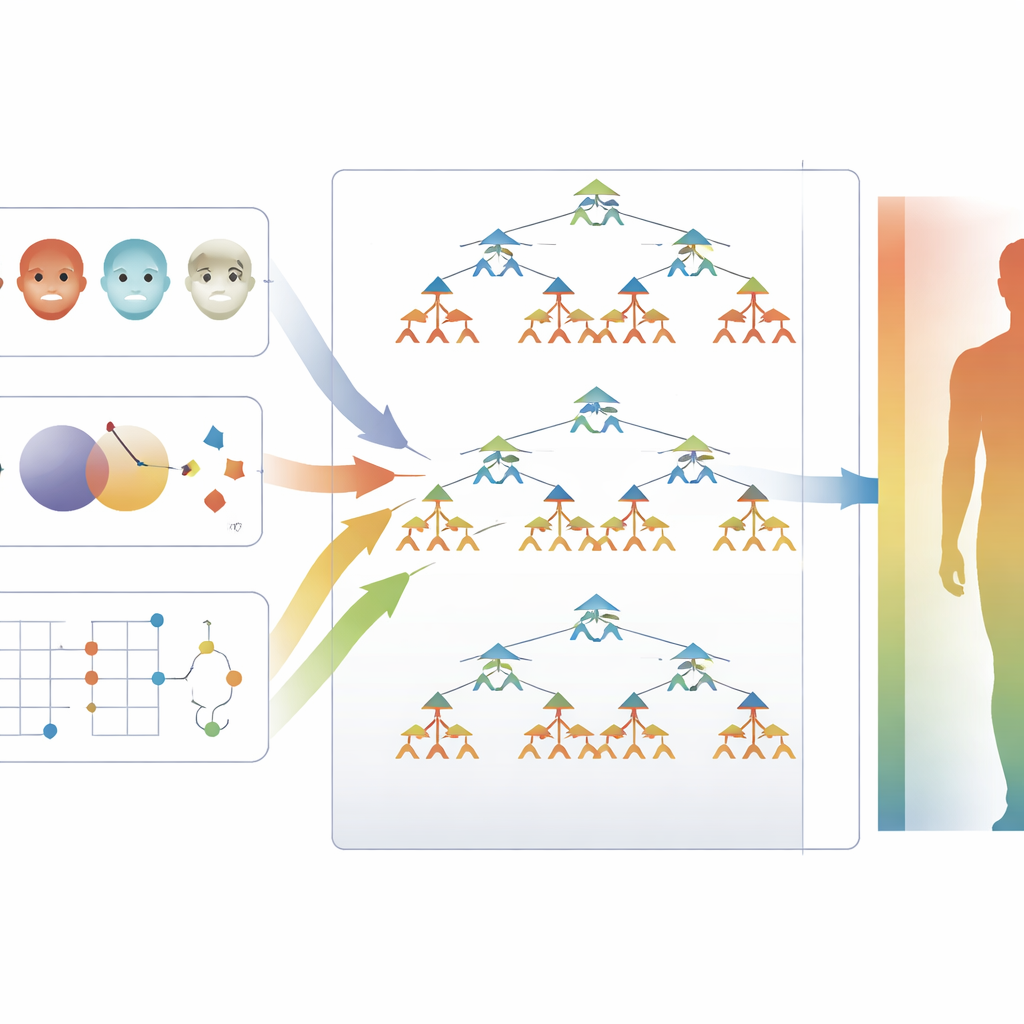
Toward faster, fairer support for adults
For a layperson, the key message is that short, objective online tasks—combined intelligently with existing questionnaires—can provide a much sharper picture of who is likely to be autistic than questionnaires alone. The study shows that machine learning can uncover reliable patterns in how adults see, feel, and think, even when traditional statistics see only small differences. While such tools cannot and should not replace a full clinical assessment, they could help prioritize adults for timely evaluations, reduce reliance on biased self‑report, and offer clinicians a richer profile of cognitive strengths and challenges. With further refinement and testing in more diverse groups, this kind of accessible, internet‑based screening could become an important aid in shrinking long waiting lists and getting appropriate support to autistic adults sooner.
Citation: Van der Burg, E., Jertberg, R.M., Geurts, H.M. et al. Finding the forest in the trees: Using machine learning and online cognitive and perceptual measures to predict adult autism diagnosis. Transl Psychiatry 16, 129 (2026). https://doi.org/10.1038/s41398-026-03823-y
Keywords: adult autism diagnosis, machine learning, online cognitive testing, emotion recognition, executive function