Clear Sky Science · en
Evoked emotions in anorexia nervosa: neural and behavioural correlates of social-emotional processing
Why Feelings on the Face Matter
Most of us read other people’s feelings from quick glances at their faces—smiles, frowns, and everything in between. For people with anorexia nervosa, a serious eating disorder, these outward signs of emotion may look different. This study explores how women with anorexia react to emotional scenes, both in how their faces move and how their brains respond, to understand why social life can feel so difficult and isolating.
Watching Real-Life Moments on Screen
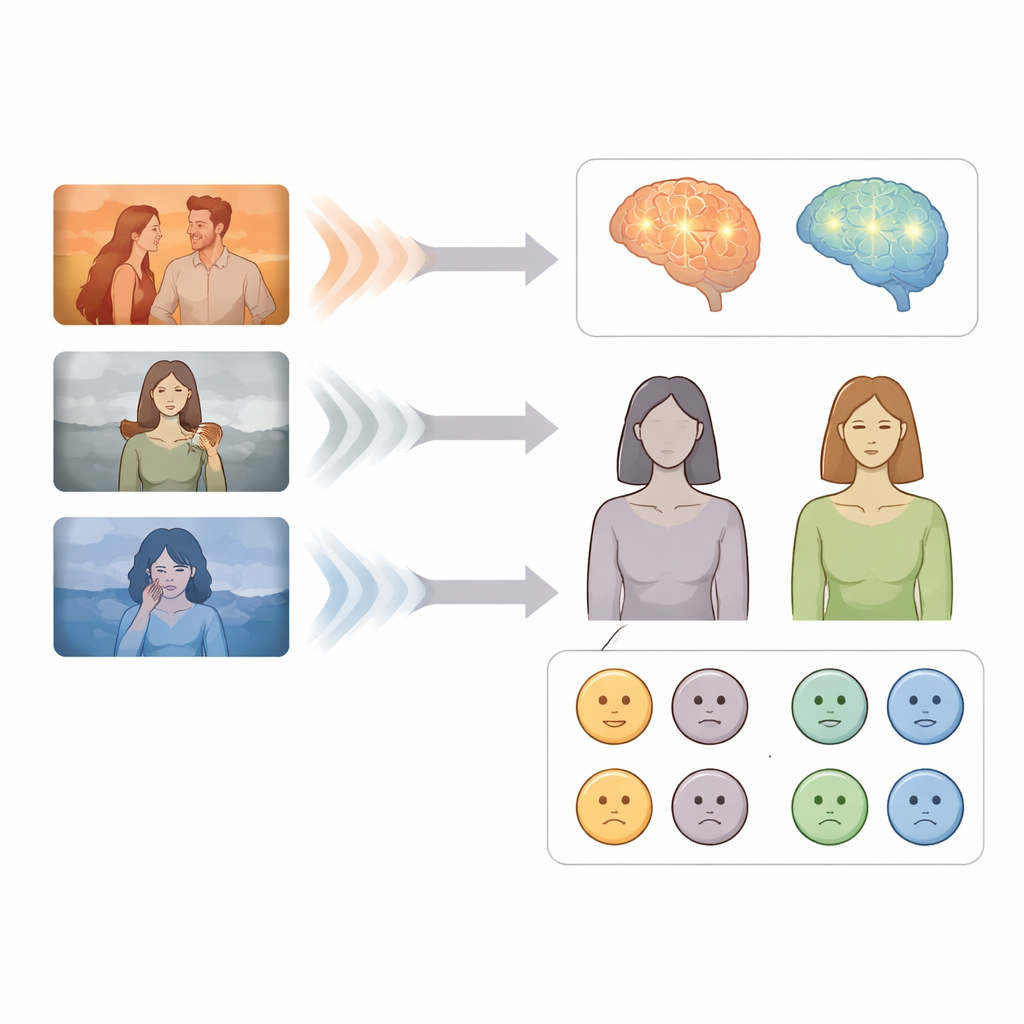
To capture emotional reactions in a way that feels close to everyday life, researchers used short film clips built around real positive, neutral, and negative experiences described by people with anorexia. One hundred forty-one young women took part: about half had current or recent anorexia, and half had no history of mental health problems. First, everyone completed a laptop-based task where their faces were video-recorded while they watched the clips and rated how they felt afterward. Then, in a brain scanner, they watched a different set of clips and again rated their mood. This design let the team compare outward expression, inner experience, and brain activity for the same kinds of emotional events.
Smiles That Fade, Feelings That Lag
Computer software tracked tiny muscle movements in each person’s face, focusing on combinations typically linked to smiling and frowning. Both groups reacted to the films in expected ways—showing more “smile” activity during positive clips and more “frown” activity during negative ones. But an important difference emerged over time. As positive clips unfolded, women without anorexia tended to grow more expressive, while those with anorexia showed flatter or fading positive expressions toward the middle and end of the films. Their responses to neutral and negative clips, however, were broadly similar to the comparison group. When asked to rate their mood, women with anorexia also reported feeling less uplifted by positive films, though their reactions to neutral and negative clips did not differ much from others.
Inside the Brain: Similar Pictures, Different Feelings
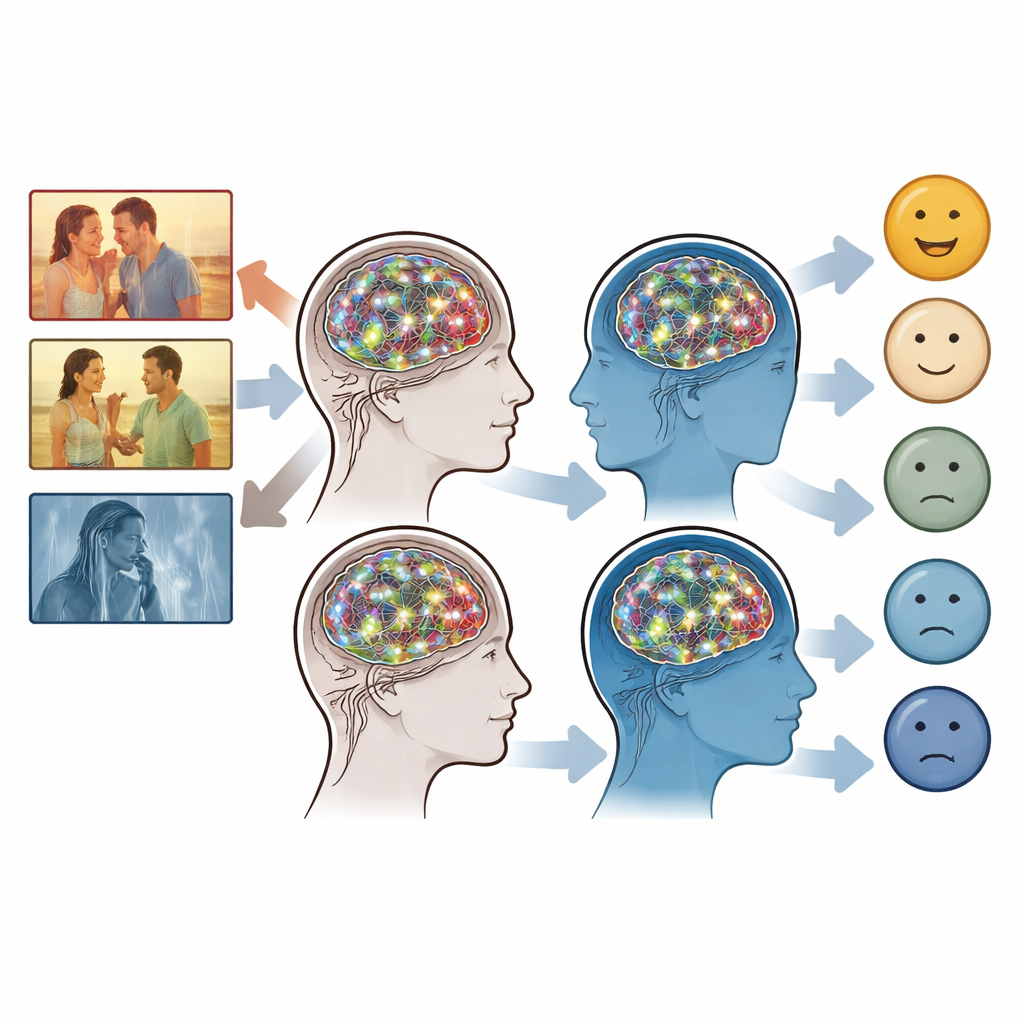
While participants lay in the MRI scanner, the films activated a broad network of brain areas involved in seeing, understanding, and feeling emotions, including regions in the visual, temporal, and frontal lobes. Emotional clips—both positive and negative—produced stronger brain responses than neutral clips, and the direction of information flow between brain regions shifted with film type. Yet, despite clear behavioural differences in facial expression and mood, the researchers did not find reliable brain activity differences between women with anorexia and their healthy peers. The overall pattern of brain responses to the films looked surprisingly alike across groups.
What Illness Severity Adds (and What It Doesn’t)
The team also asked whether the severity of eating disorder symptoms, low weight, anxiety, or depression within the anorexia group explained who reacted most differently. For the most part, these clinical factors did not predict facial expressions or brain responses. Only in the scanner task did higher depression and more severe eating-disorder symptoms relate to slightly worse mood, especially after positive and negative clips. This hints that how people with anorexia interpret and label their own feelings—rather than how their brains first register emotional scenes—may be especially tied to other symptoms like low mood.
Untangling Social Difficulties in Everyday Life
Put simply, this study suggests that women with anorexia may feel and show less joy in response to positive social moments, even though their brains respond to emotional scenes much like anyone else’s. Their smiles arrive more weakly and fade sooner, and they report feeling less positive, while their reactions to upsetting or neutral events are largely unchanged. Because others rely on facial cues to gauge warmth and connection, this blunting of positive expression could unintentionally strain friendships and family relationships, feeding into the loneliness many people with anorexia describe. At the same time, the lack of clear brain differences raises new questions: social challenges in anorexia may stem less from basic emotional “wiring” and more from patterns of inhibition, self-focus, and interpretation that shape how feelings are expressed and shared in everyday life.
Citation: Leppanen, J., Bailey, O., Halls, D. et al. Evoked emotions in anorexia nervosa: neural and behavioural correlates of social-emotional processing. Transl Psychiatry 16, 128 (2026). https://doi.org/10.1038/s41398-026-03819-8
Keywords: anorexia nervosa, emotional expression, social neuroscience, functional MRI, eating disorders