Clear Sky Science · en
Trajectory of depression occurrence before, during, and after dementia diagnosis: A population-based study
Why this matters for families and caregivers
Many families notice that a loved one who is developing memory problems also seems unusually sad, anxious, or withdrawn. This study asks a crucial question: how does depression unfold in the years before and after a dementia diagnosis? By tracking over ten thousand adults in Sweden across nearly two decades, the researchers show that depression is not just a side note to dementia—it has its own clear timeline, with important implications for when and how to offer help.
Following people over many years
The researchers used data from the Swedish Twin Registry, a large national resource that has followed tens of thousands of twins. From this group, they identified 2,677 people who developed dementia after age 65 and matched each of them with up to three similar people who did not develop dementia, for a total of 10,051 participants. They then linked these individuals to national medical records to find all doctor-diagnosed episodes of depression and dementia over an 18-year span. Instead of looking only at who had depression at a single starting point, they anchored time to the year of dementia diagnosis and examined depression year by year from ten years before to ten years after that moment.
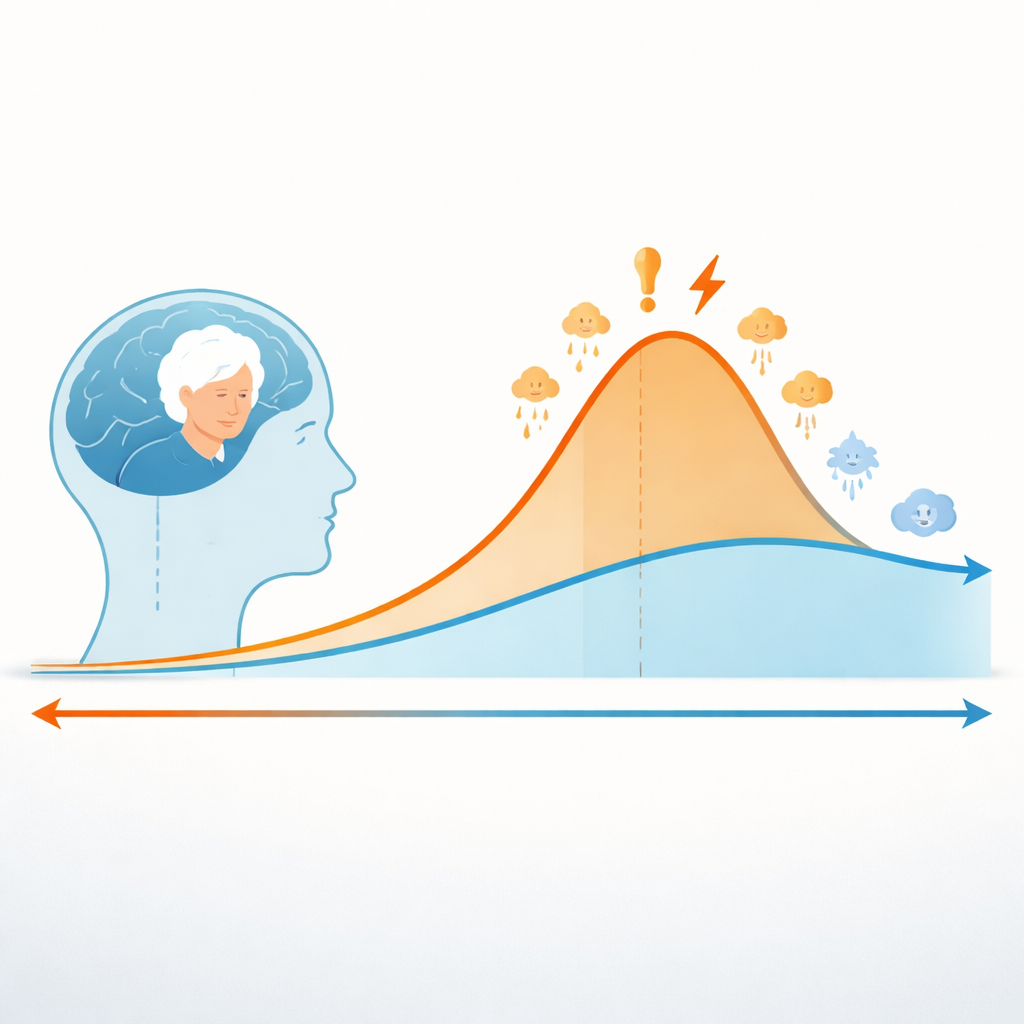
A wave of depression around diagnosis
When the team compared people with and without dementia, a striking pattern emerged. In the distant past—seven to ten years before diagnosis—depression rates were similar in both groups. But starting about six years before dementia was recognized, depression became more common among those who would go on to develop dementia. The risk rose steadily and was roughly ten times higher than in peers without dementia during the very year dementia was diagnosed. After diagnosis, depression remained more frequent for about four years before slowly declining toward the level seen in people without dementia. This suggests that depression is closely intertwined with the early and middle phases of dementia, rather than appearing randomly.
Who is most at risk before and after dementia?
The researchers also looked for characteristics that made depression more likely at different points in time among people with dementia. Before diagnosis, women were more than twice as likely as men to experience depression. Smoking, heavy drinking, and having had a stroke were also linked to higher odds of depression in this early phase. Interestingly, the oldest participants were somewhat less likely to be diagnosed with depression than those in their mid-60s, possibly because the most vulnerable people do not survive to very old ages or because depression is missed more often in the oldest patients. After dementia was diagnosed, the risk picture shifted. Living alone—being divorced, widowed, or otherwise single—stood out as a key social factor, and having a history of cancer also increased the likelihood of depression.
What this means for care and prevention
These findings point toward a two-way story. In the years leading up to dementia, depression may be both an early sign that the brain is changing and a potential contributor to further cognitive decline, possibly through effects on blood vessels, stress hormones, and brain inflammation. Once dementia is present, depression may reflect direct damage to mood-related brain circuits combined with the emotional impact of losing independence, coping with other illnesses, and facing life with fewer social supports. Either way, the study suggests that depression around the time of dementia is common, predictable, and important to treat. Paying close attention to mood changes years before memory problems become obvious, supporting healthy habits such as not smoking and limiting alcohol, and providing extra emotional and social support—especially for women, people living alone, and those with serious medical conditions—could help ease suffering across the entire course of dementia.
Take-home message
For older adults who develop dementia, depression tends to start rising about six years before diagnosis, peaks at the moment dementia is recognized, and stays higher than usual for several years afterward. Certain groups—women, smokers, heavy drinkers, stroke survivors, people who live alone, and those with cancer—are especially vulnerable. For families, clinicians, and policymakers, the message is clear: watching for and treating depression should be a core part of dementia care long before and long after the diagnosis is made.
Citation: Yang, W., Li, W., Sakakibara, S. et al. Trajectory of depression occurrence before, during, and after dementia diagnosis: A population-based study. Transl Psychiatry 16, 124 (2026). https://doi.org/10.1038/s41398-026-03817-w
Keywords: depression, dementia, older adults, mental health, risk factors