Clear Sky Science · en
A transcriptomic dimension of neuronal and immune gene programs within the subgenual anterior cingulate cortex in schizophrenia
Why this brain study matters
Schizophrenia and other major mental illnesses clearly run in families, yet it has been hard to see exactly how inherited risk alters the brain. This study looks deep inside a small region linked to mood and emotion, searching for patterns in how thousands of genes are switched on or off. By combining genetic risk, brain chemistry, and environmental exposures such as medications and drugs, the researchers uncover a hidden "direction" of gene activity that appears especially tied to schizophrenia.
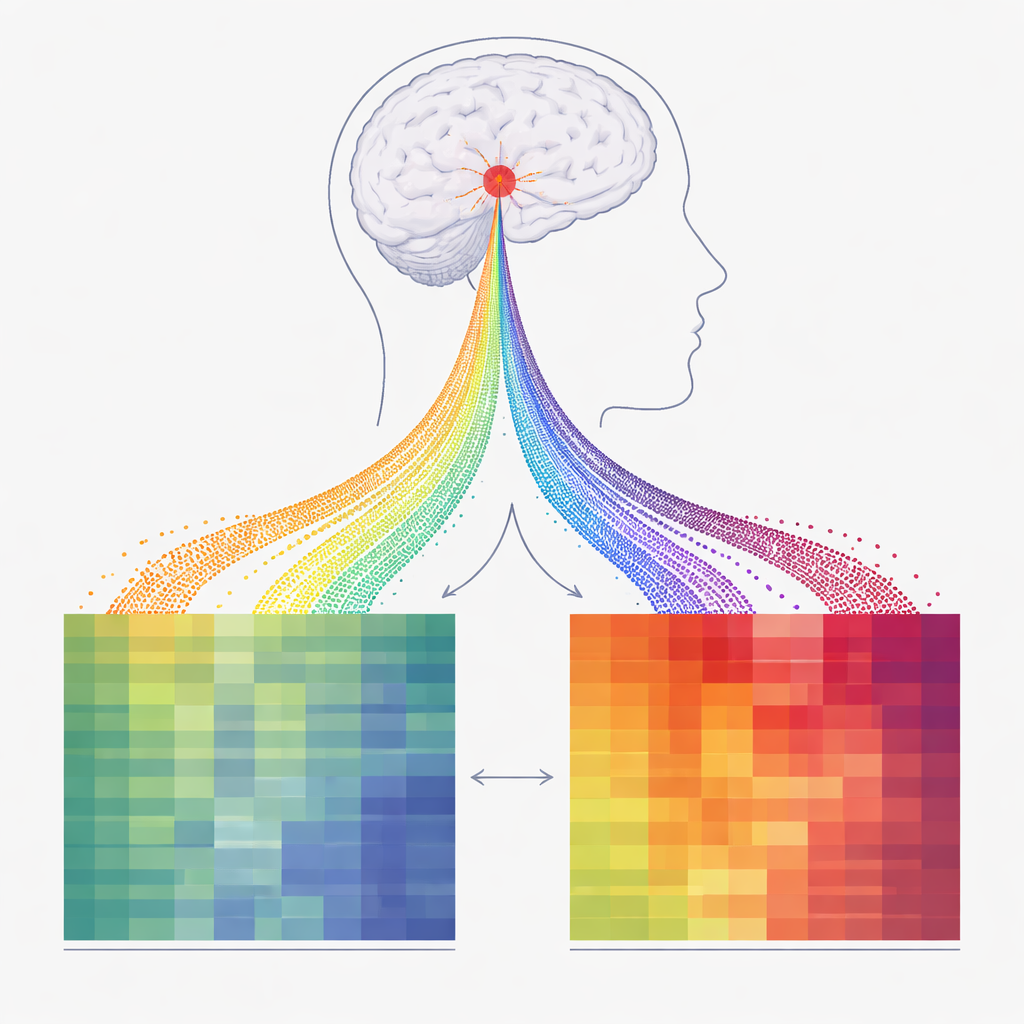
A spotlight on an emotional control hub
The work focuses on the subgenual anterior cingulate cortex, a tiny area tucked near the front and middle of the brain that helps regulate mood, decision-making, and responses to stress. This region has been implicated in depression, bipolar disorder, and schizophrenia, and is even a target for deep brain stimulation in severe depression. The team analyzed postmortem brain tissue from 185 people: some had schizophrenia, some had bipolar disorder or major depression, and some had no known psychiatric diagnosis. From each brain sample, they measured activity for nearly 19,000 genes and more than 54,000 transcript variants, which are slightly different versions of the same gene created by alternative splicing.
Finding hidden patterns in noisy data
Because brain gene activity is influenced by many factors — diagnosis, age, sex, medications, and recreational drugs — the signals of illness can easily be drowned out. Traditional methods often look at one gene at a time, asking whether it is higher or lower in patients than in controls. Here, the researchers instead used a multivariate method called group regularized canonical correlation analysis. In simpler terms, this technique looks for a combination of genes that, taken together, best lines up with clinical features such as diagnosis and toxicology results, while also accounting for the fact that some genes tend to move in concert. This approach revealed one particularly strong hidden axis of variation that tracked closely with whether a person had schizophrenia, and not with other diagnoses or measured drug exposures.
A tug-of-war between nerve cells and immune helpers
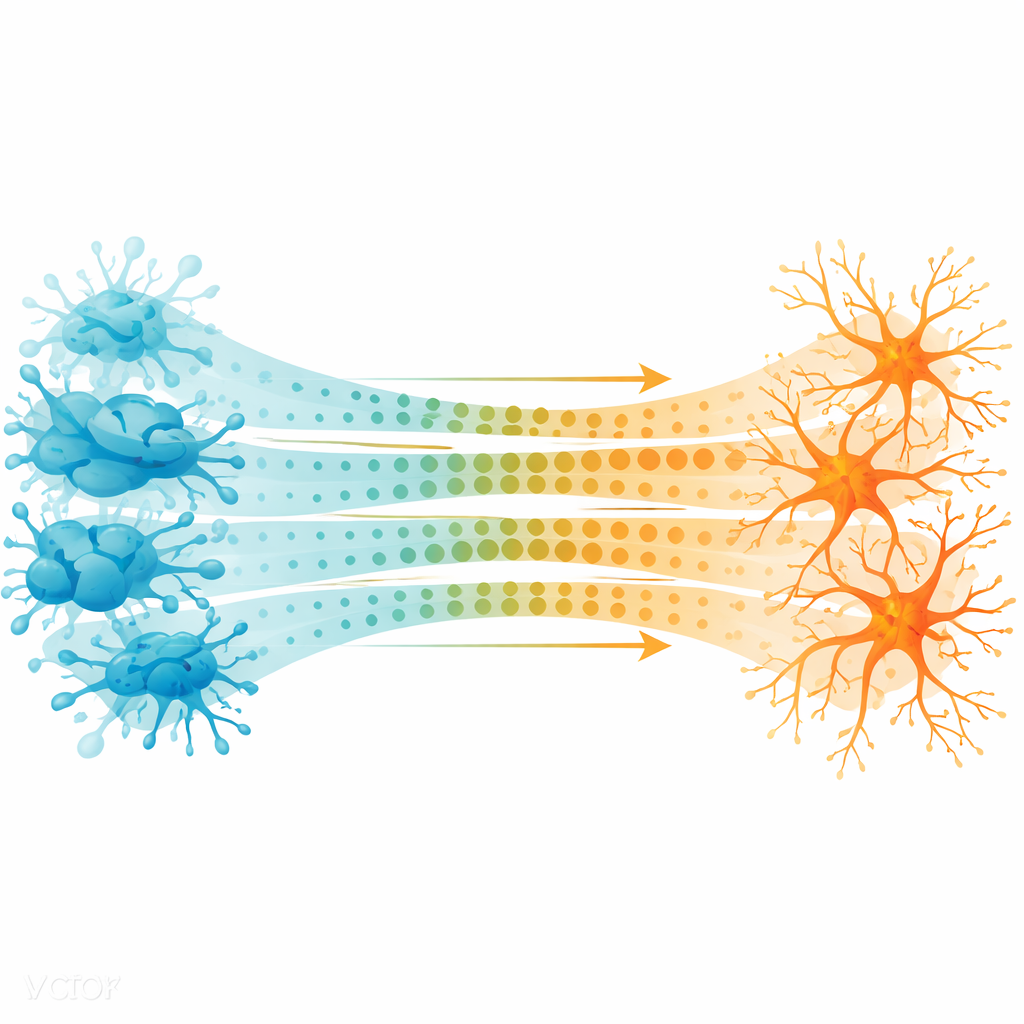
Along this schizophrenia-linked axis, genes did not simply rise or fall at random. At one end, genes typically active in neurons — the brain’s information-processing cells — were more strongly expressed. These included genes involved in synapses, vesicle transport, and the rapid signaling needed for communication between nerve cells. At the opposite end, genes typical of immune and support cells in the brain, such as microglia and astrocytes, tended to be dialed down, including pathways tied to immune responses and the tiny hair-like cilia that help move fluid and signals. In other words, the pattern looks like a gradient: a shift toward heightened neuronal programs paired with dampened immune and glial programs in the brains of people with schizophrenia.
Closer ties to genetic risk than standard tests
The team then asked whether this gradient lined up with genes that large genetic studies have linked to psychiatric disorders. Genes associated with schizophrenia in genome-wide association studies clustered strongly at the “neuron-up” end of the gradient, far more than would be expected by chance. Similar enrichment was not seen for risk genes linked to autism, major depression, or bipolar disorder. When the scientists repeated the comparison using standard one-gene-at-a-time methods, they did not see this same clear alignment with schizophrenia risk genes, and the biological pathway signals were weaker overall. This suggests that looking at coordinated gene patterns, rather than isolated differences, better captures the biology that genetic studies have been flagging for years.
Zooming in on gene variants inside the same gene
The researchers also examined transcript variants, the different “versions” of a gene produced by alternative splicing. Even when a gene as a whole did not stand out, individual variants sometimes showed strong but opposing shifts along the schizophrenia-linked gradient. For example, different forms of the same schizophrenia risk gene could move in opposite directions, with some more active and others less active in patients. These isoform-specific patterns hint that part of the illness risk may lie not just in how much of a gene is used, but in which version of it dominates in key brain regions.
What this means for understanding schizophrenia
For non-specialists, the take-home message is that schizophrenia in this emotion-related brain region is tied to a subtle but coordinated reshaping of gene activity: nerve-cell programs lean upward while immune and support-cell programs lean downward, and this pattern matches where genetic risk points us. Rather than searching for a handful of “on/off” genes, the study shows the value of mapping whole landscapes of gene activity, including the fine-grained variants within genes. Such multivariate views may bring us closer to translating genetic discoveries into concrete biological mechanisms — a necessary step toward more targeted and effective treatments for severe mental illness.
Citation: Smith, R.L., Mihalik, A., Akula, N. et al. A transcriptomic dimension of neuronal and immune gene programs within the subgenual anterior cingulate cortex in schizophrenia. Transl Psychiatry 16, 125 (2026). https://doi.org/10.1038/s41398-026-03814-z
Keywords: schizophrenia, brain gene expression, anterior cingulate cortex, neuronal and immune pathways, psychiatric genetics