Clear Sky Science · en
The effects of sub-chronic calcium treatment on ethanol-induced dopamine elevation and the alcohol deprivation effect in the rat
Why Blocking Alcohol’s Grip on the Brain Matters
Alcohol use disorder affects millions of people and is notoriously hard to treat, in part because alcohol changes the brain’s reward circuits in ways that drive craving and relapse. A medication called acamprosate can help some people stay sober, but how it works is still debated. This study asks a simple but important question: could ordinary calcium—the mineral better known for building bones—be a key piece of how acamprosate acts on the brain’s reward system and on relapse-like drinking?
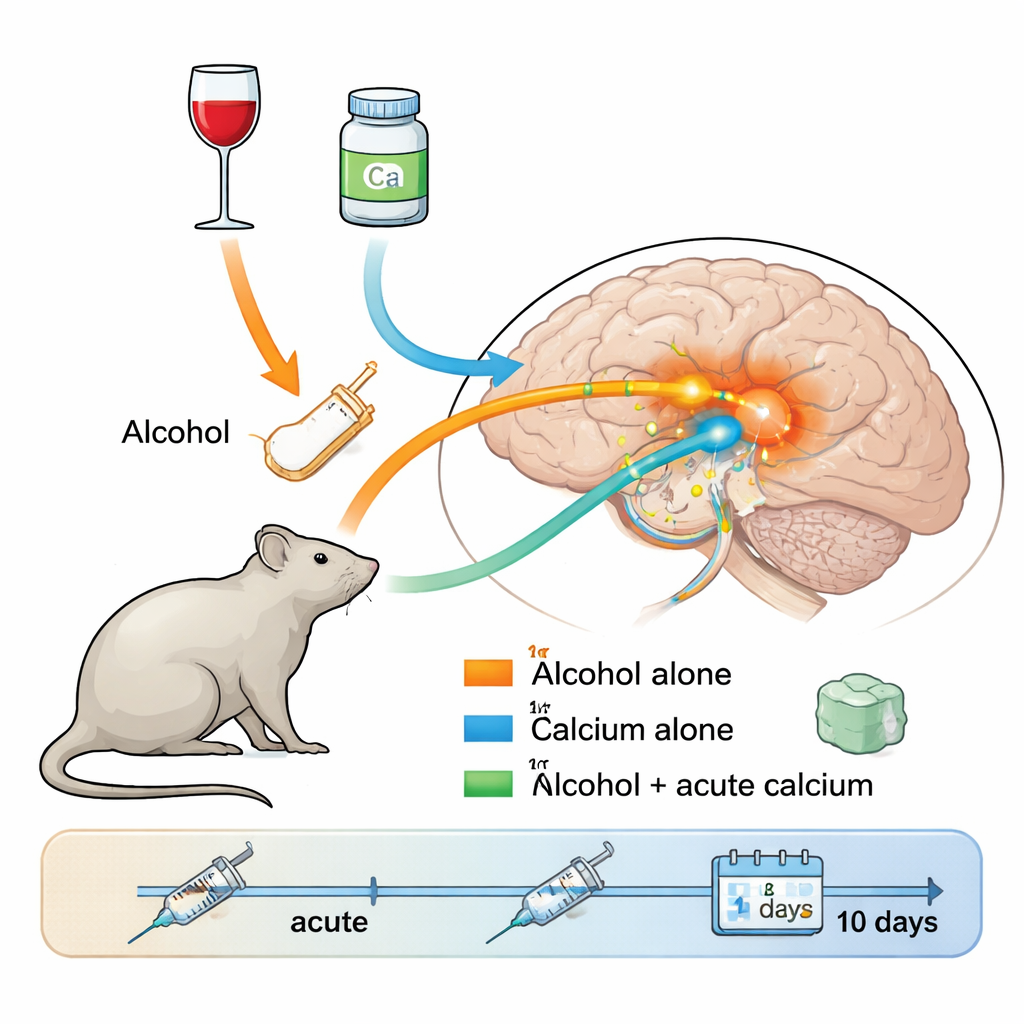
A Closer Look at Alcohol and the Brain’s Reward Hub
Alcohol boosts levels of the chemical messenger dopamine in a deep brain area called the nucleus accumbens, a central node of the reward system. This dopamine surge is thought to contribute to the pleasurable and reinforcing effects of drinking. Alcohol also raises levels of taurine, another signaling molecule that helps activate receptors involved in this dopamine release. Earlier work showed that acamprosate, which contains calcium, can itself raise dopamine and taurine and reduce alcohol intake in animals. The present study set out to separate the role of calcium from the rest of the drug and to see how calcium alone affects alcohol-driven dopamine signals and relapse-like drinking in rats.
Testing Calcium’s Immediate Impact on Alcohol’s Reward Signal
The researchers first used fine probes in the brains of male rats to measure dopamine and taurine in the nucleus accumbens in real time while they directly infused alcohol, calcium, or both into this region. Alcohol alone raised dopamine strongly. Calcium alone also raised dopamine, though more modestly. Strikingly, when rats received calcium before alcohol, alcohol could no longer push dopamine levels any higher, as if the dopamine system was already saturated. Alcohol still increased taurine under these conditions, but its peak was delayed and blunted. This pattern closely resembled earlier findings with acamprosate, suggesting that calcium by itself can reproduce key aspects of the drug’s effect on alcohol’s reward signal.
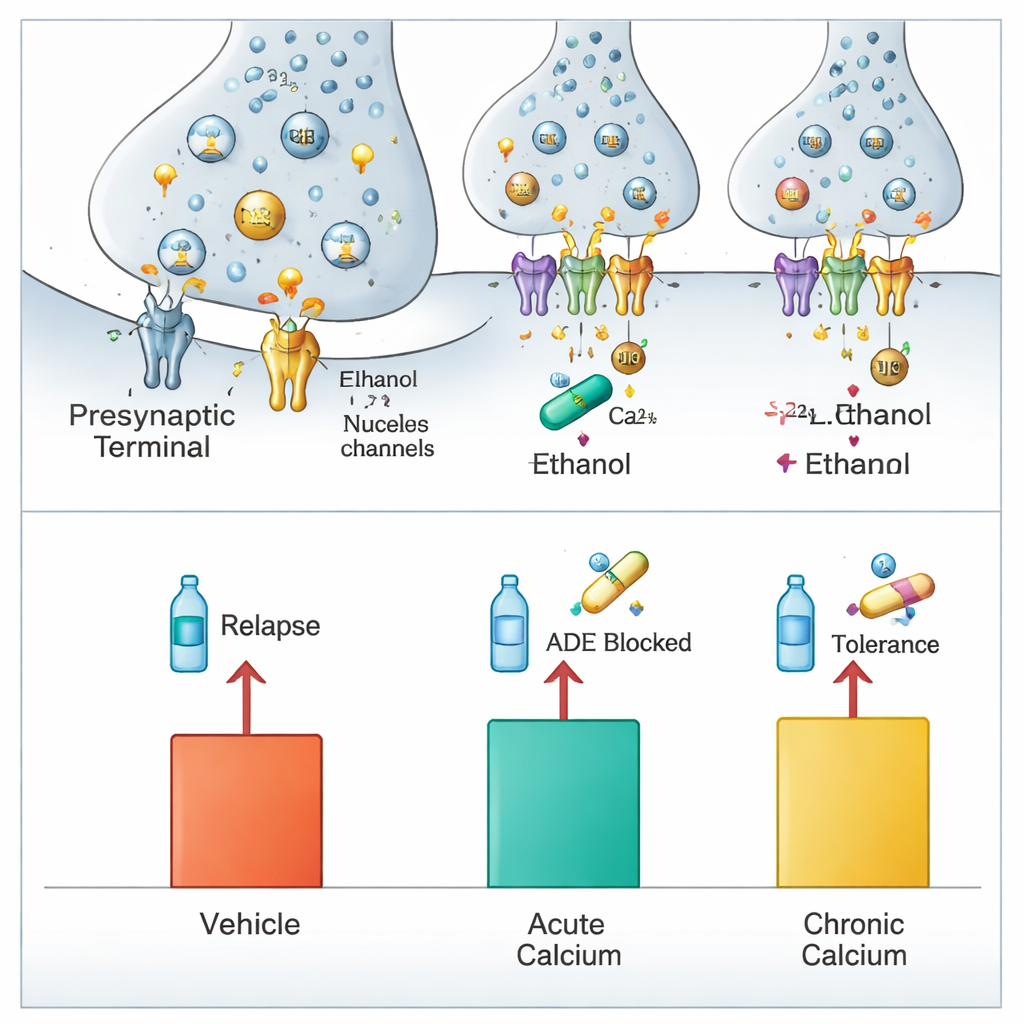
How Calcium Channels and Tolerance Change the Picture
To probe the mechanism further, the team blocked L-type calcium channels—tiny pores that let calcium ions enter nerve endings—using a drug called nicardipine. When these channels were blocked, baseline dopamine levels in the nucleus accumbens dropped, and neither calcium nor alcohol could raise dopamine any longer. This indicates that L-type calcium channels are crucial for both normal dopamine release and alcohol’s dopamine-boosting action. The scientists then asked what happens if rats receive calcium repeatedly. After ten days of daily calcium injections, an additional calcium dose no longer raised dopamine in the reward center, even though it still worked in animals that had not been pretreated. In other words, the brain appeared to develop tolerance to calcium’s dopamine-boosting effect.
From Brain Chemistry to Relapse-Like Drinking
Changing brain chemicals is only meaningful if it alters behavior, so the researchers used a well-established “alcohol deprivation” model of relapse. Rats were allowed to drink alcohol for weeks, then had it taken away, and finally were given access again. Normally, this leads to a spike in drinking—an alcohol deprivation effect that mimics relapse. In rats given a single calcium injection just before alcohol was reintroduced, this relapse-like spike disappeared: their drinking did not increase above baseline. But in rats that had been treated with calcium daily for ten days, the relapse-like spike in drinking returned, much like in untreated animals. This behavioral tolerance mirrored the loss of calcium’s effect on dopamine seen in the brain recordings.
What This Could Mean for Treating Alcohol Problems
Put simply, the study suggests that a short burst of extra calcium can blunt alcohol’s ability to crank up the brain’s reward signal and can temporarily block relapse-like drinking in rats. However, when calcium is given repeatedly, the brain adapts, the dopamine system stops responding, and the protective effect on relapse is lost—much like the tolerance seen with long-term acamprosate treatment in animals. These findings point to calcium and L-type calcium channels as key players in how alcohol hijacks the brain’s reward circuitry and how some treatments might counteract it, while also warning that the brain’s capacity to adapt may limit the long-term impact of calcium-based strategies.
Citation: Ademar, K., Danielsson, K., Söderpalm, B. et al. The effects of sub-chronic calcium treatment on ethanol-induced dopamine elevation and the alcohol deprivation effect in the rat. Transl Psychiatry 16, 20 (2026). https://doi.org/10.1038/s41398-026-03804-1
Keywords: alcohol use disorder, dopamine, calcium, relapse, nucleus accumbens