Clear Sky Science · en
Use of medications with pharmacogenomic guidelines and adverse outcomes in hospitalised older patients: a retrospective cross-sectional study
Why your genes can matter when you go into hospital
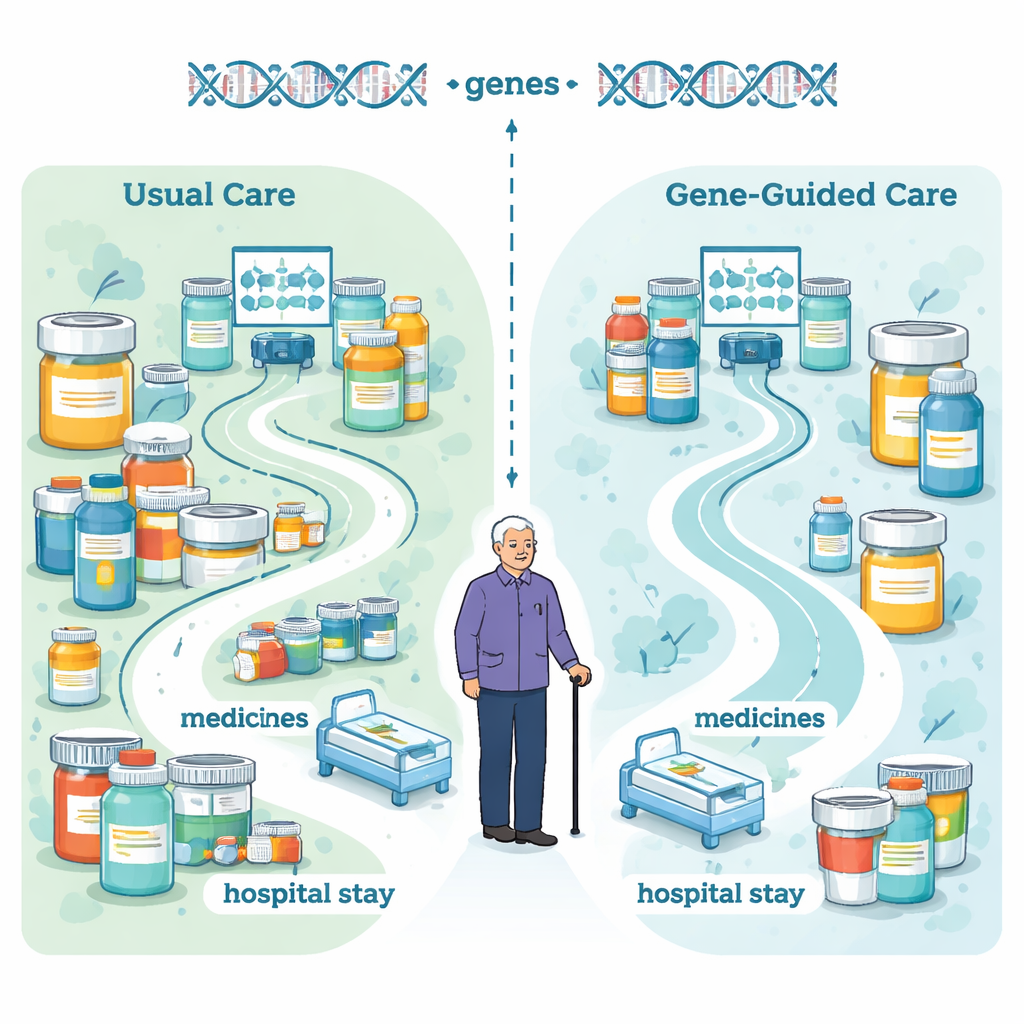
Many older people take a long list of medicines, and some end up in hospital because of side effects or drug mix‑ups. This study asks a simple but important question: could genetic differences that affect how we handle medicines be linked to longer hospital stays and more return trips to hospital, especially in very frail older adults? Understanding this connection could help doctors choose and dose medicines more safely as we age.
Medicines, age and hidden risks
Older adults are more likely than younger people to experience harmful reactions to medicines. They often live with several long‑term conditions, which means they need many different pills. This “polypharmacy” can strain the body and raise the chance that one or more drugs will cause trouble. On top of this, frailty – a reduced ability to recover from illness or stress – makes it harder for older bodies to cope when something goes wrong, such as a bad reaction to a medicine.
How genes influence common drugs
Pharmacogenomics looks at how small genetic differences change the way our bodies process medicines. For many commonly used drugs, expert groups have drawn up guidelines that say, in effect, “if a patient has this gene pattern, adjust the dose or pick a different medicine.” The researchers focused on these medicines with pharmacogenomic guidelines, asking how often they were used when people aged 65 and over were admitted to hospital in one large English hospital trust, and whether their use was linked to important outcomes: how long people stayed, whether they came in as an emergency, and whether they needed to come back again.
What hospital records revealed
Looking at nearly 60,000 admissions for more than 35,000 older patients in 2018–2019, the team found extensive medicine use: most patients were on at least five drugs. Among more than 1,400 different medicines, 63 had recognised gene‑based prescribing advice, and 12 were classed as high‑risk because they are often involved in serious side effects. Over four in five admissions involved at least one medicine with pharmacogenomic guidelines. Drugs such as cholesterol‑lowering statins, acid‑suppressing tablets, and painkillers like codeine were particularly common. Unplanned, or emergency, admissions not only involved more medicines overall, but also a higher number of these gene‑sensitive medicines per patient than planned admissions.
Frailty, emergency visits and staying longer
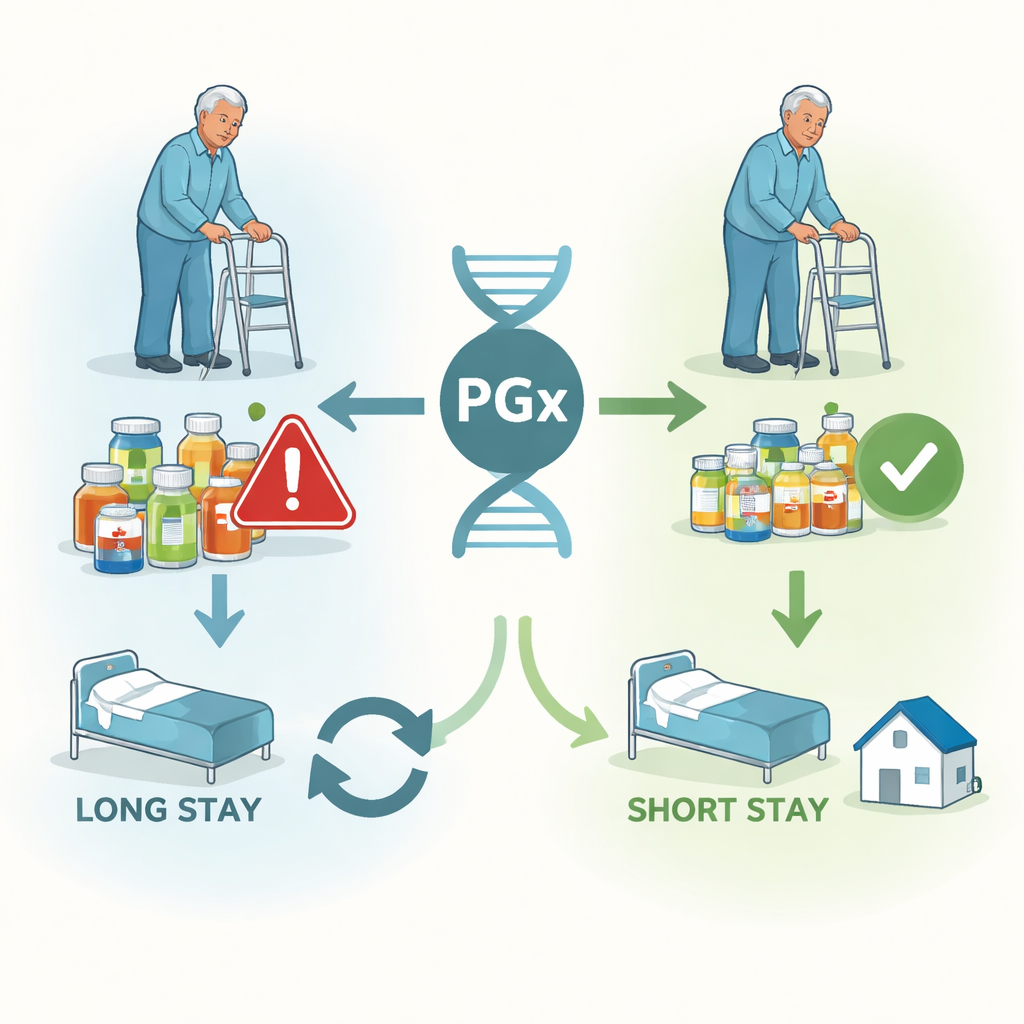
The researchers then used statistical models to see whether the number of gene‑sensitive medicines a person was taking was linked with worse outcomes, after accounting for age, sex, ethnic group, frailty, and total number of medicines. Frailty came out as the strongest overall predictor of problems: frailer patients were much more likely to have emergency admissions, to stay in hospital longer, and to return to hospital. But even when these factors were considered, each extra medicine with pharmacogenomic guidance was associated with a longer hospital stay, a higher chance of an emergency admission, and more repeat admissions. This pattern was clearest in patients with high levels of frailty, where models that included gene‑sensitive medicines fitted the data better than models that ignored them.
What this could mean for patient care
The study could not prove that gene‑drug mismatches directly caused any one admission or prolonged stay, because it did not include actual genetic test results or detailed clinical reviews of each case. It does, however, show that very frail older adults are commonly exposed to medicines where genes are known to matter, and that greater use of these drugs tracks with poorer outcomes. For a layperson, the takeaway is that your medicine list and your underlying frailty are closely linked to how you fare in hospital – and that your genes may be an extra, currently underused piece of the safety puzzle. Bringing pharmacogenomic testing into routine care, especially for frail older people, could help doctors fine‑tune treatment, avoid some bad reactions, shorten hospital stays and reduce the need to come back.
Citation: David, V., McInerney, C.D., Tomlinson, J. et al. Use of medications with pharmacogenomic guidelines and adverse outcomes in hospitalised older patients: a retrospective cross-sectional study. Pharmacogenomics J 26, 3 (2026). https://doi.org/10.1038/s41397-026-00396-3
Keywords: pharmacogenomics, older adults, frailty, polypharmacy, hospital admissions