Clear Sky Science · en
Evaluating and refining the wheelchair mobility activity log (WC-MAL): a comprehensive study of validity and reliability
Why Wheelchair Movement in Daily Life Matters
For many people living with spinal cord injury, a manual wheelchair is the key to getting around, going to work, seeing friends, and handling everyday tasks. But until recently, health professionals lacked a precise way to measure how people actually use their wheelchairs in real-world settings, not just in a clinic. This study refines and tests a detailed interview tool, the Wheelchair Mobility Activity Log (WC-MAL), to make sure it can reliably capture how often, how well, and how independently people move through their daily lives using a wheelchair.
A Closer Look at Everyday Mobility
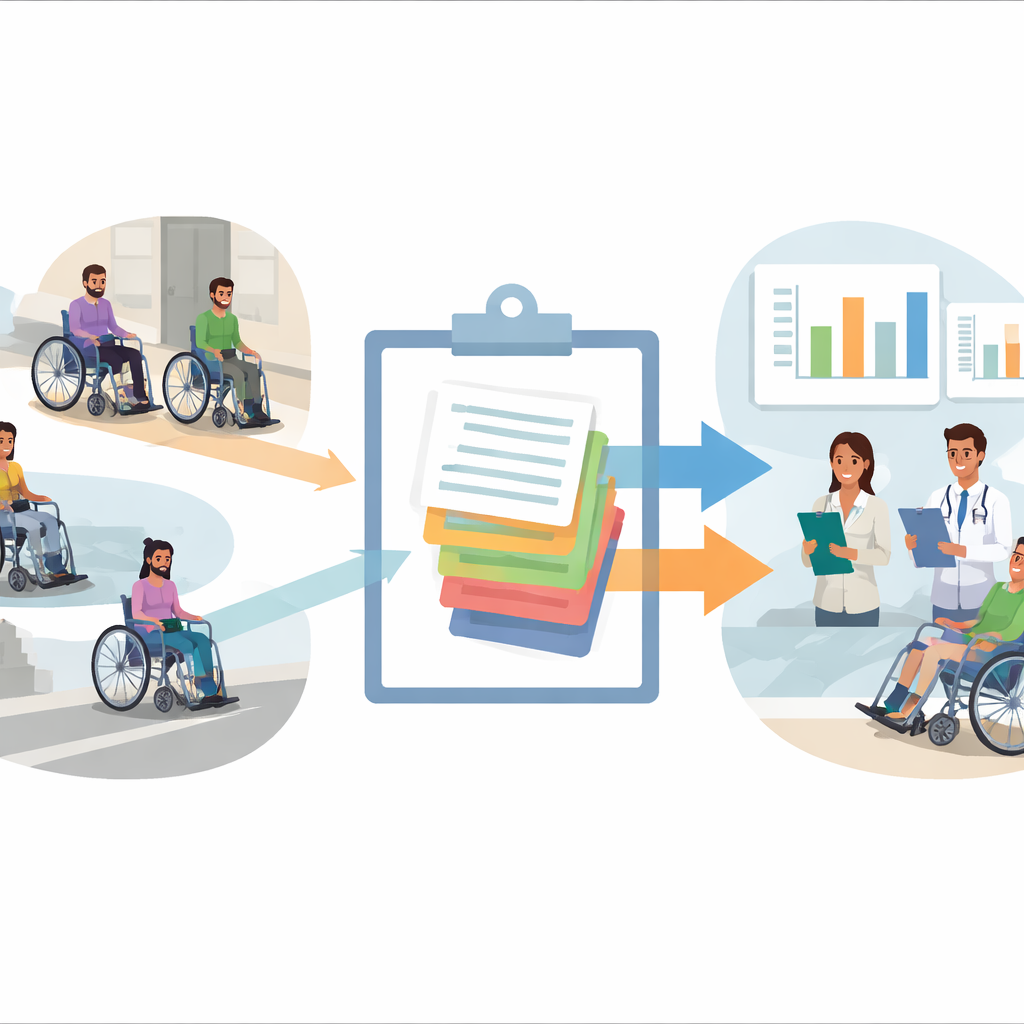
The WC-MAL is a guided interview that asks wheelchair users with spinal cord injury to recall how they moved around over the past week. It covers 23 common activities, such as moving indoors, getting in and out of a car, going up ramps, or navigating crowded places. For each activity, people report how often they did it, how well they felt they performed it, and how much help they needed, each scored from 0 (not done or unable) to 5 (very frequent, very good, or fully independent). The goal is to translate a person’s lived experience—what they actually do at home and in the community—into numbers that clinicians and researchers can use.
Putting the Questionnaire to the Test
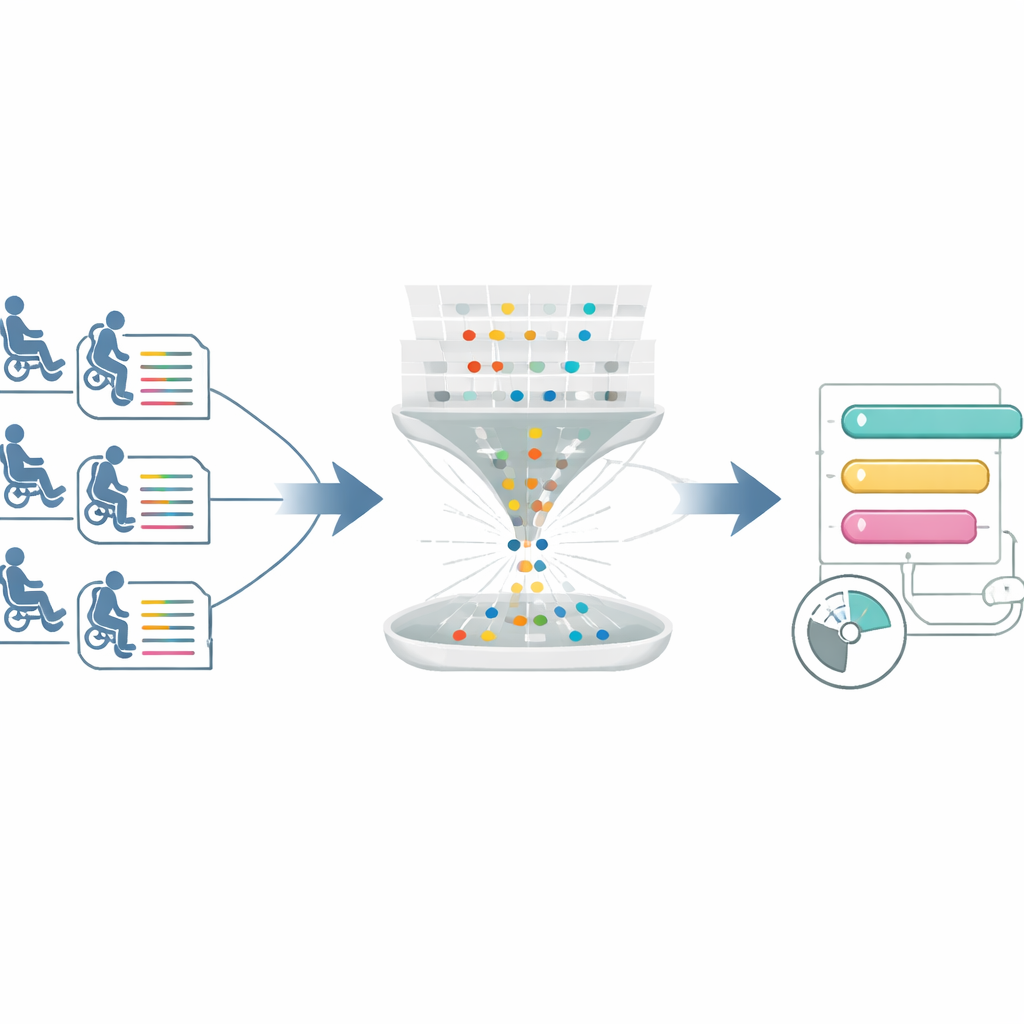
To find out whether the WC-MAL truly measures what it claims to, the researchers worked with 60 adults with spinal cord injury who rely on manual wheelchairs. Two trained physiotherapists interviewed each participant by video call, two weeks apart, and were kept blind to each other’s scores. The team then used a sophisticated statistical approach, known as Rasch analysis, to check whether the questions all pointed to a single underlying ability—wheelchair mobility—and whether the scale could tell apart people with different levels of skill. They also checked if the items behaved fairly for different groups, such as men and women or people with different levels of injury.
Refining the Questions for Clearer Results
The Rasch analysis showed that three questions—about sitting for long periods, transferring to and from the toilet, and carrying large loads on the back of the chair—did not fit well with the rest of the scale. Removing these items created an updated version, called WC-MAL 2.0, with 20 activities. This revised version showed strong ability to separate people into distinct levels of wheelchair mobility, and the remaining questions formed a single, coherent measure on each of the three scales (frequency, performance, and assistance). The items lined up from easier tasks, like moving indoors or reaching forward at shoulder height, to demanding ones such as climbing stairs or negotiating uneven terrain, matching clinical expectations about which skills are hardest.
Checking Reliability and Real-World Signals
Beyond structure, the team asked whether different raters would give similar scores, and whether the WC-MAL matched an objective measure of movement. Inter-rater reliability was high: when both physiotherapists interviewed the same person, their scores agreed closely across all three scales. The items within each scale also held together well statistically, signaling good internal consistency. For a subgroup of 33 participants, the researchers went a step further by attaching a small device, a tachometer, to a wheelchair wheel at home for three days. This device counted wheel rotations as a simple yardstick of how much the chair was actually pushed. Scores from the WC-MAL 2.0 frequency scale strongly tracked with these rotation counts, suggesting that what people reported in the interview closely matched their real-world wheelchair use.
What This Means for Everyday Care
In practical terms, WC-MAL 2.0 offers clinicians and researchers a trustworthy way to capture how manual wheelchair users with spinal cord injury move through their daily environments. It can highlight which activities are most difficult, how independent someone is, and how changes in health or training affect real-life mobility over time. While future work still needs to test how well the tool detects change, adapts to different cultures, and compares with other measures, this refined interview already stands out as one of the most promising options available for understanding wheelchair mobility where it matters most—in everyday life.
Citation: dos Santos, T.R., Ilha, J., Rodrigues, C.L.D. et al. Evaluating and refining the wheelchair mobility activity log (WC-MAL): a comprehensive study of validity and reliability. Spinal Cord 64, 279–287 (2026). https://doi.org/10.1038/s41393-026-01170-9
Keywords: wheelchair mobility, spinal cord injury, rehabilitation assessment, patient-reported outcomes, Rasch analysis