Clear Sky Science · en
Implementing body composition assessment into clinical practice in patients with acute spinal cord injury- a pilot feasibility study
Why the Shape of the Body Matters After Spinal Injury
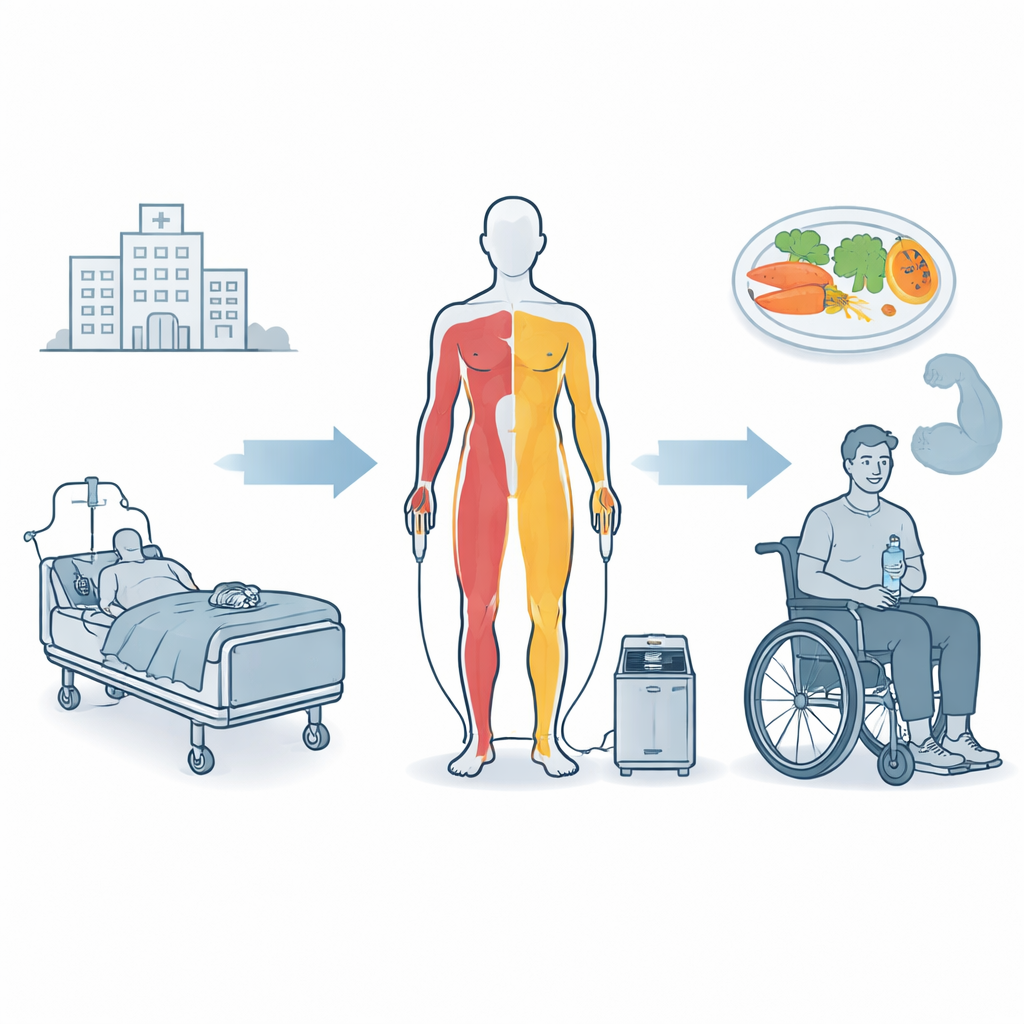
When someone experiences a spinal cord injury, life changes overnight. Beyond learning to move and live in new ways, their body itself begins to change on the inside—muscle melts away, fat can creep up, and energy needs shift dramatically. This study explores whether hospitals can realistically track these hidden body changes in everyday care, and use that information to guide food and exercise advice that helps people recover better and stay healthier in the long term.
A New Road Map for Nutrition in Rehab
The researchers designed a structured "care pathway" for people with new, traumatic spinal cord injuries treated at a specialist service in Australia. Instead of relying only on body weight, the pathway builds in regular checks of body composition—how much of the body is muscle versus fat—using a bedside technique called bioimpedance. These measurements are then fed into formulas tailored for spinal cord injury to estimate how much energy a person actually needs, so dietitians can adjust meals and nutrition support over time. The pathway also specifies when patients should be seen, who should do what, and how often reviews should occur from the early hospital phase through rehabilitation.
Testing What Works in the Real World
To see if this plan could work in the hustle of a real hospital, the team followed 21 adults with new spinal cord injuries who agreed to receive care according to the pathway. Most had tetraplegia (affecting both arms and legs), and almost half were overweight or obese by standard body mass index cutoffs. Staff were trained to perform the body composition measurements, calculate energy needs, and give individualized feedback during dietitian or exercise sessions. The researchers then tracked how many patients actually received these measurements and reviews on time, and interviewed both patients and clinicians about their experiences.
What Patients and Clinicians Experienced
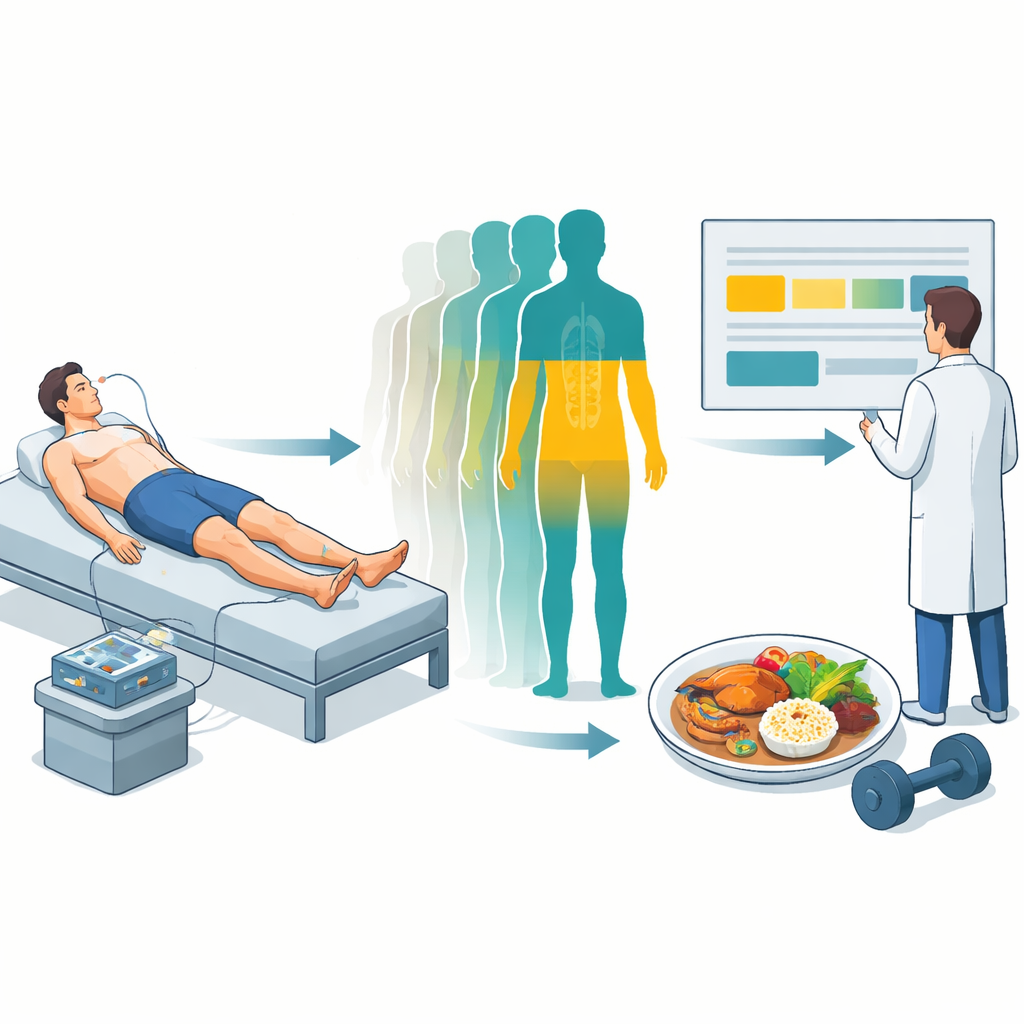
Adherence to the key parts of the pathway was mixed but promising. Initial nutritional assessments happened on time for most patients, and about seven in ten received regular dietitian reviews and goal-setting sessions during rehab. Around two-thirds of the scheduled body composition measurements were completed, though fewer than half of patients received every single measurement at the planned time. Practical barriers included patients being too unwell, confined to bed for pressure injuries, away from the ward, or clashes with staff availability. Still, both patients and clinicians largely viewed the measurements as helpful rather than a burden, especially when results were shown as simple graphs over time.
How Knowing the Inside Story Changes Choices
Interviews revealed that seeing their own muscle and fat trends made the situation feel more real to patients. Many were already worried about gaining weight or losing strength, and the numbers confirmed their impressions. Some found it motivating to see muscle gains after starting gym work or walking practice; others adjusted their eating—cutting back on portions or carbohydrates, and adding more protein, fruits, and vegetables—to protect muscle and avoid excess fat. Clinicians felt more confident using spinal cord injury–specific energy estimates instead of generic rules, and used body composition trends to shape conversations about physical activity, weight management, and long-term health risks.
Barriers, Tweaks, and Next Steps
Despite enthusiasm, the pathway was not perfect. Staff noted that collecting measurements, entering data, generating graphs, and then finding time to explain results often clashed with other urgent tasks. Patients, dealing with pain, fatigue, and heavy therapy schedules, sometimes struggled to absorb feedback. Some people with very high-level injuries had limited options for exercise, which made conversations about rising body fat emotionally difficult. The team suggested practical fixes: fewer measurements per week, focusing on patients most likely to benefit, using simpler devices, and adding mobile tools so results could be shared in real time at the bedside.
What This Means for Life After Injury
Overall, the study shows that regularly tracking muscle and fat after spinal cord injury is both doable and valued by patients and staff, even if not every step runs perfectly. The new care pathway helped move nutrition and body composition from an afterthought to a central part of rehabilitation, giving people clearer information to guide what they eat and how they move. With some streamlining and careful targeting, this approach could help more patients leave the hospital not only alive and stable, but better prepared to protect their strength, manage their weight, and guard against long-term health problems.
Citation: Desneves, K.J., Fittall, B., Elson, C. et al. Implementing body composition assessment into clinical practice in patients with acute spinal cord injury- a pilot feasibility study. Spinal Cord 64, 266–278 (2026). https://doi.org/10.1038/s41393-026-01169-2
Keywords: spinal cord injury, body composition, nutrition care, rehabilitation, bioimpedance