Clear Sky Science · en
ReMiDY (rehabilitation in mild stable degenerative cervical myelopathy): protocol for feasibility randomized controlled trial
Why this matters to people with neck and hand problems
As we get older, wear and tear in the neck can squeeze the spinal cord and lead to a condition called degenerative cervical myelopathy. People may notice neck pain, stiffness, weakness, or clumsiness in their hands, yet many are told to simply “wait and see” or consider surgery. This article describes a planned study that will test whether a carefully designed exercise and education program can offer a safe, structured alternative to simple checkups alone for people with mild, stable forms of this condition.
A common problem with few non-surgical options
Degenerative cervical myelopathy is now recognized as the most frequent non-traumatic injury to the spinal cord. It develops when age-related or inherited changes in the bones and discs of the neck narrow the space around the spinal cord. Current guidelines advise surgery for people with more serious or worsening disease, but for those with milder symptoms the advice is uncertain: they may be offered surgery or supervised rehabilitation, even though the supporting evidence is weak. Surgery in mild cases often brings only small improvements and still carries a real risk of complications. At the same time, there have been no high-quality trials of structured rehabilitation as an alternative to surgery. International experts have therefore ranked the development of new rehabilitation approaches for this group as a top research priority.
A trial built to test the waters first
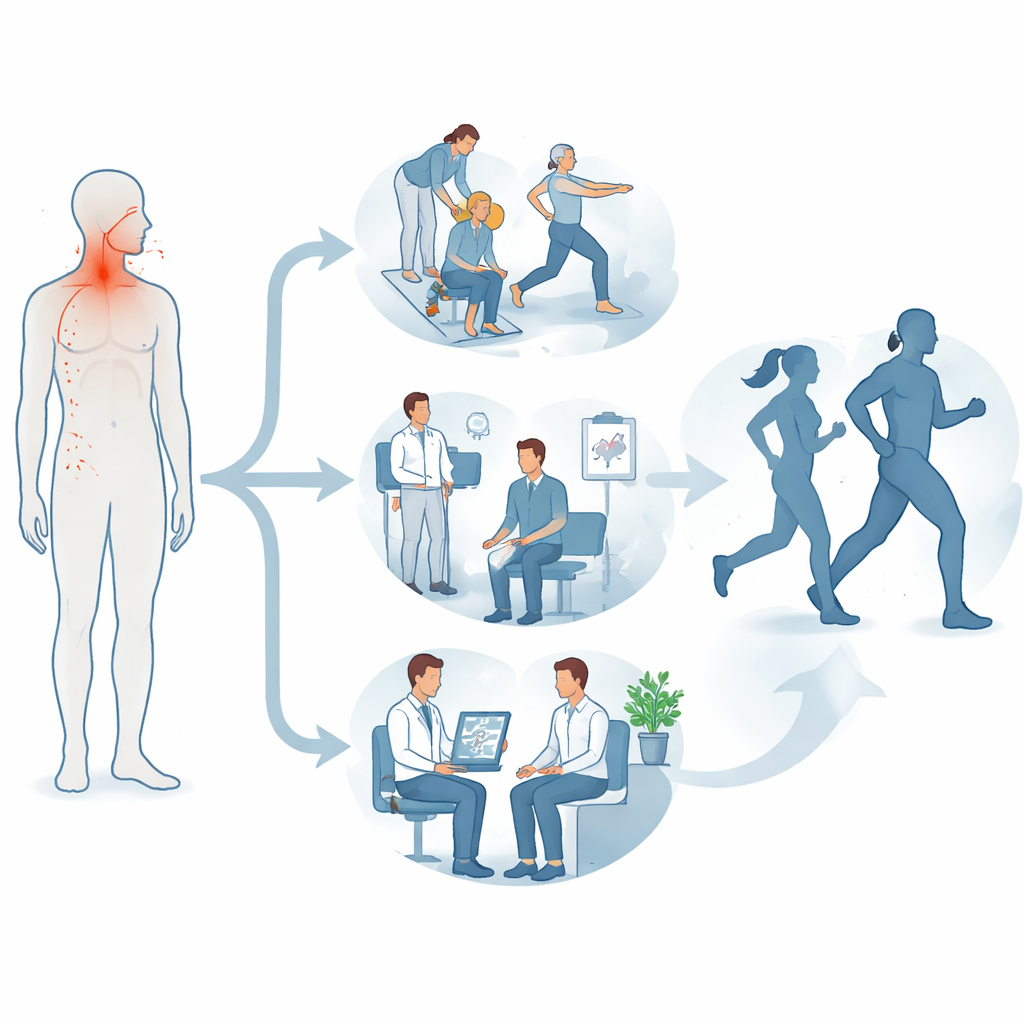
The ReMiDY study is a “feasibility” trial, meaning its main purpose is to find out whether running a larger, definite trial is practical and worthwhile. The researchers, based at the national neurosurgical center in Dublin, will recruit 24 adults with mild, stable myelopathy from routine outpatient clinics. All participants will have a confirmed diagnosis based on symptoms, signs on examination, and scans showing pressure on the spinal cord. People who urgently need surgery, have other confusing neurological problems, or cannot commit to a 12-week program will not be included. Those who join will be randomly assigned to one of two groups, reflecting the real-world choices: structured physical rehabilitation, or standard clinical surveillance, which is the current usual care for patients managed without surgery.
What the exercise program actually involves
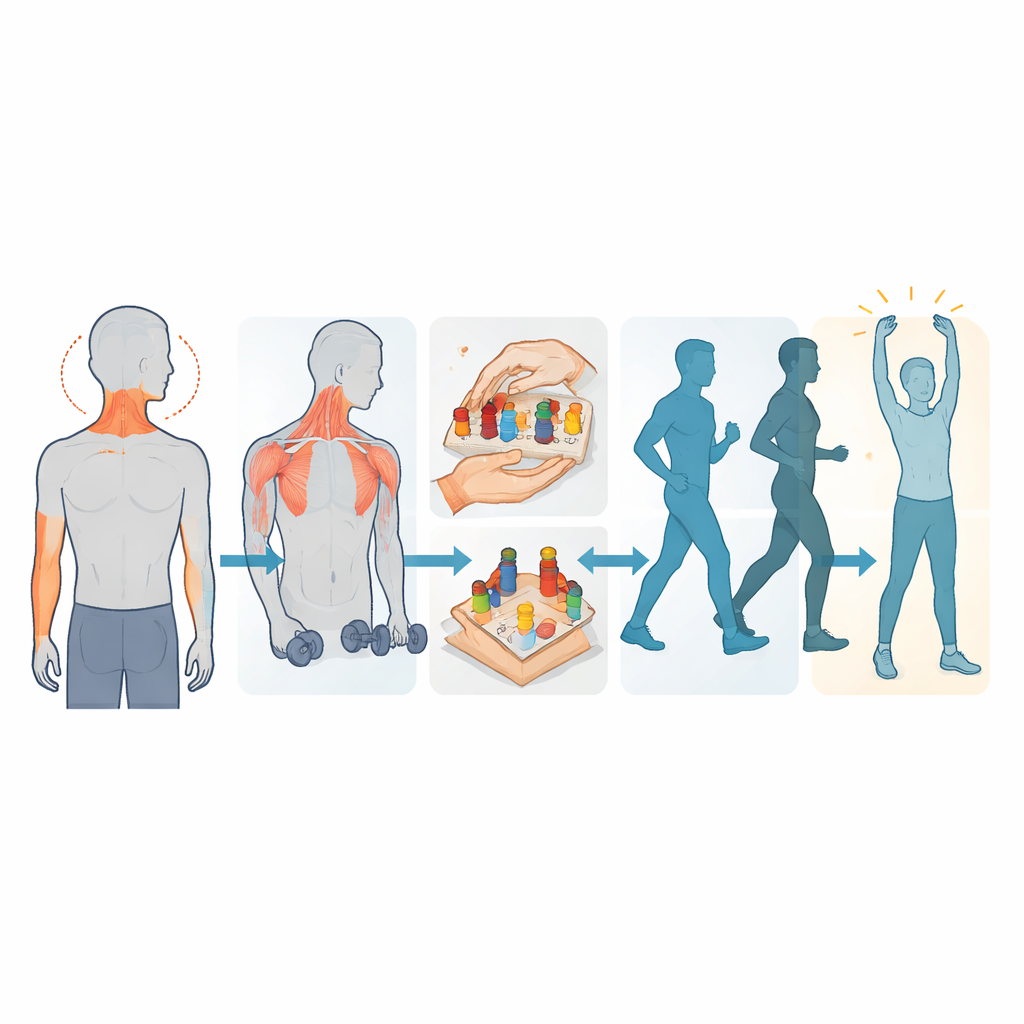
Everyone in the study will receive clear information about the condition, what changes to watch for, and when to contact their surgical team. People in the clinical surveillance group will attend one education session and then return for review after 12 weeks. Those in the rehabilitation group will attend up to ten one-to-one sessions with a specialist physiotherapist over the same period, along with a home exercise plan. The program is tailored to the person’s specific problems and combines several elements: gentle neck movement exercises, progressive strengthening of neck, shoulder, and arm muscles, tasks to train hand and finger function, and support to increase overall physical activity. The design of the program draws on imaging studies, biomechanics, and exercise science, as well as successful approaches used in stroke, spinal cord injury, and nerve root pain in the neck.
How the researchers will judge success
Instead of asking whether the program “works” outright, this first study asks a series of practical questions. How many patients with mild, stable disease pass through the clinic? How many are eligible, and how many agree to take part? Do they stick with the sessions and the home exercises? Are the tests and questionnaires acceptable, or too burdensome? To answer these, the team will track recruitment, attendance, and drop-out rates, and will interview both patients and physiotherapists about their experiences. They will also measure a wide range of changes over 12 weeks: neck and arm pain, everyday function, hand dexterity, grip strength, neck movement and strength, walking and balance, and typical daily activity levels using a wrist-worn motion sensor. Detailed scan information will be collected at the start to characterize the spinal cord changes in each participant.
Looking ahead to better choices for patients
By the end of the ReMiDY study, the researchers aim to know whether a full-scale trial comparing structured rehabilitation with usual checkups is realistic, safe, and acceptable to patients and clinicians. They will use the results to fine-tune the program, estimate how many people would be needed for a definitive trial, and set clear rules for when to proceed. For people living with mild degenerative cervical myelopathy, this work is an essential step toward having stronger evidence on whether a well-planned, supervised exercise approach can protect function and quality of life without immediately turning to surgery.
Citation: Treanor, C., Bolger, C. & Malone, A. ReMiDY (rehabilitation in mild stable degenerative cervical myelopathy): protocol for feasibility randomized controlled trial. Spinal Cord 64, 296–302 (2026). https://doi.org/10.1038/s41393-025-01148-z
Keywords: degenerative cervical myelopathy, neck rehabilitation, spinal cord compression, physiotherapy trial, non-surgical treatment