Clear Sky Science · en
Potent and selective LSD1 inhibitor DC551040 reveals a promising combination therapy for AML with insight into epigenetic dysregulation
Rewiring Cancer’s Control Switches
Acute myeloid leukemia (AML) is an aggressive blood cancer where immature white blood cells crowd out healthy ones. Many patients relapse or cannot tolerate harsh chemotherapy, so researchers are searching for smarter drugs that target the disease’s inner control switches rather than simply killing dividing cells. This study introduces a new experimental pill, DC551040, that aims at one such switch and shows how pairing it with an existing leukemia drug could make treatment more powerful and more durable.
A New Precision Tool Against Leukemia
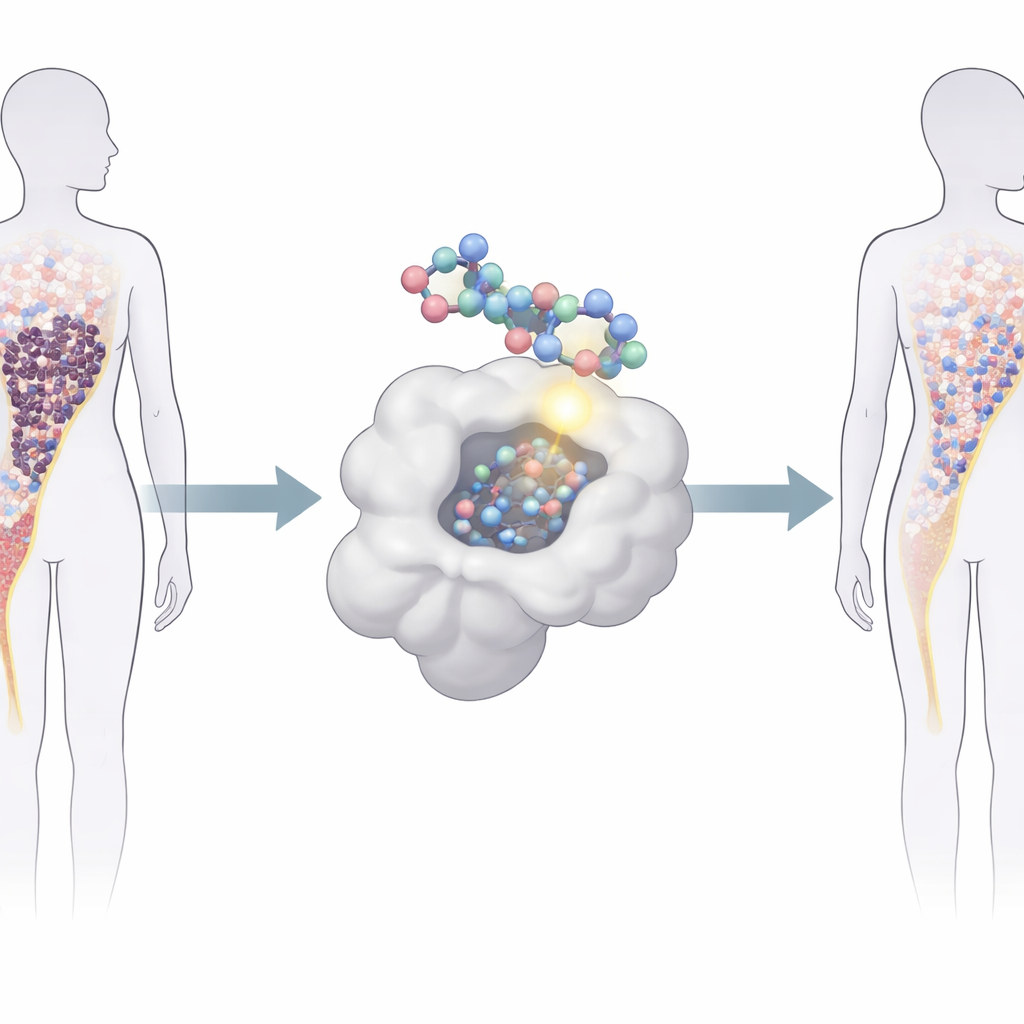
Many cancers, including AML, hijack the way our cells package and read DNA—processes known collectively as epigenetic regulation. A key player in this system is an enzyme called LSD1, which adjusts chemical tags on DNA-associated proteins and thereby turns sets of genes on or off. LSD1 is frequently overactive in tumors and has been an attractive drug target, but earlier LSD1 blockers either hit other brain-related enzymes or caused side effects. The authors used structure-guided chemistry to design DC551040, a highly selective LSD1 blocker that latches onto its target permanently. In biochemical tests, DC551040 bound tightly to LSD1 while largely sparing related enzymes that are important for nerve cell function, suggesting a cleaner safety profile.
From Cells to Mice: Testing the New Drug
The team next asked whether DC551040 could actually slow leukemia growth. In laboratory dishes, the compound strongly inhibited several AML cell lines but had only weak effects on other blood cancers and on normal blood cells. Treated leukemia cells were more likely to undergo programmed cell death and to mature toward more normal-looking white blood cells, echoing what is seen when LSD1 is genetically disabled. In mouse models carrying human AML tumors, an oral course of DC551040 shrank tumors, delayed disease progression, and extended survival. Across mice, rats, and dogs the drug was well absorbed, broken down slowly, and caused little heart or nervous system toxicity at doses far above those needed for an anticancer effect. These results supported moving DC551040 into an ongoing Phase I trial in people with AML.
Hidden Pushback: The Cancer Fights Back
Targeted drugs often work well at first but lose strength as cancer cells rewire their signaling networks. To look for early warning signs of such adaptation, the researchers treated leukemia-bearing mice with DC551040 and then cataloged thousands of genes and proteins in the tumors over three weeks. They saw wide-ranging shifts in metabolism and, notably, a steady activation of immune and inflammation-related pathways, including molecular circuits controlled by STAT3, STAT5, NF-κB, and AKT. DC551040 boosted production of interleukin-6 (IL-6), a key inflammatory messenger, and ramped up downstream genes linked to cell survival and blood vessel growth. This suggested that while blocking LSD1 harms leukemia cells, it also stirs up pro-survival signals that could ultimately blunt the drug’s impact.
Finding a Partner Drug by Data Mining
To counter this inflammatory backlash, the team turned to the Connectivity Map, a large database that links drugs to the gene expression patterns they create in cells. They asked which approved medicines tend to reverse the same inflammation-related genes that DC551040 turns on. One strong hit was homoharringtonine (HHT), a plant-derived compound already used as a chemotherapy for some leukemias. Previous work showed that HHT can dampen IL-6–JAK–STAT signaling and related inflammatory routes. In AML cells, HHT pushed key inflammatory molecules and survival genes back down, in direct opposition to DC551040’s effects on the same pathways.
Two Drugs Work Better Than One
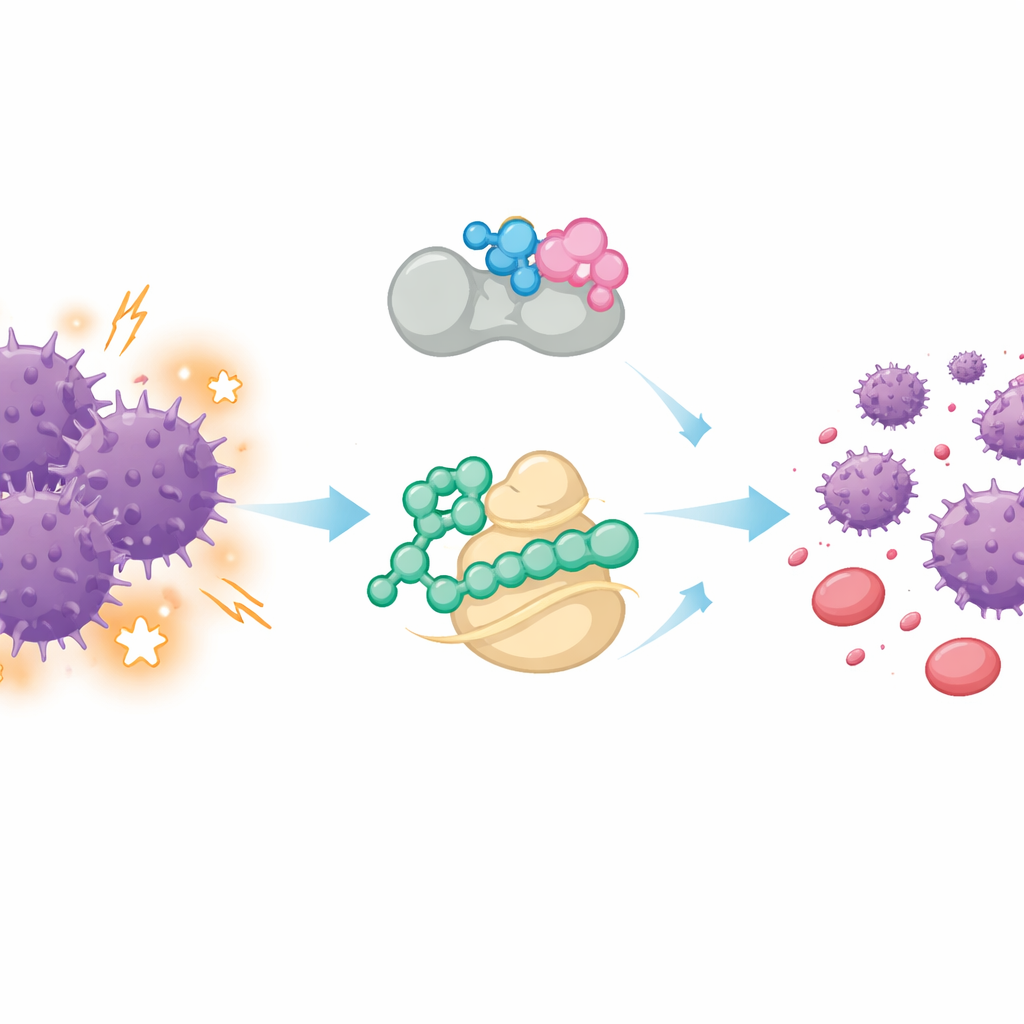
Armed with this clue, the researchers tested DC551040 and HHT together. Across multiple AML cell lines and patient-derived leukemia samples, the pair killed more cancer cells than either drug alone, even at lower doses, and triggered higher levels of cell-death enzymes. In mouse models where leukemia spreads through the bloodstream and bone marrow, the combination extended survival and more effectively cleared human leukemia cells than single-drug treatment or an older LSD1 inhibitor. Gene-silencing experiments further supported the idea that IL-6 and its signaling network help leukemia cells resist LSD1 blockade, and that HHT restores sensitivity by calming this inflammatory surge.
What This Could Mean for Patients
For non-specialists, the takeaway is that this work delivers both a new targeted drug and a strategy for making it last longer against a shape-shifting cancer. DC551040 precisely disables an enzyme that leukemia cells rely on to keep growth-promoting genes in the right configuration, and early safety testing in animals looks encouraging. At the same time, the study shows that the drug unintentionally flips on inflammatory programs that may let some cancer cells escape. By pairing DC551040 with HHT, which quiets those same programs, the researchers achieve a one-two punch: cut off the cancer’s epigenetic support while blocking its backup survival signals. If ongoing clinical trials confirm these benefits in people, such rational combinations could offer AML patients more effective and potentially gentler treatment options than current chemotherapy-heavy regimens.
Citation: Wang, J., Wang, H., Du, R. et al. Potent and selective LSD1 inhibitor DC551040 reveals a promising combination therapy for AML with insight into epigenetic dysregulation. Sig Transduct Target Ther 11, 108 (2026). https://doi.org/10.1038/s41392-026-02637-0
Keywords: acute myeloid leukemia, LSD1 inhibitor, epigenetic therapy, drug combination, homoharringtonine