Clear Sky Science · en
Synergistic immunotherapeutic effects of irreversible electroporation and CAR-NK cell therapy against hepatocellular carcinoma
Turning Electricity and Immune Cells Against Liver Cancer
Liver cancer, especially hepatocellular carcinoma, is one of the deadliest cancers worldwide and is notoriously hard to treat. Many patients are not candidates for surgery, and even when tumors are destroyed locally, they often grow back. This study explores a new way to combine a medical device that zaps tumors with short electric pulses and a next-generation immune-cell therapy, aiming to give the body’s defenses a lasting advantage over the cancer.
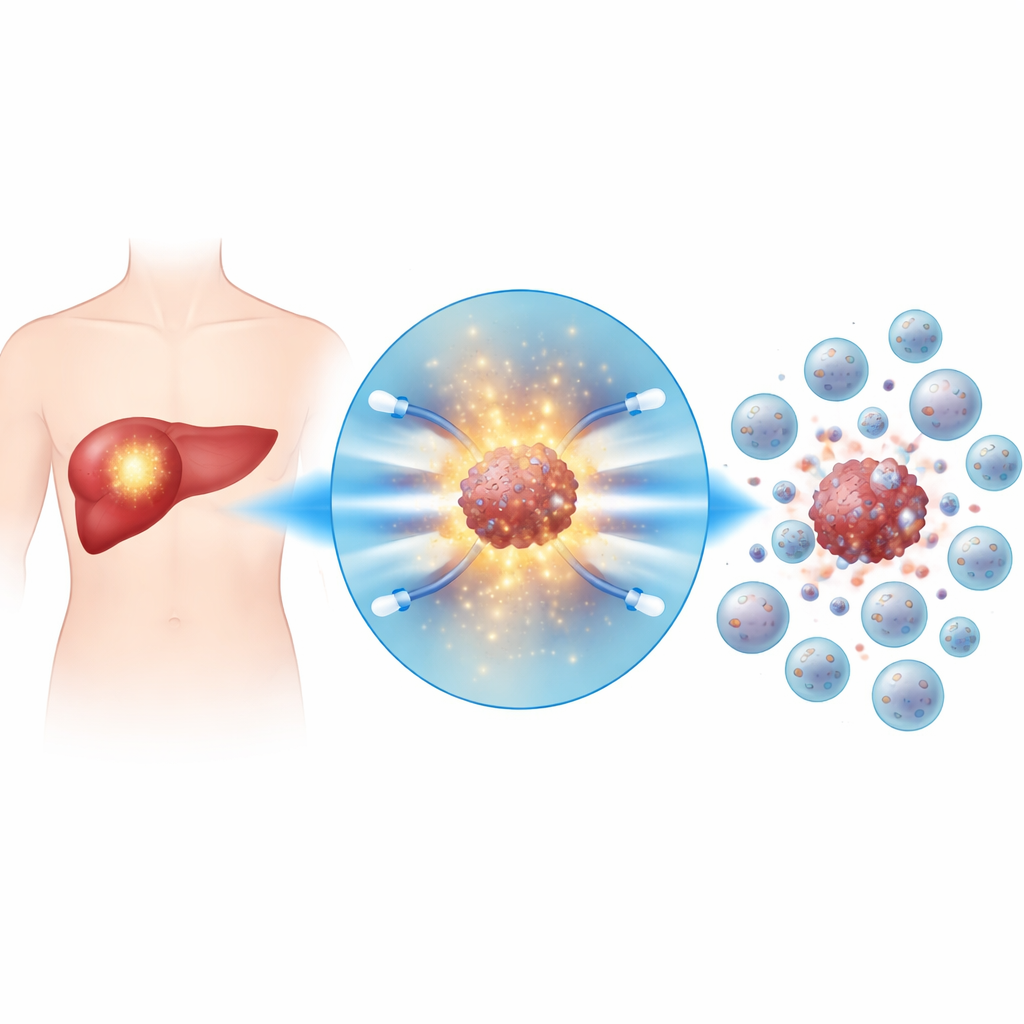
Why Liver Tumors Are So Hard to Fight
Liver tumors do not simply grow as isolated lumps; they also reshape their surroundings into an immune-hostile zone. In this environment, helpful immune cells, such as natural killer (NK) cells, struggle to enter and function. NK cells are part of the body’s rapid-response defense against abnormal cells, but in liver cancer they are often scarce and weakened. Standard treatments like heat-based ablation or chemotherapy can shrink tumors, yet they rarely fix this unfriendly immune setting, which is one reason relapses are so common.
Using Electric Pulses to Wake Up the Immune System
The researchers focused on a technique called irreversible electroporation, which delivers very short, high-voltage pulses directly into the tumor. Instead of cooking the tissue, these pulses punch tiny permanent holes in cancer cell membranes, causing the cells to die in a way that spills alarm signals into the neighborhood. In mouse models of liver cancer, this procedure led to a surge of immune messengers called chemokines inside the tumors and drew in waves of immune cells, especially NK cells, within hours. At the same time, the electric pulses raised the level of reactive oxygen species—highly reactive molecules—inside surviving cancer cells, making them more vulnerable to being killed by NK cells.
Engineering Smarter Killer Cells
To push this effect further, the team created upgraded NK cells armed with a chimeric antigen receptor (CAR) that recognizes glypican-3, a protein often abundant on liver cancer cells. Instead of using viruses to add genetic instructions, they used specially designed lipid nanoparticles—tiny fat-based delivery vehicles—decorated with a positively charged component to efficiently ferry messenger RNA into NK cells. This approach produced CAR-NK cells that could be manufactured relatively quickly and safely. In dishes and in patient-derived liver cancer organoids, these engineered NK cells were especially potent when they met tumor cells that had first been hit with electric pulses, leading to more cell death than either method alone.
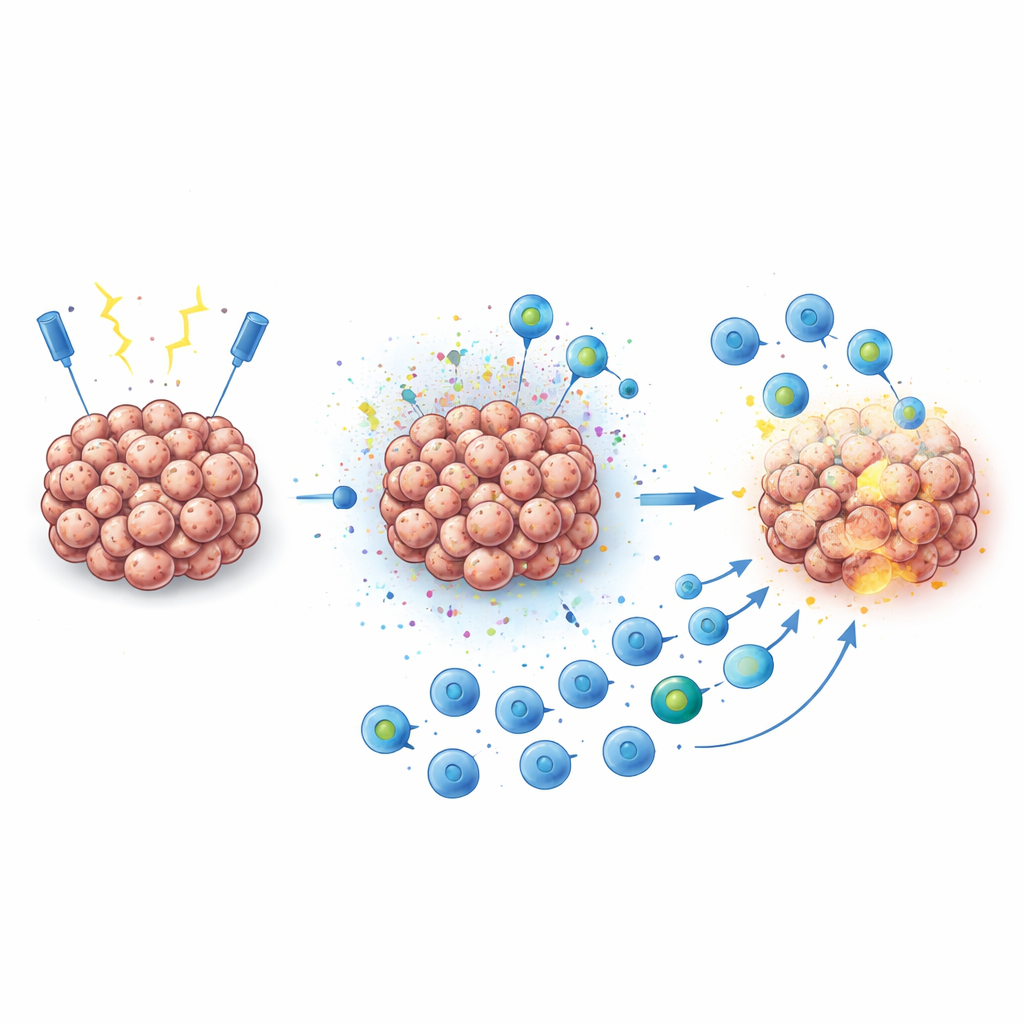
Stronger Tumor Control in Living Models
The combined treatment was then tested in several mouse models, including tumors growing in the liver and human liver tumors implanted under the skin. Irreversible electroporation by itself slowed tumor growth only modestly, and CAR-NK cells alone had limited impact in these solid tumors. When the two were paired, however, tumors shrank more dramatically, some mice became tumor-free, and survival improved without noticeable damage to healthy organs or major weight loss. Blood tests showed that liver function markers, often disturbed by cancer, moved back toward normal levels after the combined therapy.
Building Lasting Immune Memory
Beyond immediate tumor shrinkage, the researchers looked at whether this strategy could also train the broader immune system. In immune-competent mice, the combination of electric pulses and CAR-NK cells increased the presence and activation of dendritic cells, which act as teachers for T cells, as well as both helper and killer T cells inside tumors. In the spleen, more killer T cells responded specifically to tumor material, suggesting that the treatment helped the body learn to recognize and remember the cancer. This coordinated response hints at a more durable defense that could help prevent regrowth.
What This Could Mean for Future Patients
Altogether, the study shows that pairing tumor-zapping electric pulses with precision-guided NK cells can both break open liver tumors and rally the immune system against them. The electric pulses reshape the tumor neighborhood and weaken cancer cells, while the engineered NK cells home in on a distinctive tumor marker and deliver focused attacks. Because both the device treatment and NK cell platforms already have clinical footholds, this strategy may be realistically adaptable to future care. For patients with hard-to-treat liver cancer, such a combined approach could one day offer not just local tumor control, but a stronger, longer-lasting immune shield against the disease.
Citation: Park, J.D., Shin, H.E., Jang, H.J. et al. Synergistic immunotherapeutic effects of irreversible electroporation and CAR-NK cell therapy against hepatocellular carcinoma. Sig Transduct Target Ther 11, 86 (2026). https://doi.org/10.1038/s41392-026-02627-2
Keywords: hepatocellular carcinoma, irreversible electroporation, CAR-NK cells, tumor immunotherapy, lipid nanoparticles