Clear Sky Science · en
Conductive coordination nanozyme prodrugs precisely trigger pyroptosis, cuproptosis and ferroptosis for in situ cancer vaccination
Turning Tumors into Their Own Vaccines
Cancer treatment usually aims to kill tumor cells directly, but what if a tumor could be turned into a vaccine against itself? This study describes a smart nanoparticle "prodrug" that travels safely through the body, switches on only inside tumors, and then forces cancer cells to die in a way that powerfully alerts the immune system. The result is not just shrinking primary tumors, but also training the body to hunt down distant tumors and metastases.
A New Kind of Smart Cancer Weapon
The researchers built a tiny copper-based particle called Cu–DHN that behaves like a dormant medicine during circulation and an aggressive cancer fighter once it reaches a tumor. It is assembled from copper ions, a harmless precursor molecule (1,5-dihydroxynaphthalene, or DHN), and the amino acid cysteine. Together they form a conductive coordination network, meaning electrons can move easily through the particle. This internal "electron highway" allows the entire nanoparticle, not just its surface, to participate in chemical reactions. Crucially, Cu–DHN is designed to respond only to the unusual chemistry of the tumor microenvironment, where antioxidant glutathione and hydrogen peroxide are both abnormally high.
How Tumor Chemistry Flips the On Switch
Inside tumors, Cu–DHN acts like an artificial enzyme. In the presence of glutathione and hydrogen peroxide together, it first uses glutathione to reset its copper ions into a highly reactive state and then uses hydrogen peroxide to generate a continuous burst of highly aggressive oxidants (hydroxyl radicals). These oxidants do double duty: they damage cellular components and convert the harmless DHN locked inside the particle into juglone, a potent anti-cancer compound. Juglone, in turn, suppresses the tumor’s own antioxidant defenses and further boosts hydrogen peroxide levels, creating a self-amplifying loop of oxidative stress that stays confined to the tumor, because only tumors provide the right chemical inputs to start the cycle.
Triggering Three Forms of Cancer Cell Death
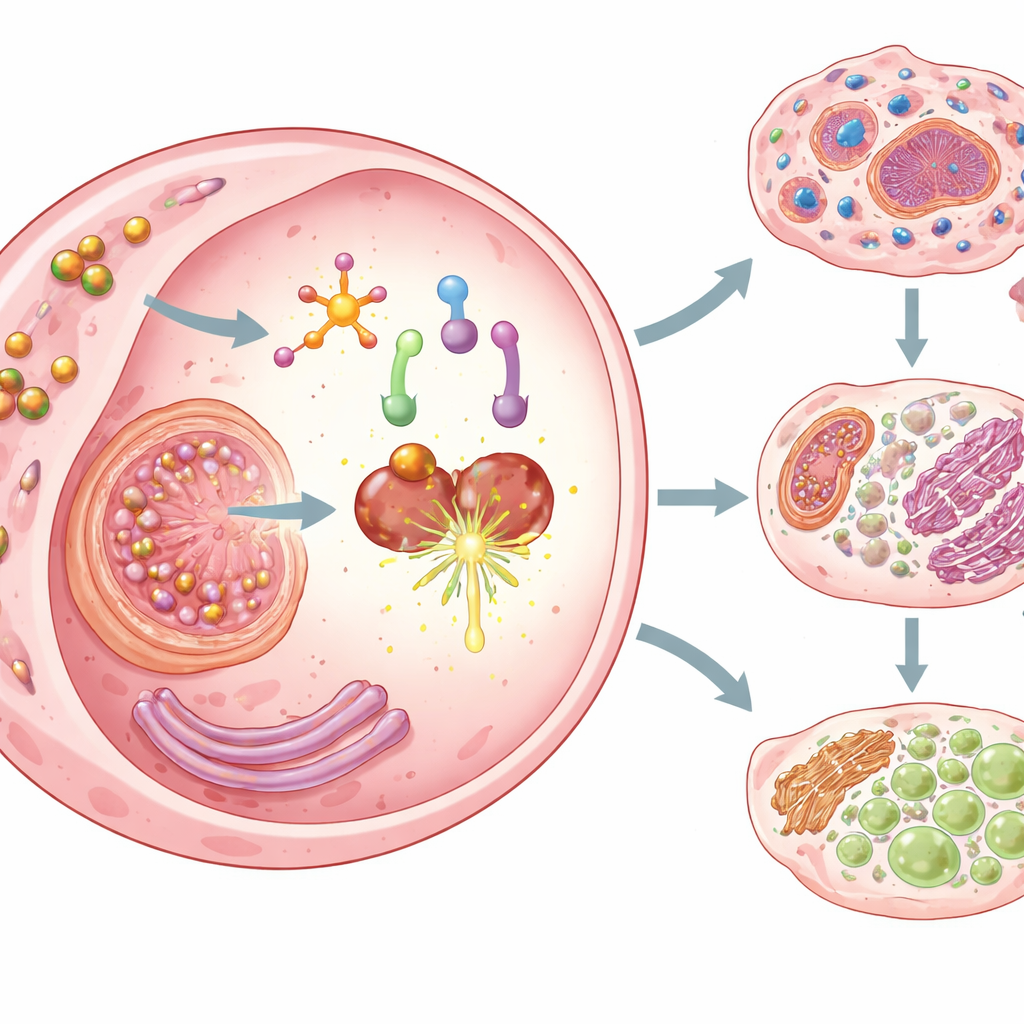
Once activated, Cu–DHN does more than simply poison cancer cells. It triggers three regulated forms of cell death that are especially visible to the immune system. First, juglone reverses epigenetic silencing of a pore-forming protein called gasdermin D and activates an inflammatory sensor complex, so that cells undergo pyroptosis—a dramatic, blistering form of death that bursts the membrane and spills internal contents. Second, the copper carried in by the nanoparticles, taken up efficiently by cancer cells, drives cuproptosis, a form of death linked to toxic buildup of copper in key metabolic machinery. Third, by depleting glutathione and disabling a protective enzyme (GPX4), Cu–DHN promotes ferroptosis, a lipid-peroxidation-driven death. Together, these modes ensure that cancer cells are not only killed efficiently but die in an especially immunogenic way.
From Local Attack to Whole-Body Defense
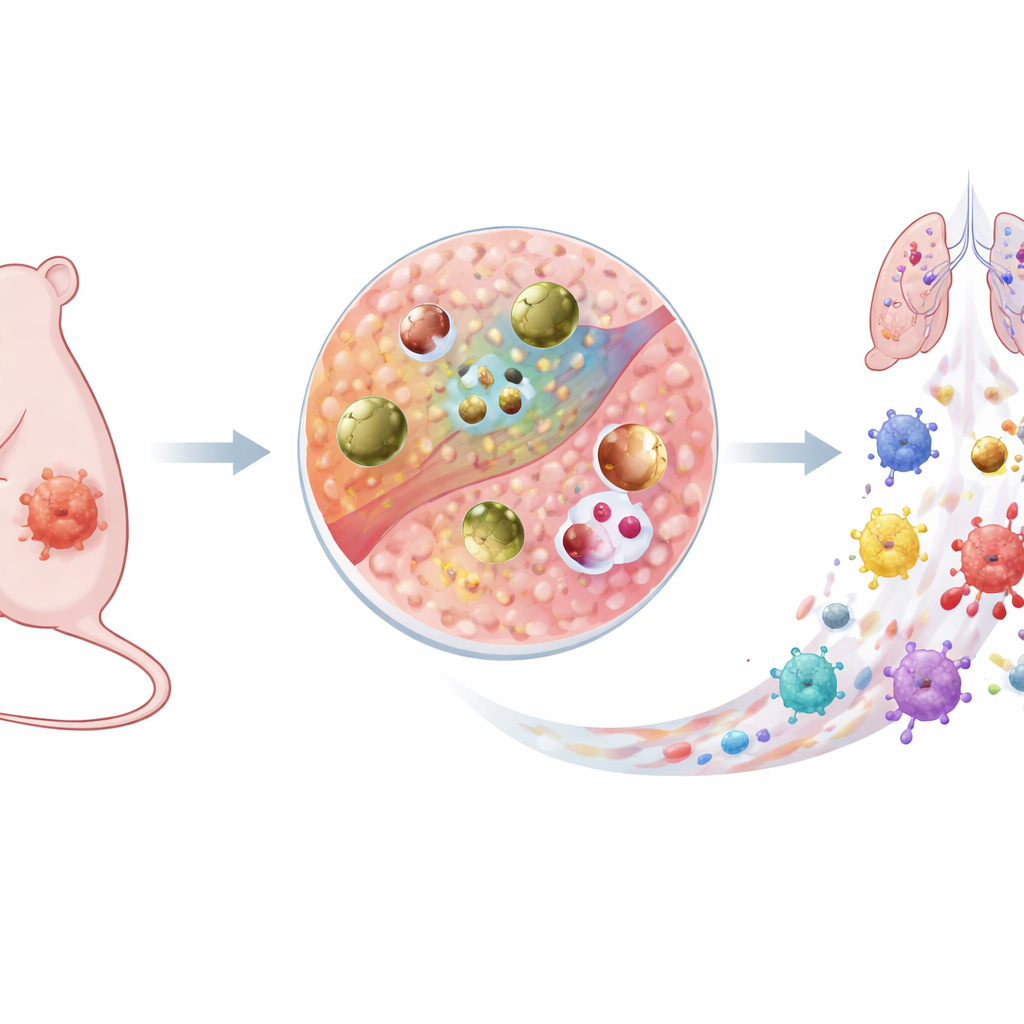
Pyroptosis and the accompanying oxidative damage cause tumor cells to release a flood of alarm signals: tumor-associated antigens, danger molecules such as ATP and HMGB1, and stress markers on their surface. In mouse models of aggressive breast cancer, a single injection of Cu–DHN into primary tumors led to strong activation of dendritic cells in nearby lymph nodes and a surge of tumor-hunting CD8 T cells. These immune cells then traveled to untreated tumors on the opposite side of the body and to the lungs, where they slowed or nearly prevented the growth of new tumors and metastatic nodules. Blocking CD8 T cells largely removed this protection, confirming that Cu–DHN turns the primary tumor into an in situ vaccine that teaches the immune system to recognize and destroy cancer elsewhere.
Potent Effects with a Safer Profile
An important concern with pyroptosis-based therapies is the risk of harming normal tissues, which also carry the same pore-forming proteins. When juglone is given directly in its active form, mice suffer significant liver, kidney, and blood toxicity. In contrast, Cu–DHN remains inert in healthy tissues, because they lack the combination of chemical triggers needed to activate the particle. In mice, Cu–DHN matched the tumor-killing and anti-metastatic power of active juglone while avoiding organ damage, blood abnormalities, and weight loss. In simple terms, this work shows how a smart, electrically conductive nanoparticle can stay quiet in the body, wake up only inside tumors, force cancer cells to die in an immune-stimulating way, and thereby act as a precise, self-contained cancer vaccine platform.
Citation: Wang, Y., Zhao, H., Sun, K. et al. Conductive coordination nanozyme prodrugs precisely trigger pyroptosis, cuproptosis and ferroptosis for in situ cancer vaccination. Sig Transduct Target Ther 11, 96 (2026). https://doi.org/10.1038/s41392-026-02607-6
Keywords: cancer immunotherapy, nanomedicine, pyroptosis, cancer vaccines, tumor microenvironment