Clear Sky Science · en
Coronary atherosclerotic plaque intervention with Tongxinluo capsule (TXL-CAP): a multicenter, randomized, double-blind and placebo-controlled study
Why this heart study matters
Heart attacks often strike without warning, but they rarely come out of nowhere. They are usually triggered when a fragile, fatty buildup inside a heart artery suddenly ruptures. This study asked a simple but important question: can a traditional Chinese herbal capsule, added to standard cholesterol-lowering drugs, help turn these fragile "ticking time bomb" plaques into calmer, more stable ones that are less likely to burst?
Hidden weak spots in heart arteries
Doctors now know that not all cholesterol plaques are equally dangerous. The riskiest ones tend to have a large, soft, fatty core and a very thin protective shell, or "cap," that can tear and cause a clot to form. In people with acute coronary syndrome—a medical term for conditions such as heart attacks and unstable chest pain—these vulnerable plaques can exist not only at the main blockage that caused symptoms, but also at other sites in the coronary arteries. Standard treatments, especially statin drugs, already help thicken the cap somewhat and lower cholesterol, but many patients still face “residual risk” of future heart events.
An herbal add-on to modern care
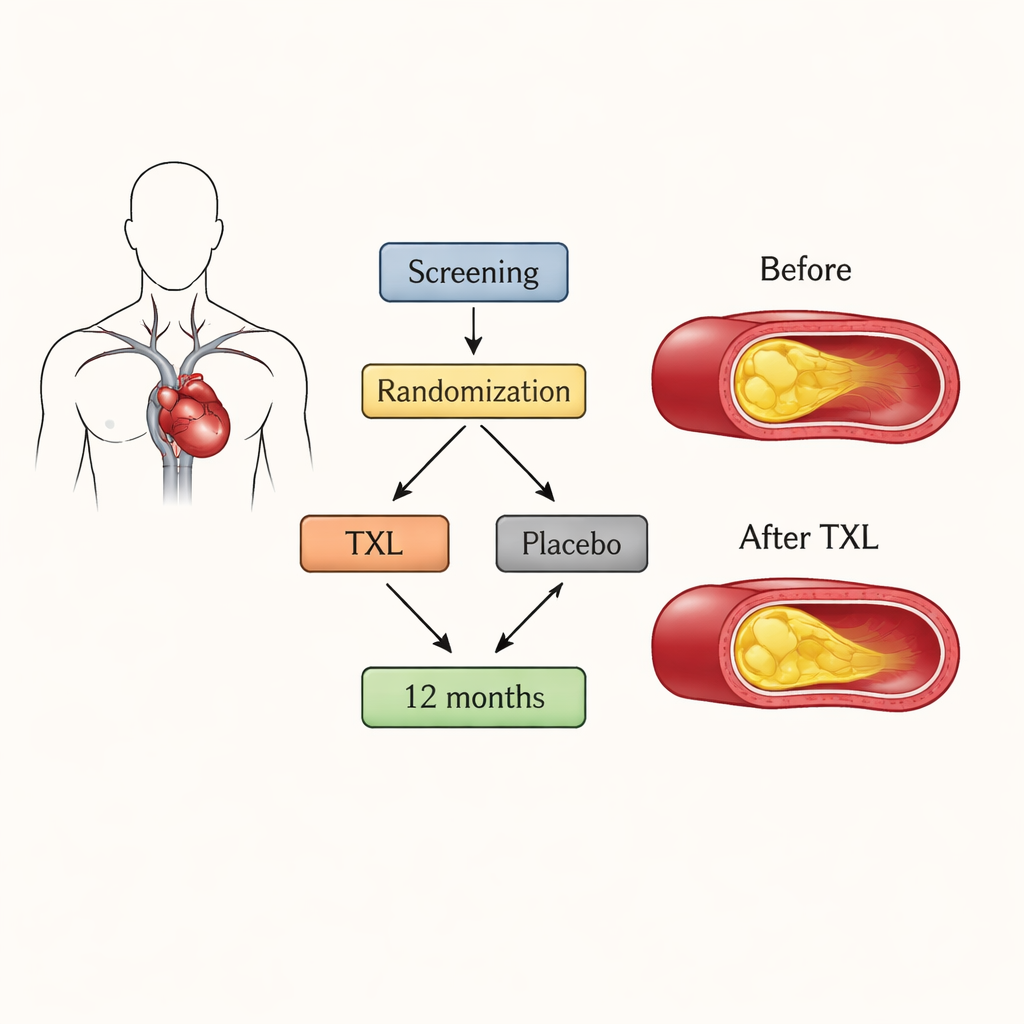
Tongxinluo is a capsule combining 12 traditional ingredients, including ginseng and several animal- and plant-derived components. It has been approved in China for angina and stroke and has shown benefits in animal studies and earlier clinical trials on neck artery plaques and heart attack patients. However, until now, no one had directly tested whether Tongxinluo could physically stabilize the most worrisome plaques in the heart’s own arteries when added on top of guideline-based therapy with statins and other standard heart medicines.
A year-long, blinded trial in high-risk patients
In the TXL-CAP trial, researchers at 17 hospitals in China screened more than 1,600 patients admitted with acute coronary syndrome. Using a high-resolution imaging method called optical coherence tomography, they identified 220 people who had especially risky plaques: thin caps (less than 0.1 millimeter thick) covering wide arcs of fat inside a coronary artery segment that did not require a stent. These patients were randomly assigned, in double-blind fashion, to receive either Tongxinluo capsules or matching placebo for 12 months, on top of statins and other standard drugs. Neither the patients nor the doctors knew who received which treatment until the study ended.
Thicker protective caps and fewer chest pains
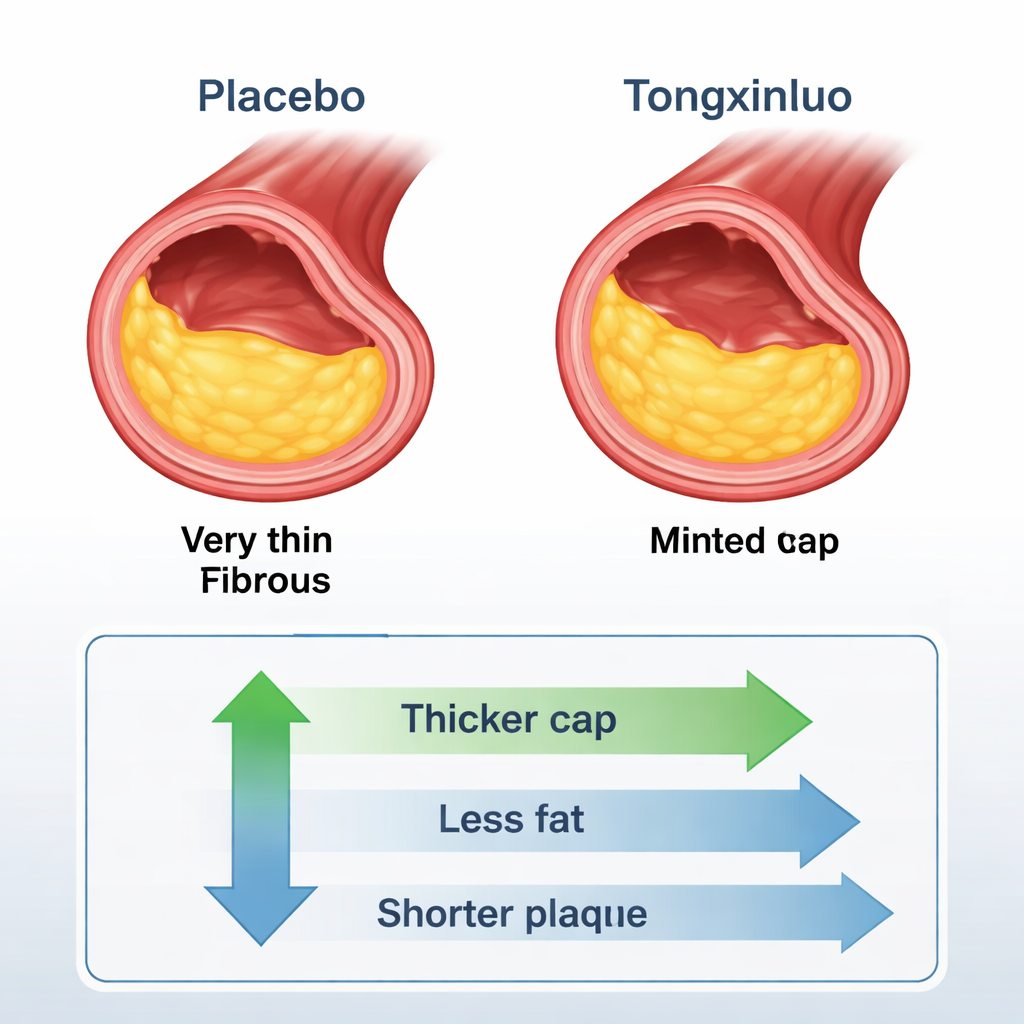
At the start, the two groups were very similar in age, medical history, and treatments. After a year, imaging showed that the fibrous cap over the risky plaques had thickened in both groups—something expected from ongoing statin use—but the gain was much larger in the Tongxinluo group. On average, the thinnest part of the cap nearly doubled in thickness with Tongxinluo and ended up clearly thicker than in the placebo group. The fatty arc inside the plaque shrank more, and the overall length of the fatty segment also shortened more with Tongxinluo, suggesting a smaller and more compact plaque. Patients taking Tongxinluo also reported less chest pain and better quality of life on standard angina questionnaires, and their doctor-graded angina class improved more often than in those on placebo.
Safety and what it means for patients
Importantly, the herbal capsule did not cause more overall side effects than placebo. Serious problems and drug discontinuations were rare and occurred at similar rates in both groups, with no liver or kidney injury linked to Tongxinluo. The study was too small, and follow-up too short, to prove that Tongxinluo actually prevents heart attacks or deaths, though there was a hint of fewer combined heart events. For now, the take-home message for a general reader is this: among Chinese patients already receiving modern heart medicines, adding Tongxinluo made dangerous plaques look safer on microscope-like artery scans and eased chest pain without clear added risk. Larger and longer studies will be needed to confirm whether this structural calming of plaques translates into fewer heart attacks over the long term.
Citation: Ni, M., Ti, Y., Yu, H. et al. Coronary atherosclerotic plaque intervention with Tongxinluo capsule (TXL-CAP): a multicenter, randomized, double-blind and placebo-controlled study. Sig Transduct Target Ther 11, 72 (2026). https://doi.org/10.1038/s41392-026-02581-z
Keywords: coronary plaque, Tongxinluo, acute coronary syndrome, statin therapy, plaque stabilization