Clear Sky Science · en
14,15-epoxyeicosatrienoic acid drives intestinal adenoma growth and its value as an early biomarker for intestinal adenoma occurrence
Why this matters for your health
Colon cancer usually doesn’t appear overnight. It grows slowly from tiny growths called polyps or adenomas, which often cause no symptoms. Detecting and stopping these early changes could prevent many cancers. This study uncovers a fat-derived molecule in the blood that rises very early—before visible growths form—and appears to help drive these polyps toward cancer. That means it could serve both as an early warning signal and as a new kind of drug target.
A hidden signal in the blood
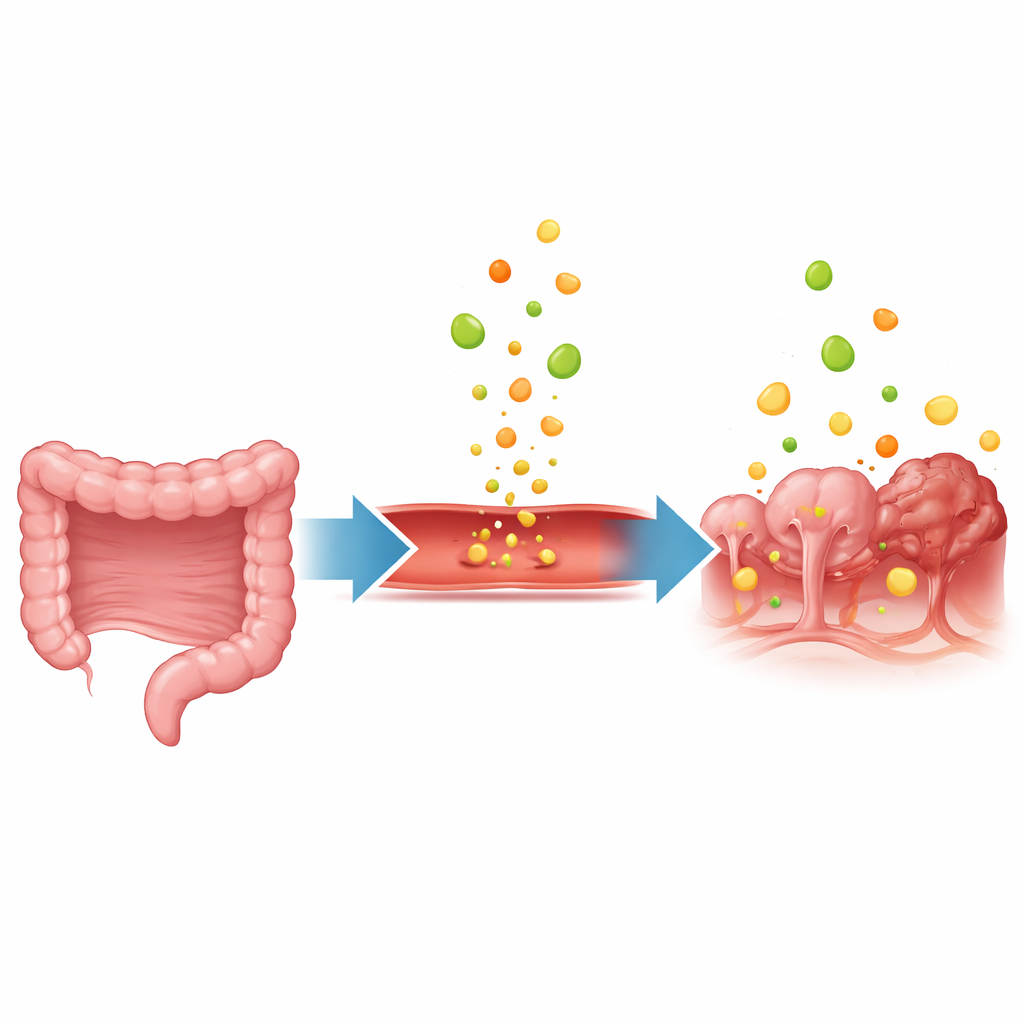
The researchers focused on small fat-based messengers in the body, called lipid metabolites, which are known to influence inflammation, blood vessels and cell growth. Using a sensitive chemical technique to scan many lipids in mouse blood, they compared normal mice with a well-established genetic model that spontaneously develops intestinal polyps and eventually tumors. Even before these mice had any visible intestinal abnormalities, one molecule—14,15-epoxyeicosatrienoic acid (14,15-EET)—stood out. Its level in the bloodstream was more than six times higher than in healthy animals, and it stayed high as tumors advanced. Other lipid changes were present, but 14,15-EET showed the most striking and consistent rise.
Where the signal comes from
To find the source of this early surge, the team measured the activity of the enzymes that make 14,15-EET in various organs. These enzymes belong to the cytochrome P450 family, especially forms called CYP2C and CYP2J. They found that, in the tumor-prone mice, many of these enzymes were sharply increased in the intestine, but not in the spleen or blood cells. This points to the intestinal lining itself as the main factory for 14,15-EET that appears in the blood during the earliest stages of disease. In other words, the future tumor site starts sending a chemical distress signal long before a doctor could see anything on a scope.
How the signal helps tumors grow and spread
The scientists then asked whether 14,15-EET is just a bystander or an active driver. When they injected this molecule into the tumor-prone mice over time, the animals developed more and larger polyps in parts of the small intestine. Under the microscope, their glands looked more irregular and disorganized, and there was more immune cell infiltration—signs of more advanced precancerous change. In cell culture experiments using mouse and human colon cancer cells, adding 14,15-EET made the cells divide faster, move more readily and invade through barriers, all hallmarks of aggressive behavior.
Changing cell behavior from the inside out
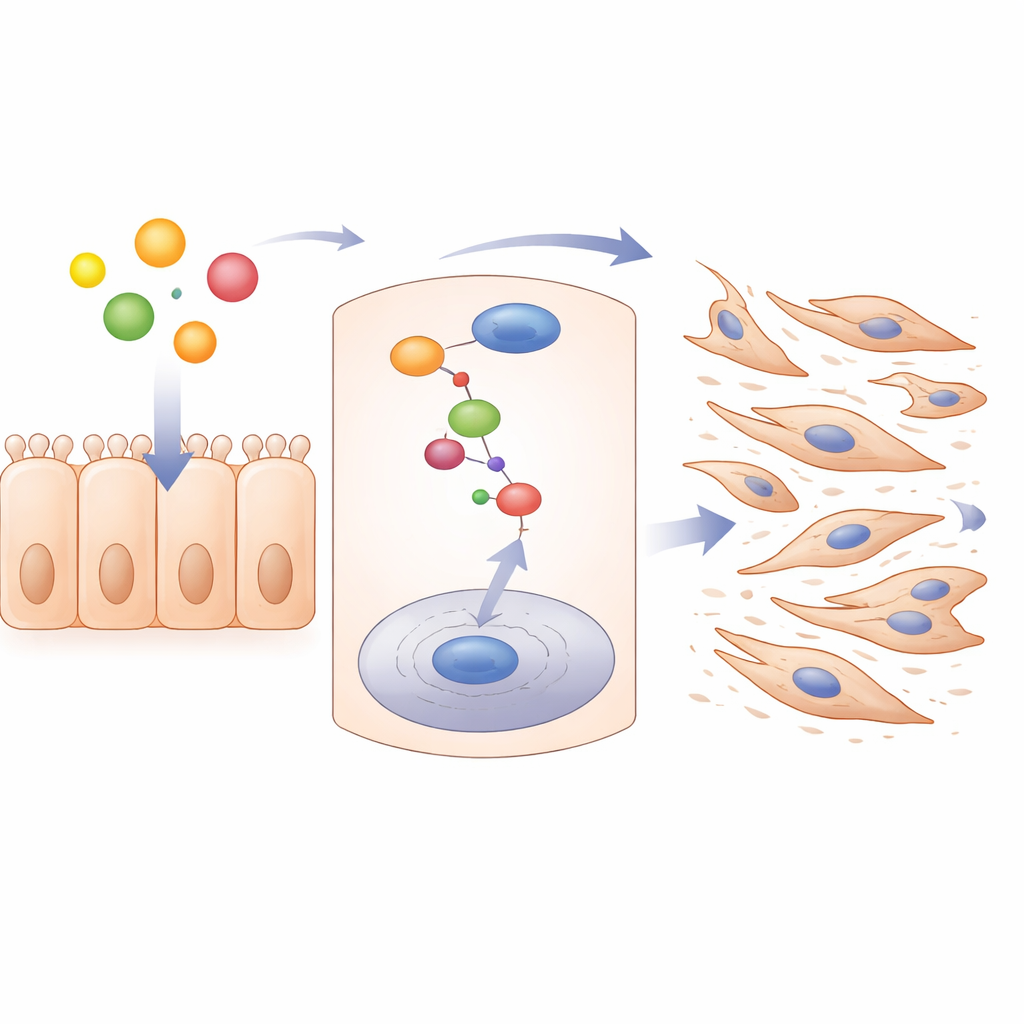
Closer examination showed that 14,15-EET pushes cancer cells to undergo a shift known as epithelial–mesenchymal transition, in which orderly, brick-like cells lose their tight connections and become more spindle-shaped and mobile. Inside the cells, 14,15-EET switched on major growth and survival pathways involving the AKT and ERK proteins, without increasing their overall amounts—rather, it activated them chemically. Gene activity profiling revealed two additional effects: the molecule boosted production of ribosomal components that help build new proteins, and dampened several DNA repair systems. Together, these changes could allow cells to grow faster while accumulating more mutations, setting the stage for both tumor expansion and treatment resistance.
Evidence from patients
To see if these findings translate to people, the authors measured 14,15-EET in blood samples from healthy volunteers, patients with intestinal adenomas, and patients with non-metastatic or metastatic colorectal cancer. Levels were lowest in healthy individuals, dramatically higher in those with adenomas, and remained elevated, though somewhat lower, in cancer patients. Cancer cell lines derived from the colon also produced and released much more 14,15-EET than normal intestinal cells. Public genetic databases further showed that the key human enzyme that makes this molecule, CYP2J2, is more active in colon and rectal tumors than in normal tissue.
What this means for prevention and treatment
Putting these pieces together, the study suggests that 14,15-EET is not only an early marker of risk, appearing before polyps are visible, but also a fuel that helps precancerous and cancerous cells grow, move and become more unstable. For the general reader, the takeaway is that a specific fat-derived molecule in the blood may one day help doctors flag people at high risk for colorectal cancer earlier than current tests allow, and that blocking its production or action—by targeting enzymes like CYP2J2 or using tailored inhibitors—could offer a new strategy to halt the transition from harmless polyp to life-threatening cancer.
Citation: He, S., Zeng, R., Zheng, B. et al. 14,15-epoxyeicosatrienoic acid drives intestinal adenoma growth and its value as an early biomarker for intestinal adenoma occurrence. Oncogenesis 15, 13 (2026). https://doi.org/10.1038/s41389-026-00604-6
Keywords: colorectal cancer, intestinal polyps, lipid signaling, early biomarkers, tumor metabolism