Clear Sky Science · en
Cancer-associated fibroblasts as key regulators of lipid metabolism in the tumour microenvironment
Why the Tumor’s Neighbors Matter
Cancer does not grow in isolation. It lives inside a bustling neighborhood of support cells, blood vessels, immune cells, and connective tissue. This article focuses on a key neighbor in that community—cancer‑associated fibroblasts, or CAFs—and explains how they handle fats in ways that can either feed tumors or hold them back. Understanding this “fat economy” in and around tumors could open paths to more effective treatments and even diet‑based strategies to complement standard cancer care.
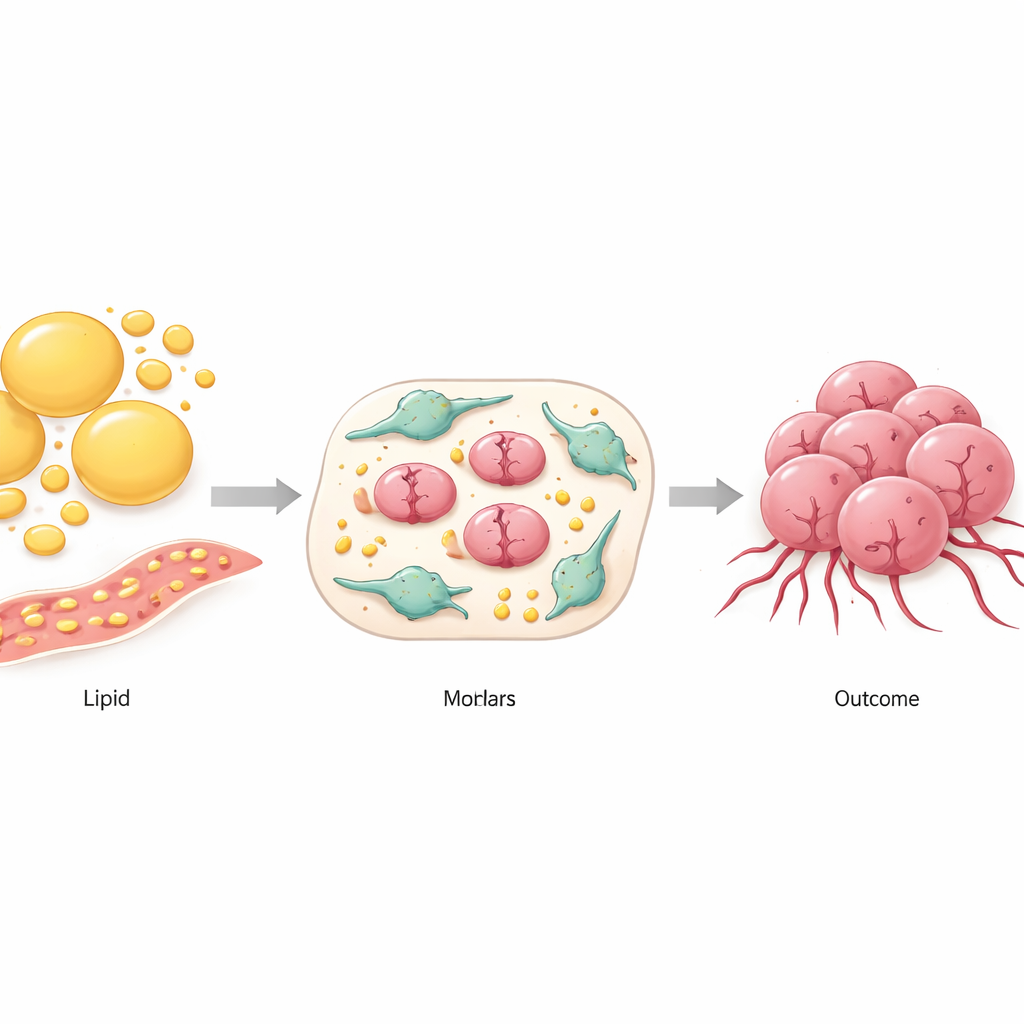
Cells That Shape the Tumor’s Home
Fibroblasts are the body’s builders and repair crew, normally helping to heal wounds by laying down structural proteins. In cancer, many of these cells become CAFs, a broad family of altered fibroblasts that surround tumor cells. They help shape the stiff scaffolding around tumors, influence blood vessel growth, and can either support or restrain cancer spread. Researchers have discovered several CAF subtypes with different origins and behaviors, including cells that drive inflammation, reshape the tumor matrix, present immune signals, or line up around blood vessels. This diversity makes CAFs powerful—but also complicated—targets for therapy.
How Tumor Helpers Trade in Fat
One of the most striking roles of CAFs is their control over fats in the tumor microenvironment. Tumor cells need fats for energy, to build new membranes, and to survive harsh conditions such as low oxygen and scarce nutrients. Some CAFs ramp up fat production and release, loading the surroundings with fatty droplets that cancer cells can absorb and burn. Others specialize in taking in fats from outside, storing them, and breaking them down to fuel their own activity. CAF‑derived fats can also alter the properties of cancer cell membranes, making them more flexible and better able to migrate, invade, and form new colonies elsewhere in the body.
Obesity, Diet, and a Fat‑Rich Tumor World
The article highlights that the wider state of the body strongly shapes this fat‑focused dialogue. Obesity, now affecting a growing fraction of the global population, raises levels of circulating fats and chronic low‑grade inflammation. In fat‑rich tissues such as the breast, local fat cells and stem cells more readily turn into CAF‑like cells in people with obesity. These CAFs tend to produce a denser, more aligned scaffold around tumors and release inflammatory signals that can weaken anti‑tumor immune responses and prepare distant organs for metastasis. High‑fat diets and specific fatty acids further tilt the balance: some, like palmitic acid or omega‑6 linoleic acid, seem to stiffen tissue and fuel tumor growth, while others, such as certain omega‑3 fats, can dampen CAF activation and improve responses to cancer drugs.
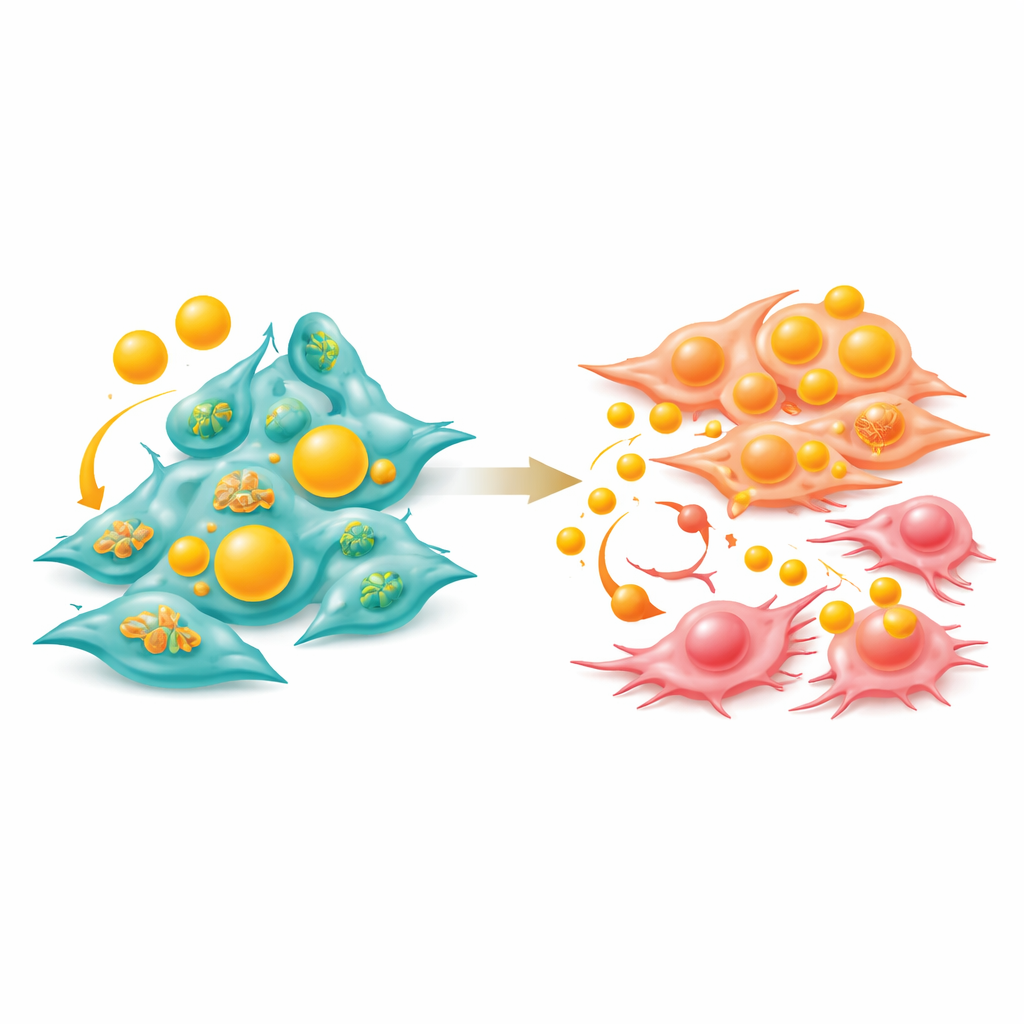
Turning Fat Pathways into Treatment Targets
Because CAFs help manage the tumor’s fat supply chain, many of the enzymes and transporters they use are emerging as drug targets. Experimental compounds and repurposed medicines are being tested to block fat production, fat import, fat burning, or cholesterol synthesis in tumors. For example, inhibitors of fatty acid synthase, a key builder of new fats, are already in clinical trials, while drugs that block fat uptake proteins like CD36 or fat‑burning enzymes such as CPT1 are being studied in animals and advanced lab models. Yet results are mixed: the same molecule can act as a tumor promoter in one cancer type and a suppressor in another, depending on which CAF subtypes are present and how they interact with immune cells and blood vessels.
What This Means for Future Cancer Care
Overall, the review paints CAFs as central managers of fat in the tumor neighborhood, sometimes stockpiling fats for themselves and sometimes exporting them to tumor cells. These activities are closely linked to treatment resistance, because tumors often ramp up fat use after chemotherapy. The authors argue that combining standard cancer drugs with agents that disrupt fat production, transport, or breakdown in CAFs and tumor cells could help overcome this resistance. They also suggest that obesity, blood fat levels, and diet will need to be factored into future treatment plans. Before that can happen, however, scientists must untangle the many CAF subtypes, clarify how animal and lab models differ from human tumors, and map how fat metabolism in CAFs reshapes the entire tumor ecosystem, especially immune cells.
Citation: Adams, J., Suelzu, C.M., Strusi, G. et al. Cancer-associated fibroblasts as key regulators of lipid metabolism in the tumour microenvironment. Oncogene 45, 1211–1219 (2026). https://doi.org/10.1038/s41388-026-03733-9
Keywords: cancer-associated fibroblasts, tumor microenvironment, lipid metabolism, obesity and cancer, fatty acid-targeted therapy