Clear Sky Science · en
Association between assisted reproductive technology and gestational diabetes mellitus: the role of serum folate and triglycerides
Why this matters for expectant families
As more people turn to assisted reproductive technology—such as in vitro fertilization—to build their families, questions naturally arise about how these treatments might affect pregnancy health. This study looks at one key concern: whether pregnancies conceived with medical help are more likely to develop gestational diabetes, a form of high blood sugar that appears during pregnancy. It also explores whether certain blood markers, like folate (a B vitamin) and fat levels in the blood, might help explain any extra risk.
Looking at thousands of real-world pregnancies
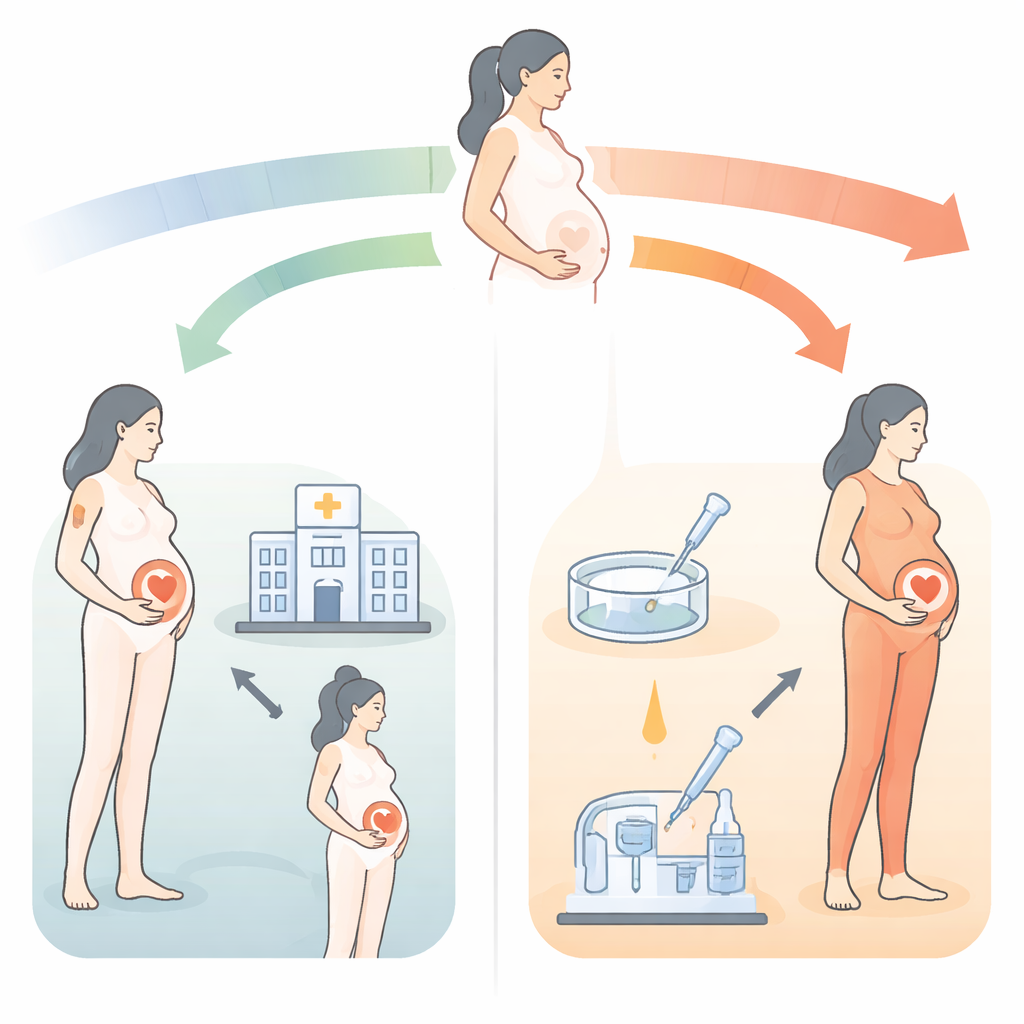
The researchers analyzed records from 11,563 women who gave birth to a single baby at a large hospital in eastern China over one year. Most conceived naturally, while about 2% used assisted reproductive technology (ART). For every woman, the team had details such as age, weight before birth, blood pressure, birth outcomes, and blood test results at delivery, including folate, vitamin B12, and blood fats like triglycerides. All women were screened for gestational diabetes between 24 and 28 weeks of pregnancy using a standard oral glucose test, so diagnoses were made in a consistent way.
Higher diabetes risk with medically assisted conception
When the researchers compared the two groups, they found that gestational diabetes was noticeably more common in women who conceived through ART. About 15 out of every 100 ART pregnancies developed gestational diabetes, compared with just over 8 out of 100 naturally conceived pregnancies. Even after accounting for important differences—such as the fact that ART mothers tended to be older, heavier, and more likely to have a cesarean section—the added risk from ART remained. The analysis suggested that women who conceived with ART had roughly one-and-a-half times the odds of gestational diabetes compared with those who conceived naturally.
Clues from vitamins and blood fats
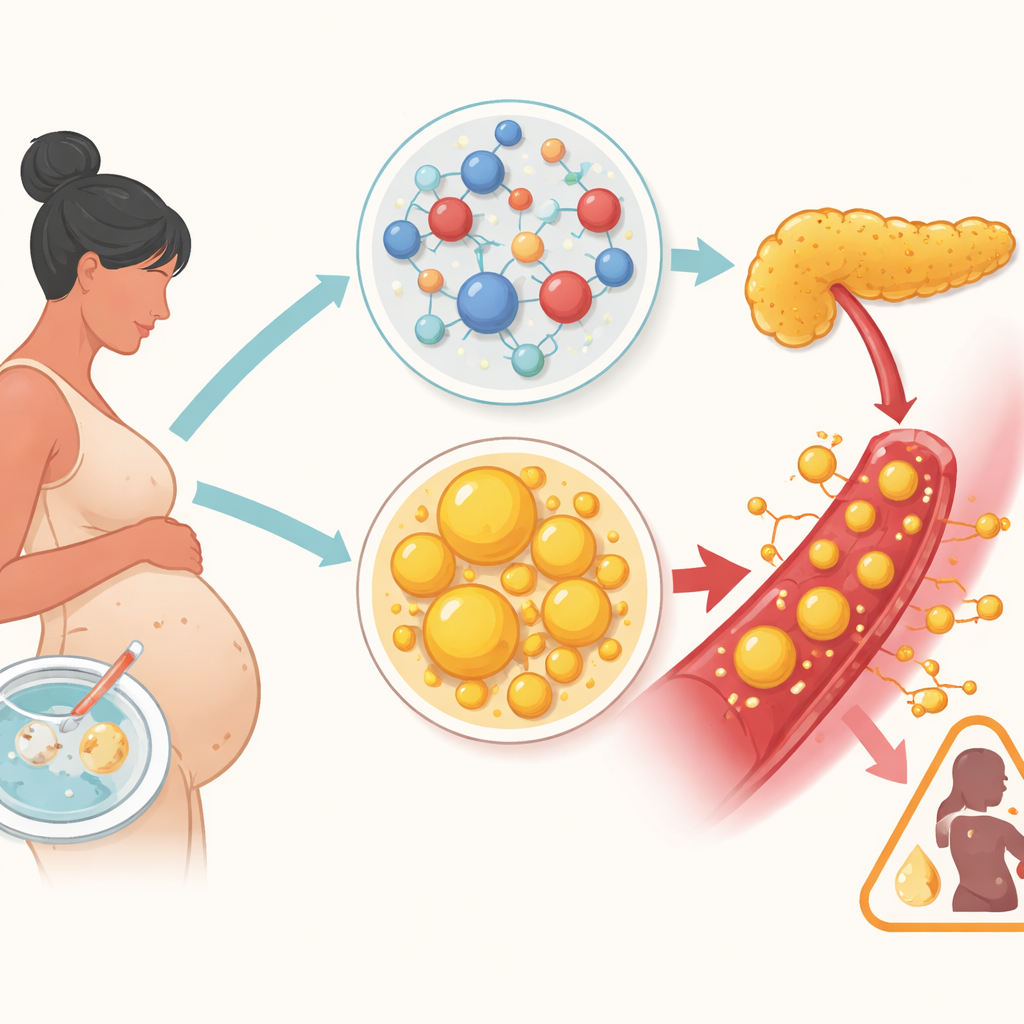
The study went a step further by examining blood markers measured late in pregnancy. Women who conceived with ART had higher levels of folate and of triglycerides, a major type of fat in the bloodstream, than women who conceived naturally. When the researchers looked across the entire group of more than eleven thousand pregnancies, they found that higher folate and higher triglycerides were each linked to greater chances of gestational diabetes, even after adjusting for age, body weight, and other health factors. Women in the highest folate and triglyceride ranges had particularly elevated odds of developing this form of diabetes.
Piecing together a possible chain of events
These findings suggest that the relationship between ART and gestational diabetes may not be due to ART alone, but may also involve the body’s metabolism during pregnancy. Women undergoing fertility treatment often receive vitamin supplements and hormonal medications and may already have underlying health conditions. The study raises the possibility that very high folate levels and elevated blood fats during pregnancy could be part of the pathway that connects ART conception to an increased risk of gestational diabetes. However, because the blood markers were measured only once, near the time of birth, the researchers could not prove that these changes came before or caused the diabetes.
What this means for patients and care teams
For families using or considering assisted reproductive technology, the study brings both reassurance and a note of caution. Most ART pregnancies still do not develop gestational diabetes, and the overall rate of serious complications was similar between ART and natural conceptions. At the same time, the added risk found here supports careful monitoring of blood sugar and metabolic health in women who conceive through ART, especially those who are older, have obesity, or have had previous pregnancies. Future research that tracks vitamin levels and blood fats from early pregnancy onward will be crucial to clarifying whether adjusting folate doses or managing triglycerides can help lower the chance of gestational diabetes in this growing group of pregnancies.
Citation: Zhang, B., Xi, S., Hao, R. et al. Association between assisted reproductive technology and gestational diabetes mellitus: the role of serum folate and triglycerides. Nutr. Diabetes 16, 7 (2026). https://doi.org/10.1038/s41387-026-00414-0
Keywords: assisted reproductive technology, gestational diabetes, pregnancy health, folate, triglycerides