Clear Sky Science · en
Nutritional contents, nutritional quality and manufacturer of ready foods in China: a cross-sectional study of 2087 food products
Fast Food at Home
Across China, more people are trading time in the kitchen for the ease of opening a box or reheating a sealed bag. These convenient “ready foods” are now just a few taps away on major shopping apps, promising restaurant-style dishes without the effort of cooking. But as this new way of eating spreads rapidly, a key question emerges: what is actually inside these products, and what might they mean for long-term health?
The Rise of Heat-and-Eat Meals
China’s economic growth and hectic urban lifestyles have pushed many families toward meals that can be stored, reheated, and served within minutes. Industry data show that this “ready food” market has been growing at around 20% a year and is now worth tens of billions of dollars. These products range from complete rice-and-meat meals to sauced meats and vegetables that are meant to be paired with rice or noodles. Government support for the industry, especially as a way to boost rural economies, is likely to make such products even more common in the years ahead. 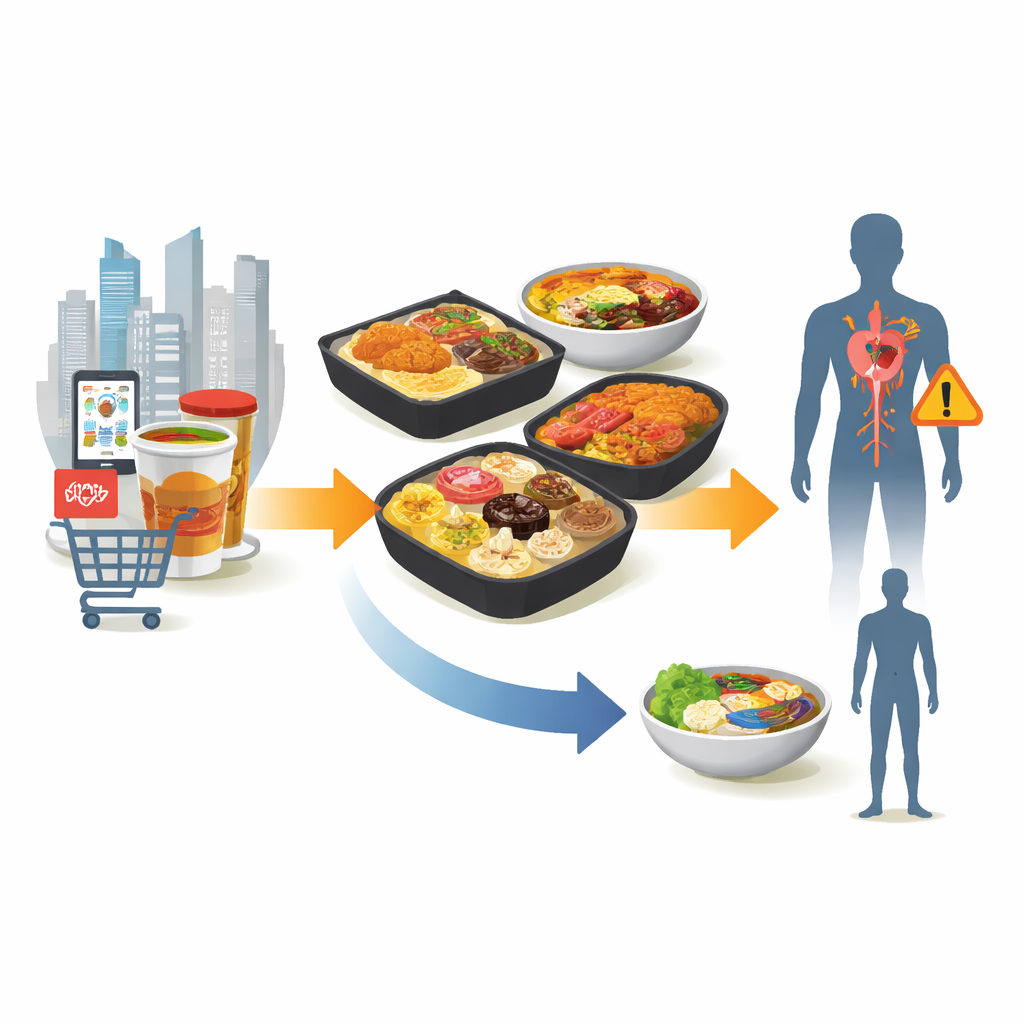
What the Researchers Set Out to Check
Because there was almost no published information on how healthy these products are, the research team searched four of China’s largest online retailers, which together account for nearly all of the country’s online shopping. They identified over 100,000 ready food listings, then carefully removed duplicates and items that lacked clear labels, finally ending up with 2,087 unique products. Using the nutrition facts printed on the packages, and an established scoring system called the Health Star Rating developed in Australia and New Zealand, they estimated the overall nutritional quality of each item and compared typical nutrient levels with Chinese dietary recommendations.
What’s Really Inside the Box
The typical ready food package weighed around 270 grams and delivered just over 2,200 kilojoules of energy—roughly one third of a full day’s needs for an average adult. Protein and fat levels were often high, but the most striking finding was sodium: the median package contained about 1,700 milligrams, far above the recommended limit for a single meal. More than 85% of products exceeded the suggested sodium intake, and only about a quarter fell within the recommended energy range. When translated into Health Star Ratings, these nutrition profiles looked poor. On average, products scored 2.7 out of 5 stars, and fewer than one in three reached the threshold the system considers “healthy.” Ready meals that bundled a staple food with a main dish tended to have more carbohydrate and slightly better scores than side dishes alone, but were still far from ideal.
Big Brands, Similar Problems
The team also looked at whether some manufacturers were doing better than others. They compared the ten companies with the most products to all of the smaller brands. For ready meals, the leading manufacturers actually had slightly lower average scores than the rest, and only about one in ten of their products counted as healthy by the star system. For side dishes, large producers did a bit better, but still only about a quarter of their offerings met the “healthy” cut-off. These patterns suggest that the issue is not just a few outliers but a broad industry tendency to prioritise taste, long shelf life, and low cost over nutritional balance. 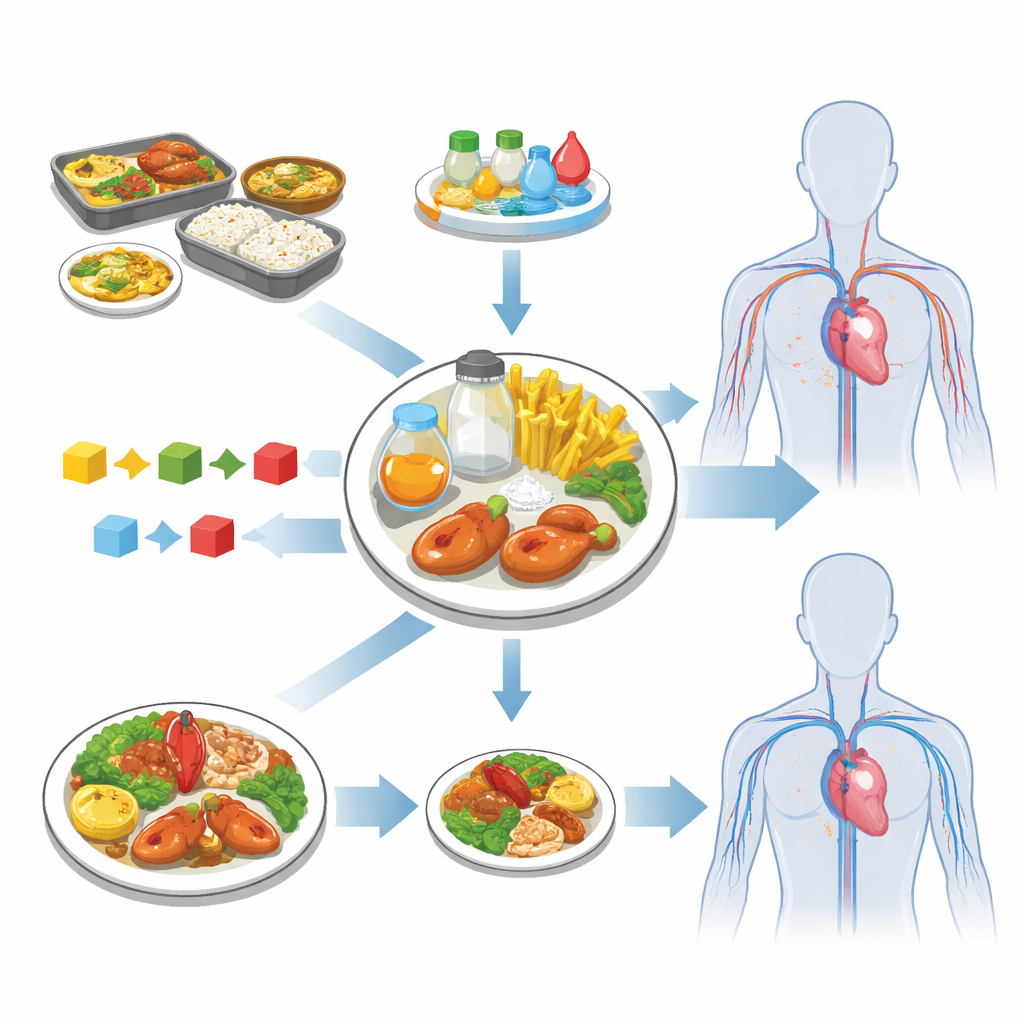
What This Means for Everyday Eating
From a layperson’s point of view, the message is clear: most ready foods now flooding Chinese online stores are salty, often unbalanced, and rarely qualify as genuinely healthy choices. The authors warn that relying heavily on these products could add to the country’s already growing burden of heart disease, high blood pressure, and other diet-related illnesses. They argue that solutions will require action on several fronts. Consumers need clearer information and better nutrition education so they can recognise healthier options. Policymakers can help by strengthening labelling rules, including simple front-of-pack symbols, and by pushing for standards that limit salt, saturated fat, and other risky nutrients. Food companies, especially the largest players, have a chance—and a responsibility—to reformulate their recipes so that convenience does not come at the cost of long-term health.
Citation: Wang, T., Xin, Y., Liu, X. et al. Nutritional contents, nutritional quality and manufacturer of ready foods in China: a cross-sectional study of 2087 food products. Nutr. Diabetes 16, 6 (2026). https://doi.org/10.1038/s41387-026-00413-1
Keywords: ready meals, online food shopping, nutrition quality, sodium intake, China diet trends