Clear Sky Science · en
The Beverage Quality Index and type 2 diabetes risk in women: a prospective analysis of the Mexican Teachers’ Cohort
Why What We Drink Matters
Type 2 diabetes is rising fast in Mexico, especially among women, and drinks loaded with sugar are a big part of the problem. This study followed tens of thousands of Mexican schoolteachers to ask a simple but important question: if you look at the overall “quality” of what people drink in a day—not just one beverage at a time—does that help predict who will later develop diabetes?
Turning Drinks Into a Single Score
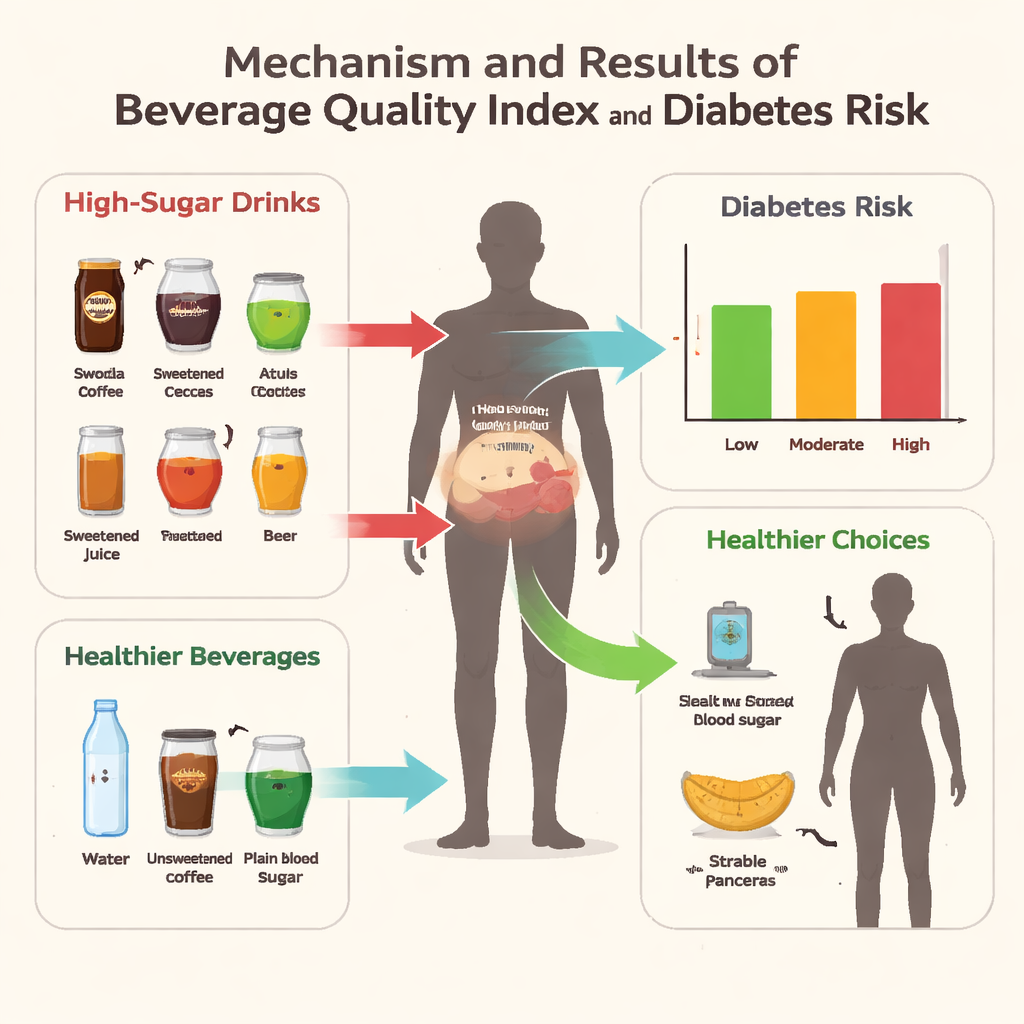
To tackle this question, researchers used a tool called the Beverage Quality Index (BQI). Instead of judging only one drink, the BQI combines several types of beverages into a single score from 0 to 70, where a higher score means a generally healthier mix. Coffee and milk counted as positive choices when consumed in moderate amounts. Sugary drinks like soda and traditional sweetened beverages such as aguas frescas and atole, along with fruit juices, alcohol, sugar added at home, and total calories from drinks, counted against the score when consumed in excess. The index was originally created using Dutch nutrition guidelines, so this study also tested how well that European concept fits Mexican drinking habits.
Following Thousands of Teachers Over Time
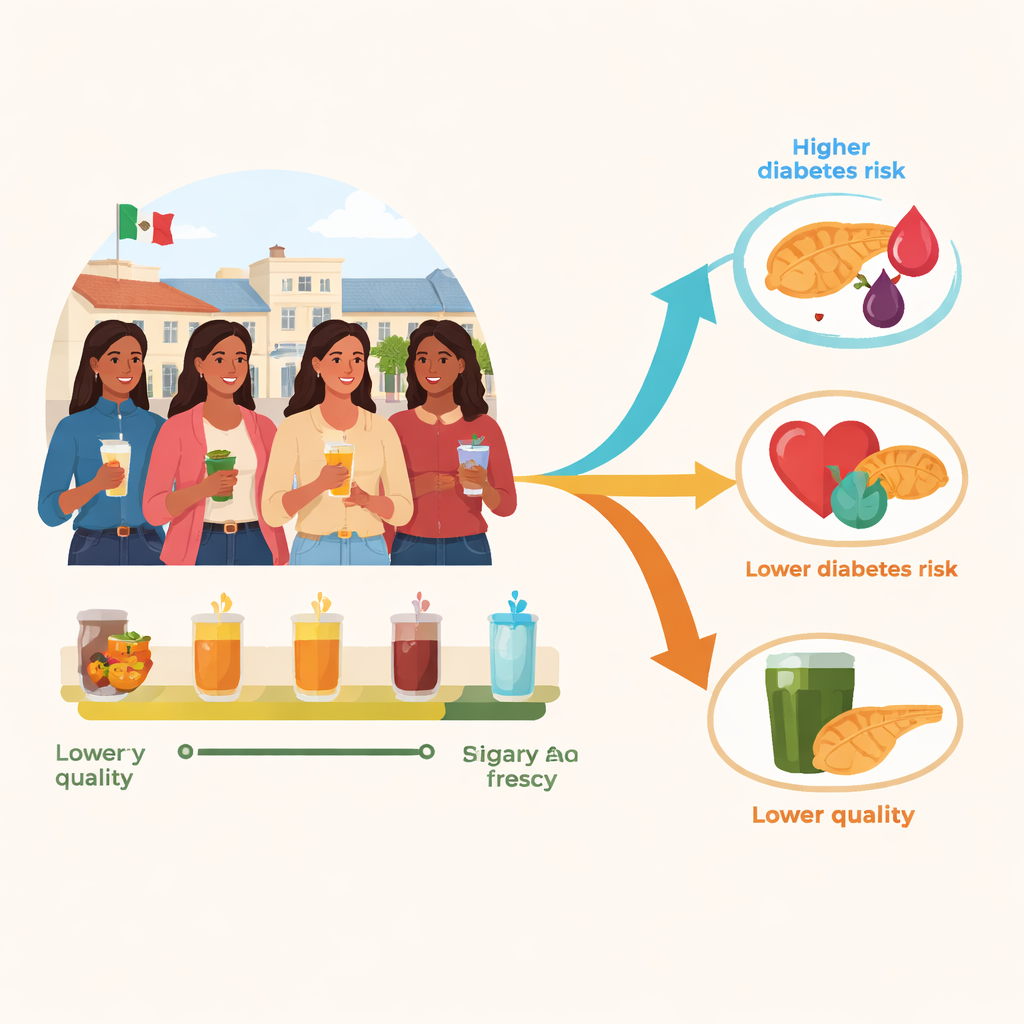
The study drew on the Mexican Teachers’ Cohort, a large ongoing project that tracks the health of female teachers across 12 states. Researchers focused on 77,484 women who did not have diabetes at the start, between 2006 and 2008. The women filled out a detailed food questionnaire that captured how often they drank different beverages over the previous year. The team then followed them for about eight years on average, checking survey responses and health records to see who developed diabetes and when it began.
What the Numbers Revealed
During the follow-up period, 4,521 women developed diabetes. When the researchers compared women with the lowest BQI scores (poorest beverage quality) to those with the highest scores (best beverage quality), the high-score group appeared to have a somewhat lower rate of diabetes. However, once the results were adjusted for other factors such as age, physical activity, family history, and overall diet, the difference was modest and statistically uncertain. When the BQI was analyzed as a smooth curve across its entire range, diabetes risk stayed roughly flat instead of steadily dropping with higher scores. In short, the study did not find a clear, consistent link between the BQI score and diabetes in this population.
Why Sugary Traditions May Blur the Picture
One reason the BQI may have struggled to predict diabetes risk is that Mexican beverage habits differ sharply from those in the Netherlands, where the index was developed. Almost all women in the study drank sugar-sweetened beverages, and many added sugar even to drinks usually considered healthier, such as coffee, tea, and dairy-based beverages. That meant that “good” and “bad” drinks often overlapped in practice, and most participants clustered in the middle of the BQI scale rather than falling into clearly distinct groups. The index also did not distinguish between low-fat and full-fat milk, which may matter more in a country where overweight and obesity are common. Interestingly, among women who already had overweight or obesity, those with the highest BQI scores did show a clearer reduction in diabetes risk, suggesting that improving drink choices might matter more in this higher-risk group.
What This Means for Everyday Choices
For a general reader, the take-home message is that drinks do matter for diabetes risk—but the particular scoring system used here was not well tuned to Mexican drinking patterns. The study did not prove that a higher BQI score strongly protects against diabetes in Mexican women, though it hinted at some benefit among women who already had excess weight. The findings point to the need for a new, locally tailored index that better captures how traditional sweetened drinks, added sugar, and milk types are actually consumed. In the meantime, practical advice remains straightforward: keeping sugary drinks and added sugar to a minimum, and favoring water and unsweetened beverages, is still a sensible strategy for protecting long-term health.
Citation: Jacobo Cejudo, M.G., Monge, A., Khandpur, N. et al. The Beverage Quality Index and type 2 diabetes risk in women: a prospective analysis of the Mexican Teachers’ Cohort. Nutr. Diabetes 16, 3 (2026). https://doi.org/10.1038/s41387-026-00410-4
Keywords: sugar-sweetened beverages, type 2 diabetes, Mexican women, beverage patterns, Beverage Quality Index