Clear Sky Science · en
The role of ovarian hormones in risk aversion in female rats
Why this research matters
Every day, people weigh rewards against possible harm: speeding to save time, investing money, or trying an addictive drug. Women, on average, tend to be more cautious about punishment-linked risks than men, yet the biological reasons for this difference are not fully understood. This study uses female rats to uncover how ovarian hormones shape the balance between chasing rewards and avoiding pain, offering clues that may eventually help explain sex differences in disorders involving risky choices, such as addiction or eating disorders. 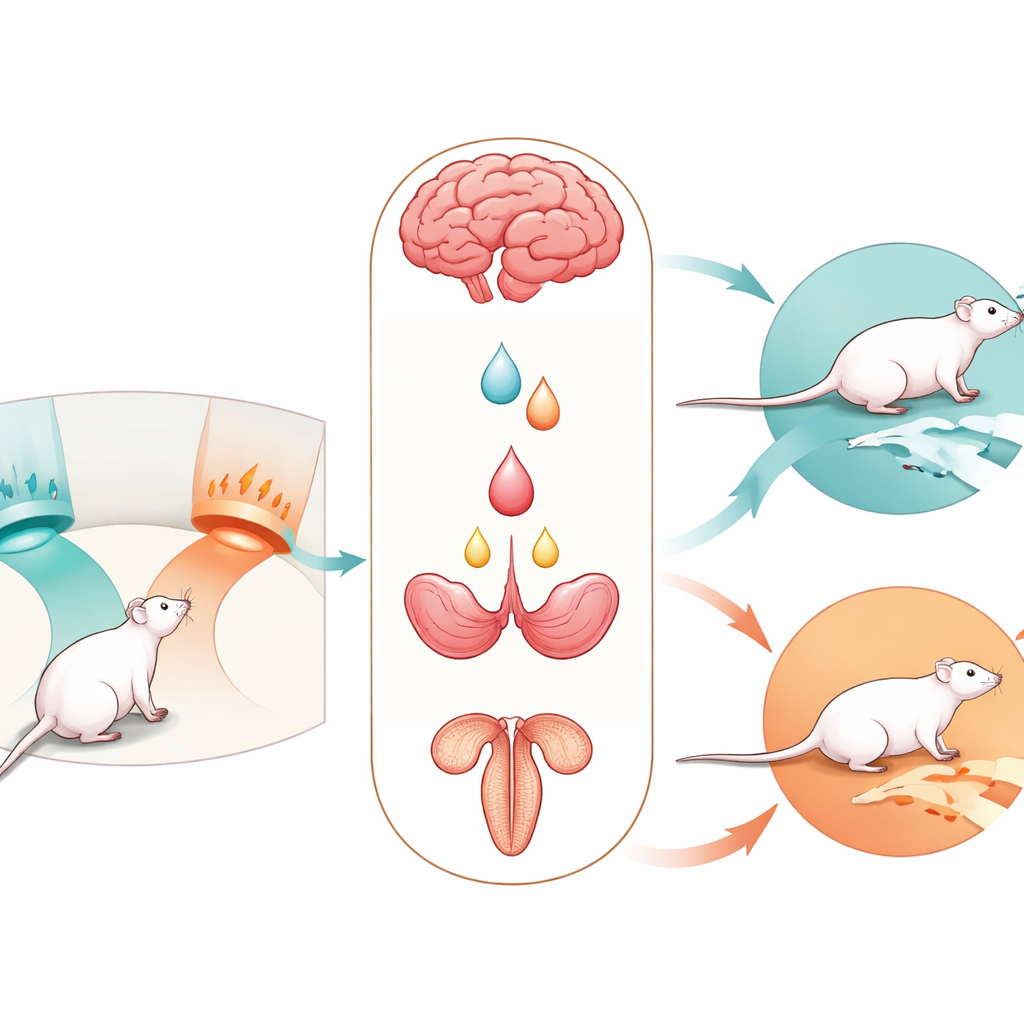
How the scientists tested risky choices
The researchers trained female rats in a “risky decision-making” setup. In each trial, a rat could press one lever for a small but completely safe food reward, or another lever for a larger reward that sometimes came with a brief footshock. Across the session, the chance of getting shocked when choosing the big reward rose from no risk to guaranteed punishment, forcing the animals to continuously judge how much danger they were willing to accept for extra payoff. Once the rats’ choices became stable, the scientists removed their ovaries, sharply reducing natural levels of the main ovarian hormones, estradiol and progesterone, and then repeated the decision task.
What happened when ovarian hormones were removed
After ovary removal, the rats became noticeably bolder: they chose the large, risky reward more often and the small, safe option less often, especially when shock was likely. Trial-by-trial analysis showed that they were more likely to repeat a risky choice after it was rewarded and less likely to switch away from risk after a shock. In other words, the loss of ovarian hormones made them more driven by reward and less deterred by punishment. These shifts mirror broader patterns seen in humans, where hormonal changes across life—such as menopause—can alter mood and decision making.
Pinpointing estradiol’s key role
To find out which hormone was responsible, the team gave ovariectomized rats estradiol benzoate, a form of estradiol that restores hormone levels similar to those seen just before ovulation. This treatment reversed the riskier behavior: rats again favored the safer lever and became more likely to change course after a punishing outcome. Next, the researchers asked which of two major estrogen receptors in the brain carried this effect. Using drugs that selectively activated either estrogen receptor alpha or beta, they showed that turning on receptor alpha—alone or together with receptor beta—reduced risk taking, while activating receptor beta by itself did not. Importantly, these drugs did not change how much the rats wanted food overall or how strongly they felt the shocks, indicating that the hormones were specifically reshaping how the animals evaluated risky choices. 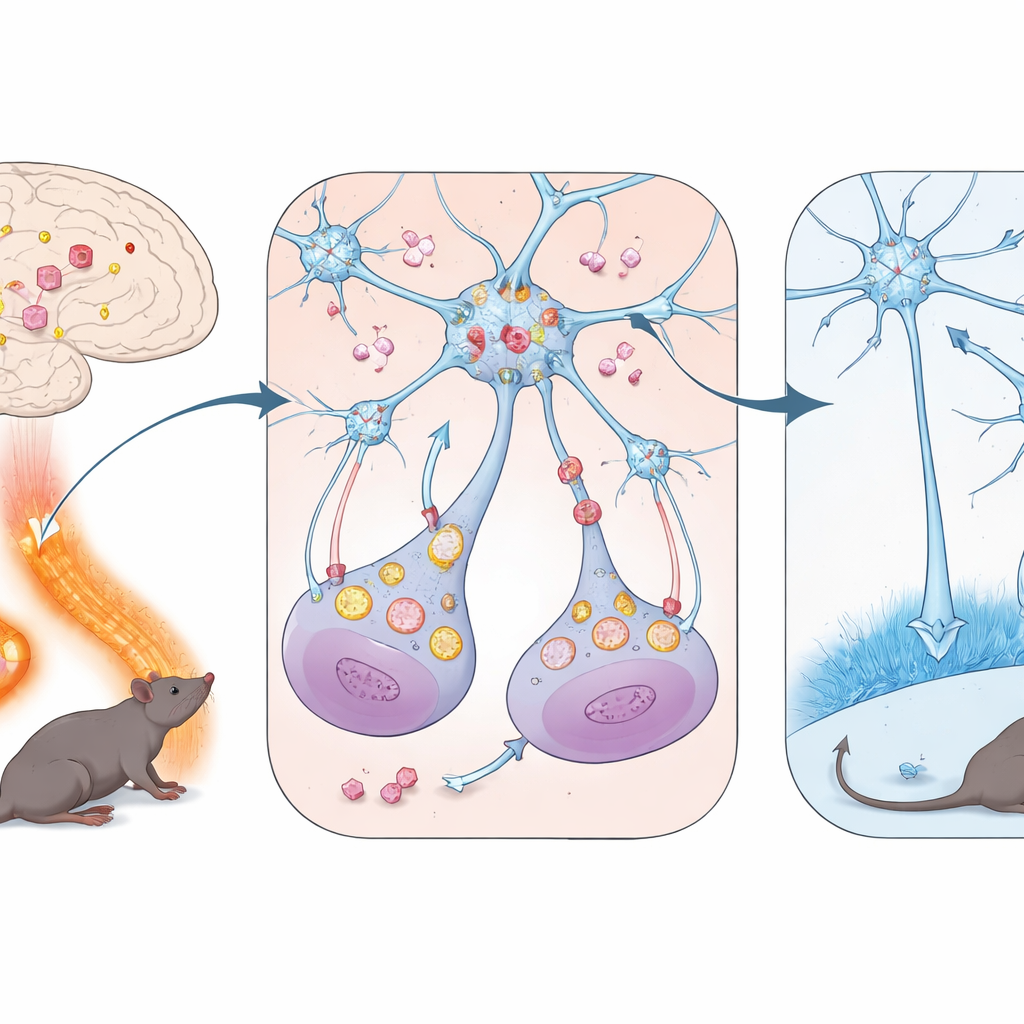
Testing progesterone’s influence
Progesterone, another major ovarian hormone, can counteract estradiol in other behaviors, particularly those related to drug use. Here, however, giving progesterone alone to ovariectomized rats did not change their preference for risky versus safe rewards. Combining progesterone with estradiol still produced a strong shift toward safer choices, and progesterone did not blunt estradiol’s protective effect. This suggests that, at least for decisions involving the chance of physical punishment, progesterone is not the main driver and does not meaningfully interfere with estradiol’s action.
What the findings mean for real-world health
Taken together, this work shows that estradiol is the crucial ovarian hormone promoting risk-averse choices in female rats, and that it likely does so by activating estrogen receptor alpha in the brain. By making punishment matter more and reward slightly less, estradiol nudges behavior toward safer options when harm is on the line. Understanding this hormone-receptor pathway may help explain why certain psychiatric conditions marked by harmful risk taking are more common in women, and could eventually guide strategies that take biological sex and hormonal state into account when treating problems like substance use and extreme dieting.
Citation: Truckenbrod, L.M., Carlos, N., Kelly, M. et al. The role of ovarian hormones in risk aversion in female rats. Neuropsychopharmacol. 51, 968–978 (2026). https://doi.org/10.1038/s41386-026-02347-9
Keywords: estradiol, risk taking, estrogen receptors, female decision making, ovarian hormones