Clear Sky Science · en
Tailoring the morphology and optical properties of alumina nanostructures by carbon quantum dot modification for enhanced heavy metal adsorption
Cleaning Dirty Water with Tiny Helping Hands
Access to clean drinking water is a growing concern worldwide, especially where heavy metals like copper contaminate rivers and wells. This study explores a new kind of ultra-tiny material—built from aluminum oxide (alumina) and glowing carbon "dots"—that can pull copper out of water quickly and efficiently. By tweaking how these particles are made, the researchers show they can tune both how the material behaves with light and how well it captures metal pollution, pointing toward smarter filters and future sensing devices for safer water.
Building a New Kind of Nano Sponge
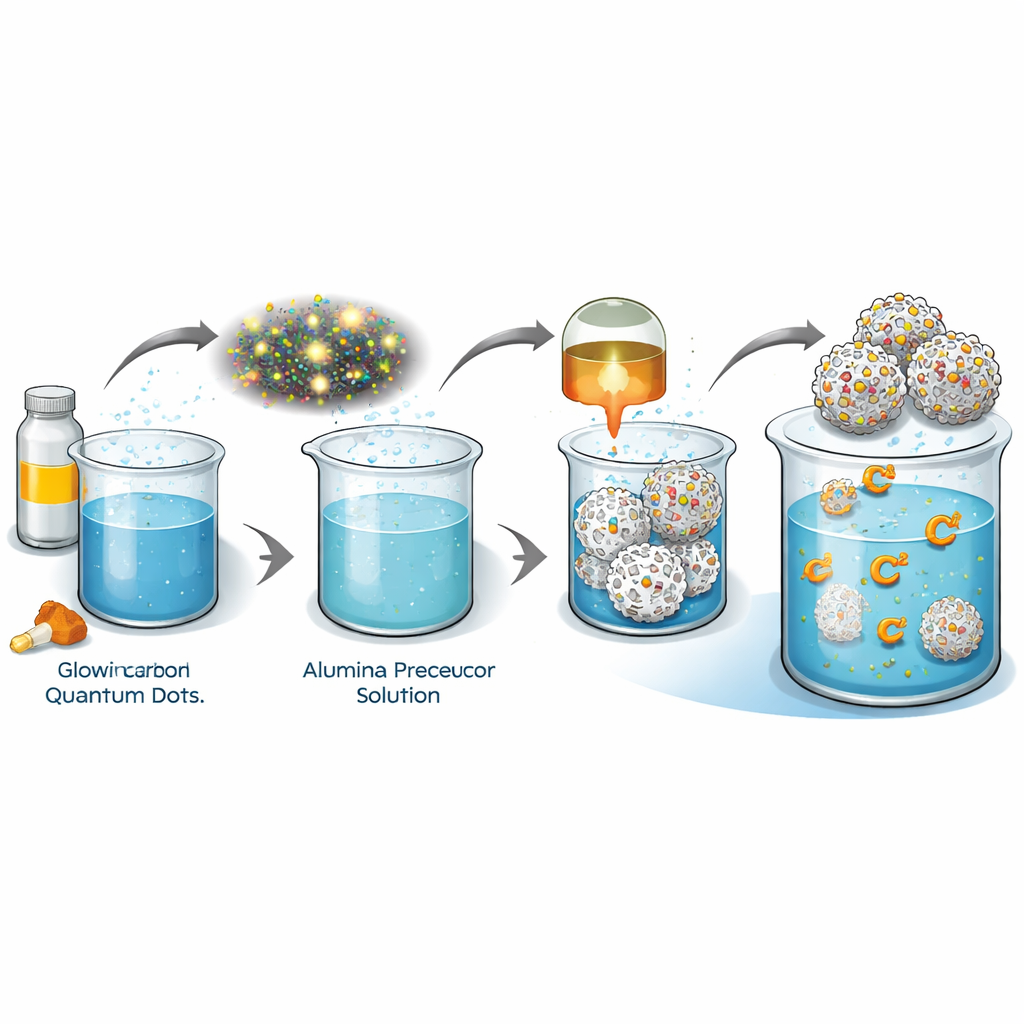
The team started with alumina, a well-known ceramic material valued for its strength, chemical stability, and large internal surface area—like a rigid sponge full of tiny pores. Alumina nanoparticles are already used in industry and environmental cleanup, but the researchers wanted to boost their performance by adding carbon quantum dots, which are nanoscale specks of carbon that strongly interact with light. They first made a liquid rich in these carbon dots by heating citric acid and then reacting it with an alkaline solution. Next, they used a simple, low-cost "co-precipitation" method to grow alumina in the presence of different amounts of this carbon-dot solution, producing a family of composites named AQD-1, AQD-7, AQD-13, and AQD-19, each containing more carbon than the last.
Shaping and Lighting Up the Nanostructures
To understand what they had created, the scientists used a suite of powerful microscopes and light-based techniques. X-ray measurements showed that when only a little carbon solution was used, the alumina kept a crystalline structure with tiny ordered grains just under 3 nanometers in size. As more carbon dots were added, that ordered structure broke down and the material became amorphous, meaning the atoms were still bonded but no longer arranged in a regular crystal pattern. Electron microscope images revealed that low-carbon samples formed thin, tangled filaments, while higher-carbon samples collapsed into clumps of smaller, rounded particles. At the same time, the surface chemistry changed: carbon-based groups rich in oxygen and nitrogen appeared on the particle surfaces, creating many potential binding sites for metal ions in water.
Balancing Surface Area and Pores for Water Cleanup
A key design feature for any filter is surface area—the more area exposed, the more spots there are for pollutants to stick. Surprisingly, as the carbon content increased, the total surface area of these composites actually dropped from about 247 to 98 square meters per gram. Detailed gas adsorption tests showed that while the overall pore structure remained slit-like, some of the pores became partially blocked or filled by the carbon dots, reducing the accessible volume. Yet this did not hurt performance in a straightforward way. Instead, the combination of modified pores and new surface groups from the carbon dots created highly active interfaces where copper ions could be captured efficiently, suggesting that the chemical nature of the surface can outweigh simple surface-area numbers.
Capturing Copper and Signaling Its Presence
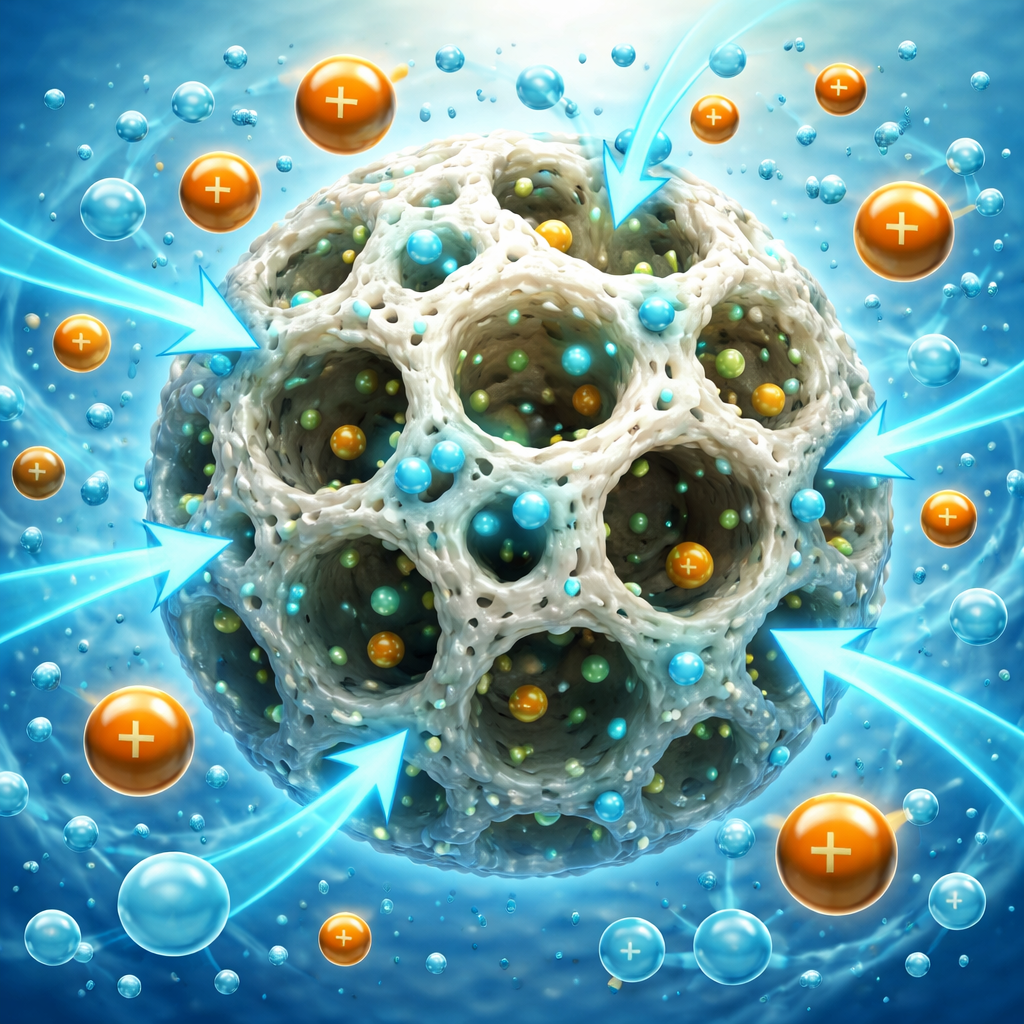
The most important test was whether these materials could clean real-world style water. The team challenged the nanocomposites with strongly contaminated water containing 184 parts per million of dissolved copper at mildly acidic pH. All versions removed 80 percent or more of the copper in as little as two minutes, an unusually fast response. The best performer, AQD-19, cut copper levels by about 97 percent within an hour and could be reused at least four times with only a modest drop in efficiency. Chemical and imaging analyses confirmed that copper was indeed trapped inside and on the surface of the particles. Because carbon dots glow under ultraviolet light, the researchers also tracked how the light emission changed when copper was present. After adsorption, the glow from the composite dimmed slightly, indicating that copper ions were interacting directly with the carbon-dot sites—an effect that could be harnessed as a simple optical signal for copper detection.
Why This Matters for Future Water and Sensing Technologies
For a non-specialist, the key message is that by carefully mixing alumina with tiny carbon dots during synthesis, scientists can "dial in" how the material looks under light and how it behaves in polluted water. Even though the internal surface area shrank as more carbon was added, the tuned surfaces became better at grabbing copper ions quickly and could signal their presence through subtle changes in glow. This dual role—as both a powerful adsorbent and a potential optical sensor—makes these nanocomposites promising candidates for future water purification cartridges, smart filters that report when they are saturated, and even biomedical or imaging tools where controlled light emission and safe, stable materials are essential.
Citation: Gholizadeh, Z., Aliannezhadi, M. Tailoring the morphology and optical properties of alumina nanostructures by carbon quantum dot modification for enhanced heavy metal adsorption. Microsyst Nanoeng 12, 80 (2026). https://doi.org/10.1038/s41378-025-01134-8
Keywords: nanocomposites, heavy metal removal, water purification, carbon quantum dots, alumina nanoparticles