Clear Sky Science · en
Synthetic lethality of MCL-1 inhibition and CAR-T therapy in aggressive B-cell lymphoma
Why this matters for cancer treatment
Aggressive B‑cell lymphomas are fast‑growing blood cancers that often come back after treatment. Even powerful new approaches like CAR‑T cell therapy, which reprograms a patient’s own immune cells to attack cancer, fail in roughly half of patients over time. This study explores a way to turn that weakness into a strength: using a drug that targets a key survival protein in lymphoma cells to both kill tumors and make the remaining cells easier for CAR‑T cells to finish off.
The problem of stubborn lymphoma cells
Aggressive B‑cell lymphomas are frequently driven by excessive activity of a gene called MYC, which pushes cells to divide rapidly and also helps them hide from the immune system. Standard treatments and even CAR‑T therapy can leave behind small pockets of lymphoma cells that tolerate drugs and later cause relapse. These “persister” and resistant cells live in a tumor neighborhood crowded with suppressive immune cells that keep killer T cells at bay. The authors asked whether blocking MCL‑1, a protein that lymphoma cells depend on to avoid self‑destructing, could expose a hidden weakness in this system.
A two‑step attack on tumor survival and hiding
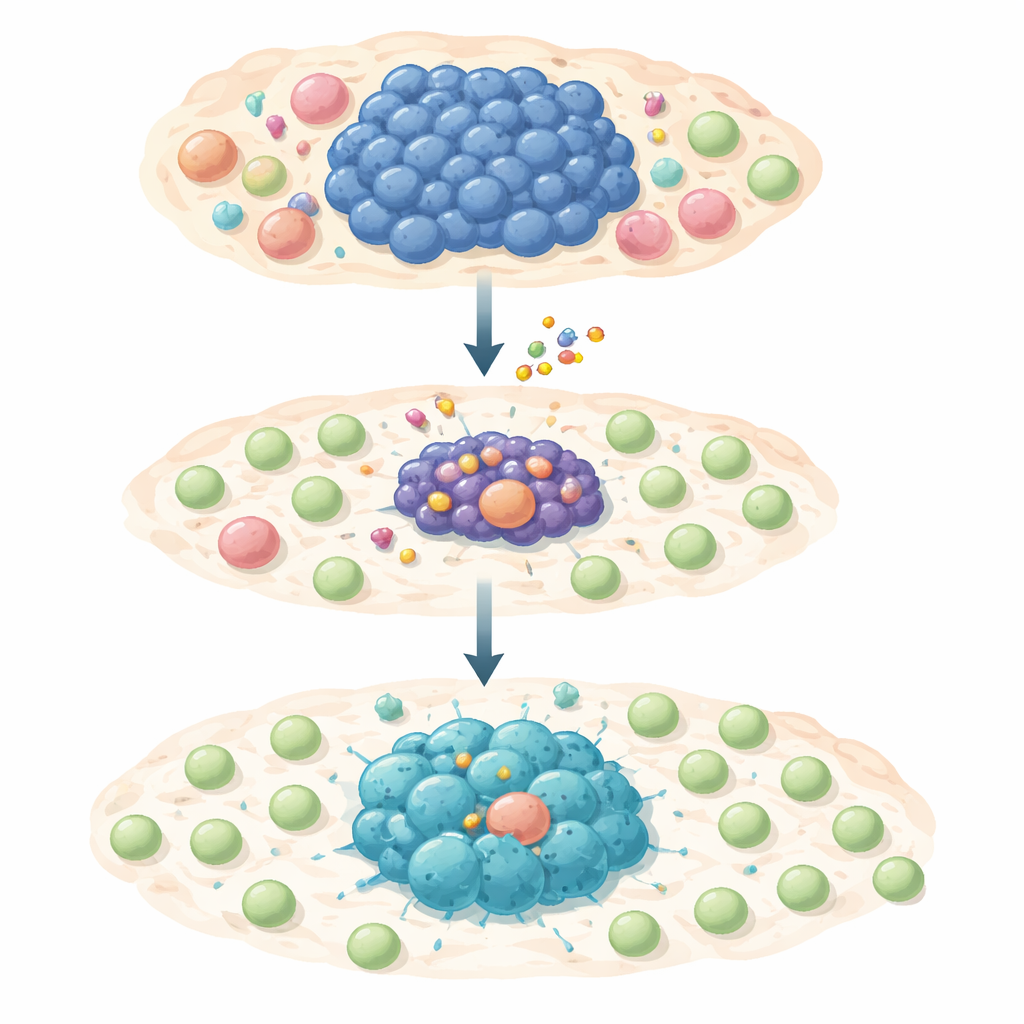
The team tested a selective MCL‑1‑blocking drug, S63845, in a large panel of human lymphoma cell lines that depend on MYC. Most of these cancer cells were highly sensitive to the drug and underwent programmed cell death when MCL‑1 was blocked. However, a small fraction survived short‑term or long‑term exposure and became drug‑tolerant or fully resistant. When the researchers examined these survivors in detail, they found that MYC activity was dampened while another molecule, STAT1, and its associated interferon alarm pathway were switched on. This shift turned on genes that drive inflammatory signals and chemokines—molecular “flares” that can summon T cells into the tumor area.
Reawakening the immune neighborhood
To see how this plays out in a living organism, the authors treated mice bearing MYC‑driven lymphomas with a low dose of the MCL‑1 inhibitor. The drug shrank the tumor burden while sparing normal B cells, but its impact went beyond simple debulking. Treated tumors showed more CD4 and CD8 T cells, fewer exhausted T cells, fewer regulatory T cells, and fewer suppressive myeloid cells, all signs of a more immune‑friendly environment. Single‑cell RNA sequencing of tumor and surrounding cells confirmed that residual lymphoma cells had reduced MYC, increased STAT1, and stronger interferon and inflammatory signals, while the surrounding tissue was repopulated with active T and natural killer cells rather than suppressive cells.
Turning resistance into an opening for CAR‑T cells
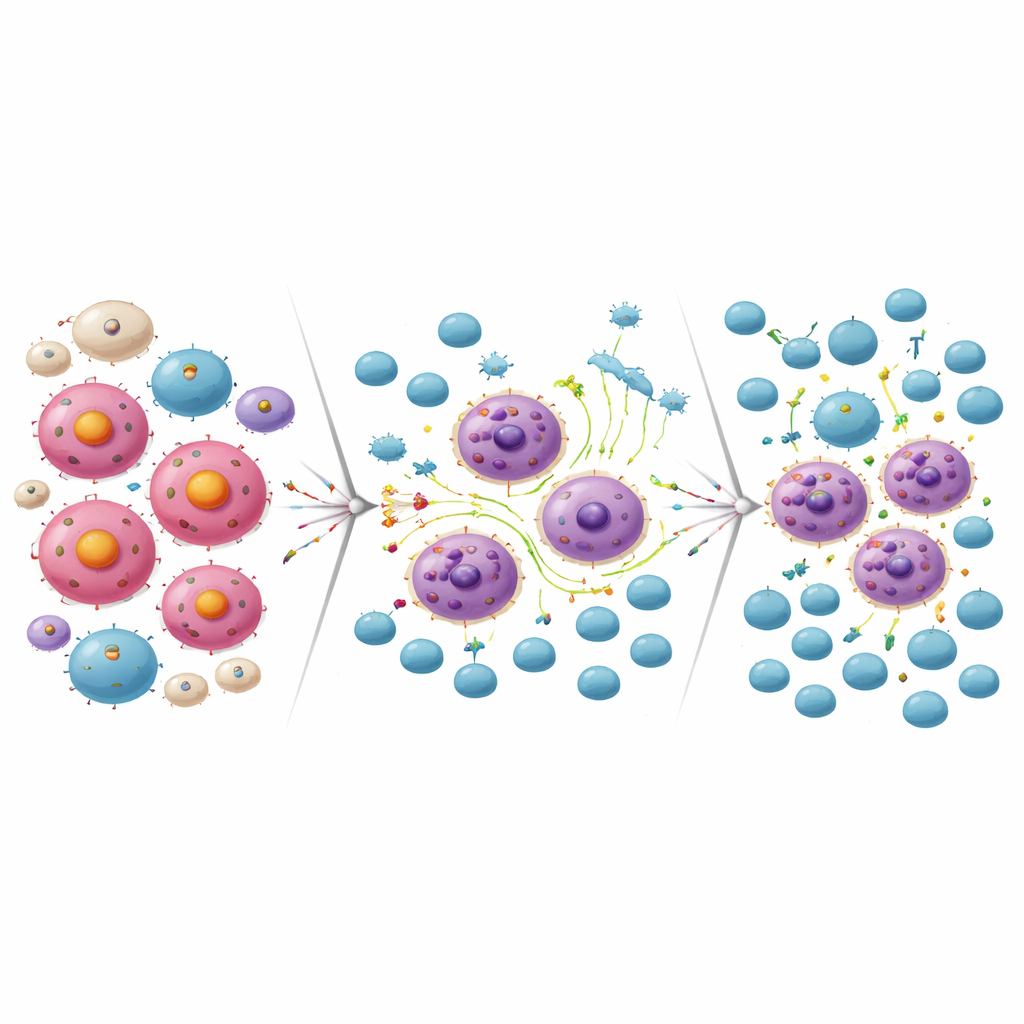
The same inflammatory reprogramming that helped some lymphoma cells survive MCL‑1 blockade also made them more vulnerable to immune attack. In the lab, CD19‑targeted CAR‑T cells efficiently killed lymphoma cells that had become resistant to the MCL‑1 drug. Conversely, lymphoma cells that had been made resistant to CD19 CAR‑T therapy were highly sensitive to the MCL‑1 inhibitor. When the researchers combined a sublethal dose of the MCL‑1 drug with CAR‑T cells in cell culture, the two treatments together wiped out far more lymphoma cells than either alone. In mouse models, giving the MCL‑1 inhibitor followed by CD19 CAR‑T cells led to near‑complete tumor clearance and significantly longer survival compared with single treatments.
A one‑two punch with curative potential
Put simply, the study suggests a “one‑two punch” strategy. First, an MCL‑1‑blocking drug knocks down most of the lymphoma and forces surviving cancer cells into an inflamed, highly visible state that draws in T cells and strips away protective immune shields. Second, CD19 CAR‑T cells exploit this newly exposed weakness to eradicate the remaining disease. By hitting both the tumor’s internal survival wiring and its protective neighborhood, this combined approach could reduce relapses and move aggressive B‑cell lymphomas closer to long‑lasting remission.
Citation: Gao, J., Zhao, X., Yin, Q. et al. Synthetic lethality of MCL-1 inhibition and CAR-T therapy in aggressive B-cell lymphoma. Leukemia 40, 638–648 (2026). https://doi.org/10.1038/s41375-026-02884-8
Keywords: B-cell lymphoma, CAR-T therapy, MCL-1 inhibition, tumor microenvironment, drug resistance