Clear Sky Science · en
Prognostic impact of myelodysplasia-related gene mutations in FLT3-ITD-mutated acute myeloid leukemia
Why Genes Matter in a Blood Cancer
Acute myeloid leukemia is an aggressive blood cancer, but people diagnosed with it do not all face the same outlook. Tiny changes in their DNA can make the disease more or less likely to come back after treatment. This study looks closely at how different constellations of gene changes interact in one common form of the disease, asking a practical question that matters to patients and doctors alike: who is really at high risk, and who might do better than expected?
Sorting Patients by Genetic Signals
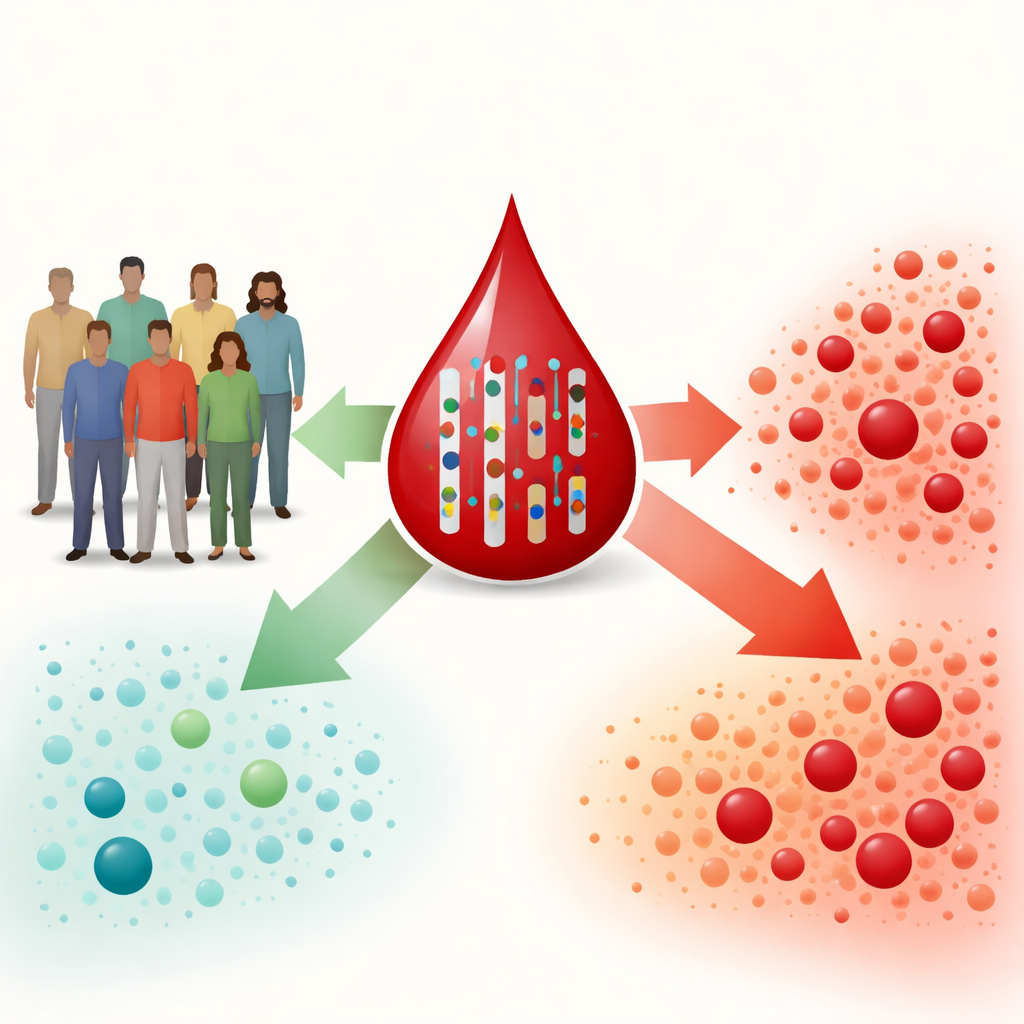
Doctors increasingly use genetic tests to guide leukemia treatment. Two of the most important genes are FLT3 and NPM1, which help control how blood cells grow and mature. Another group of nine genes, called myelodysplasia-related genes, is often linked to a poorer outlook. Current international guidelines tend to place patients with changes in both FLT3 and any of these nine genes into the highest risk group. The authors wanted to test whether that broad rule actually matches what happens to patients over time.
A Large European Patient Collection
To tackle this, researchers drew on the HARMONY Platform, a large European data resource that pools information from leukemia centers and clinical trials. They focused on 4,078 adults with acute myeloid leukemia who had received intensive chemotherapy, and from these identified 862 people with a specific FLT3 change known as an internal tandem duplication. About one in five of these patients also had at least one of the nine myelodysplasia-related gene mutations. The team compared how long patients lived and how long they stayed in remission, while also considering age, white blood cell counts, chromosome changes, and other important factors.
When Extra Mutations Worsen the Outlook
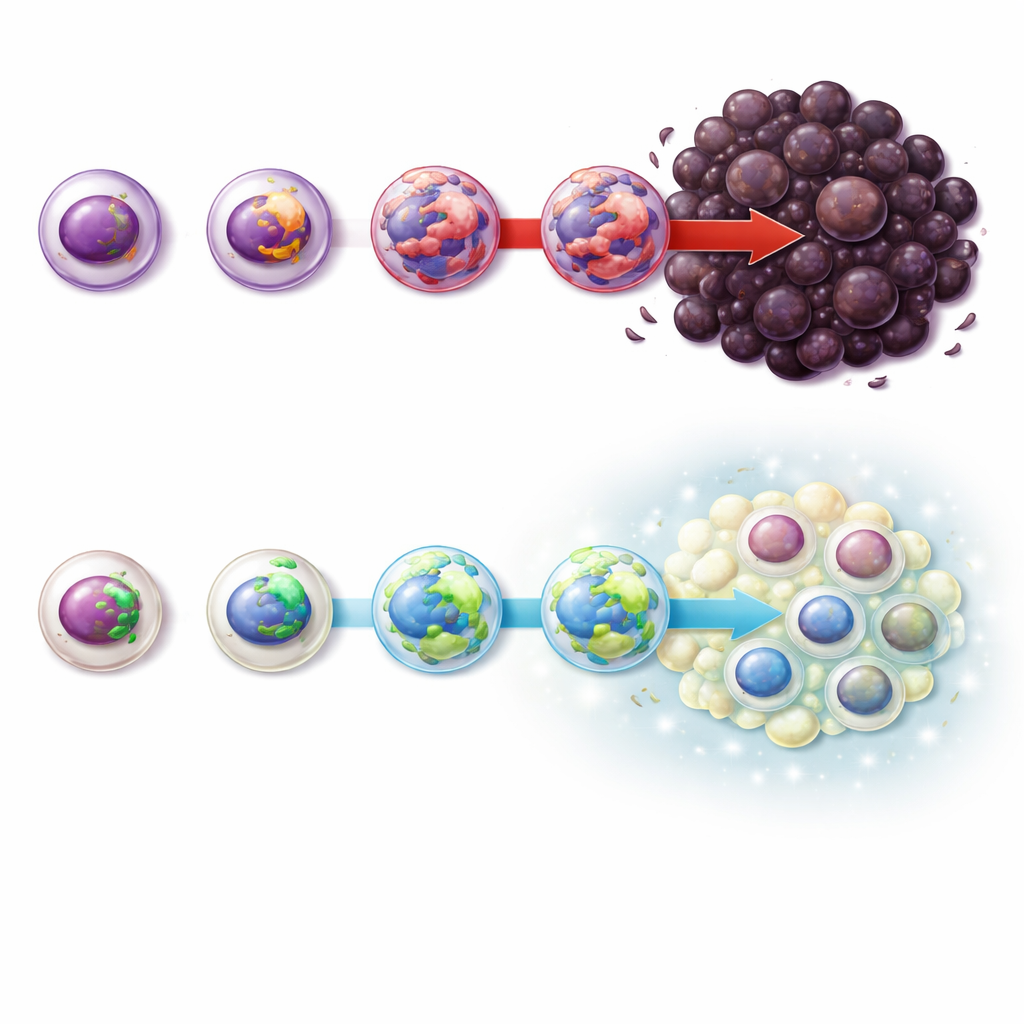
Looking at all 862 FLT3-ITD patients together, having a myelodysplasia-related mutation was linked to somewhat shorter survival at first glance, but this effect faded once age and other risk features were taken into account. The picture changed sharply, however, when the researchers split patients by NPM1 status. Among those whose NPM1 gene was normal, about one third carried at least one of the nine additional mutations. In this subgroup, myelodysplasia-related gene changes clearly predicted a higher chance of the disease returning and a lower chance of long-term survival, even after adjusting for other risk factors. Patients with two or more of these mutations fared especially poorly.
When a “Bad” Mutation Loses Its Bite
For patients who did have an NPM1 mutation, the story was different. Only about one in ten of them carried an extra myelodysplasia-related gene mutation, and in this setting those extra changes did not noticeably worsen outcomes. Their chances of staying in remission and overall survival were closer to what is seen in intermediate or even more favorable risk groups. Another measurement, the proportion of leukemia cells carrying the FLT3-ITD change, only added prognostic value in some subgroups and did not further separate risk among the highest-risk patients—those with FLT3-ITD, normal NPM1, and myelodysplasia-related mutations.
What This Means for Risk and Treatment
The findings suggest that the impact of risky gene changes in this leukemia is not fixed, but depends strongly on the broader genetic context. In patients with FLT3-ITD and normal NPM1, extra myelodysplasia-related mutations truly do signal a worse outlook and support classifying them in the highest risk group, often steering doctors toward aggressive options such as early stem cell transplantation. In contrast, when an NPM1 mutation is present alongside FLT3-ITD, these same additional mutations no longer appear to drive the disease toward a clearly poorer course. For those patients, automatically labeling them as highest risk may underestimate their chances. Although treatments continue to improve, especially with targeted drugs against FLT3, this work argues that fine-grained genetic combinations—not single mutations in isolation—should guide prognosis and, ultimately, personalized care.
Citation: Mecklenbrauck, R., Villaverde Ramiro, A., Sträng, E. et al. Prognostic impact of myelodysplasia-related gene mutations in FLT3-ITD-mutated acute myeloid leukemia. Leukemia 40, 622–629 (2026). https://doi.org/10.1038/s41375-026-02874-w
Keywords: acute myeloid leukemia, FLT3-ITD, NPM1, myelodysplasia-related genes, prognostic risk