Clear Sky Science · en
Strong constitutive NF-κB signaling in B cells drives SLL/CLL-like lymphomagenesis and overcomes microenvironmental dependencies
When Immune Cells Go Rogue
Our immune system relies on B cells to recognize germs and remember past infections. This study explores what happens when a key control switch inside B cells, called NF-κB, is stuck in the “on” position. The work shows how this persistent signal can turn normal B cells into leukemia- and lymphoma-like cells that resemble human chronic lymphocytic leukemia (CLL), and how it can even free these cancer cells from the normal support they need from their surroundings. Understanding this process could point to new ways to treat hard‑to‑cure blood cancers.
A Master Switch in Immune Cells
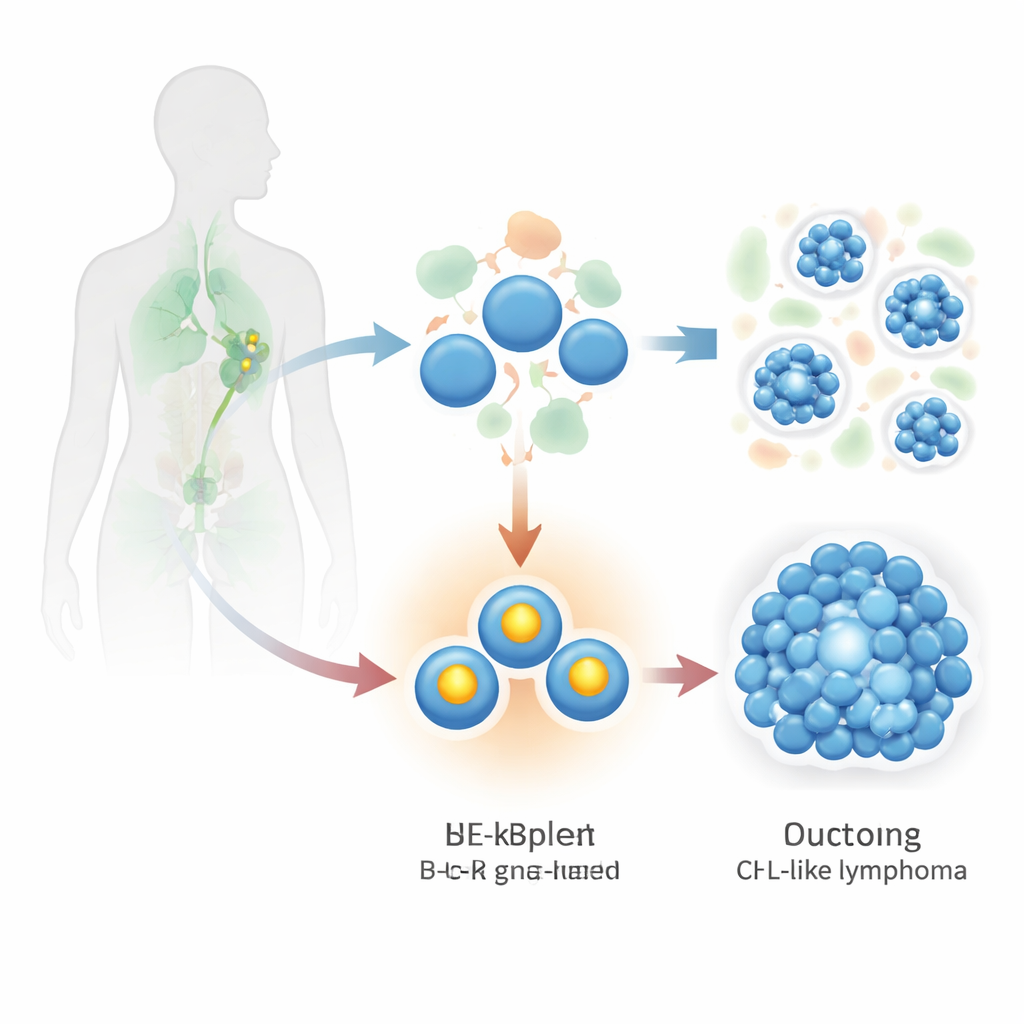
NF-κB is a family of proteins that acts like a master switch for genes controlling cell survival, growth, and immune responses. Under healthy conditions, NF-κB turns on only when B cells receive signals from infections or from helper cells in lymph nodes. In many human lymphomas and CLL, however, NF-κB is chronically active. The authors asked a simple but powerful question: if they forced NF-κB to be constantly active specifically in mouse B cells, would this alone be enough to start cancer, and would the strength of that signal matter?
Turning the Signal Up in B Cells
To test this, the researchers engineered mice whose B cells produce an always‑active version of a protein called IKK2, a key trigger of the “canonical” NF-κB pathway. Some mice carried one copy of the altered IKK2 gene, while others had two, creating weaker or stronger levels of NF-κB activity. In young animals, both levels enlarged the spleen and increased certain B cell populations, but strong signaling caused a striking expansion of a special B cell subset known as B1a cells. These cells normally reside in body cavities and are thought to be a likely source of human CLL. Genetic profiling confirmed that NF-κB target genes were switched on in a dose‑dependent way: twice as much active IKK2 led to markedly stronger NF-κB gene programs.
From Overgrowth to CLL‑Like Cancer
As the mice aged, those with the strongest NF-κB signal almost uniformly developed a slow‑growing but ultimately fatal disease closely resembling human small lymphocytic lymphoma and CLL. Their spleens became massively enlarged and packed with small, CD5‑positive B1a‑like cells that infiltrated other organs. Mice with only one copy of the active IKK2 gene also developed disease, but later in life and with more varied tumor types. The cancerous B cells showed repeated patterns in their antigen receptors, similar to what is seen in human CLL, suggesting that self‑like or modified self molecules help select and expand these clones. When these tumor cells were transplanted into new mice, they grew aggressively, confirming that they were true lymphomas.
Supercharging a Known Leukemia Model
The team next combined constant NF-κB activity with another well‑established leukemia driver, a protein called TCL1, which on its own produces a CLL‑like disease in mice. Adding one or two copies of active IKK2 dramatically sped up disease: mice died much earlier and showed massive spread of malignant B1a‑like cells through spleen, lymph nodes, bone marrow, and body cavities. Gene‑expression analyses revealed that these double‑driven tumors switched on many pathways linked to cell division, inflammation, and aggressive, poor‑prognosis forms of human CLL, including signatures associated with transformation into fast‑growing Richter syndrome. Even when NF-κB was activated only in a small fraction of candidate cells, those cells quickly outcompeted all others, showing a powerful cell‑intrinsic growth advantage.
Breaking Free from Their Neighborhood
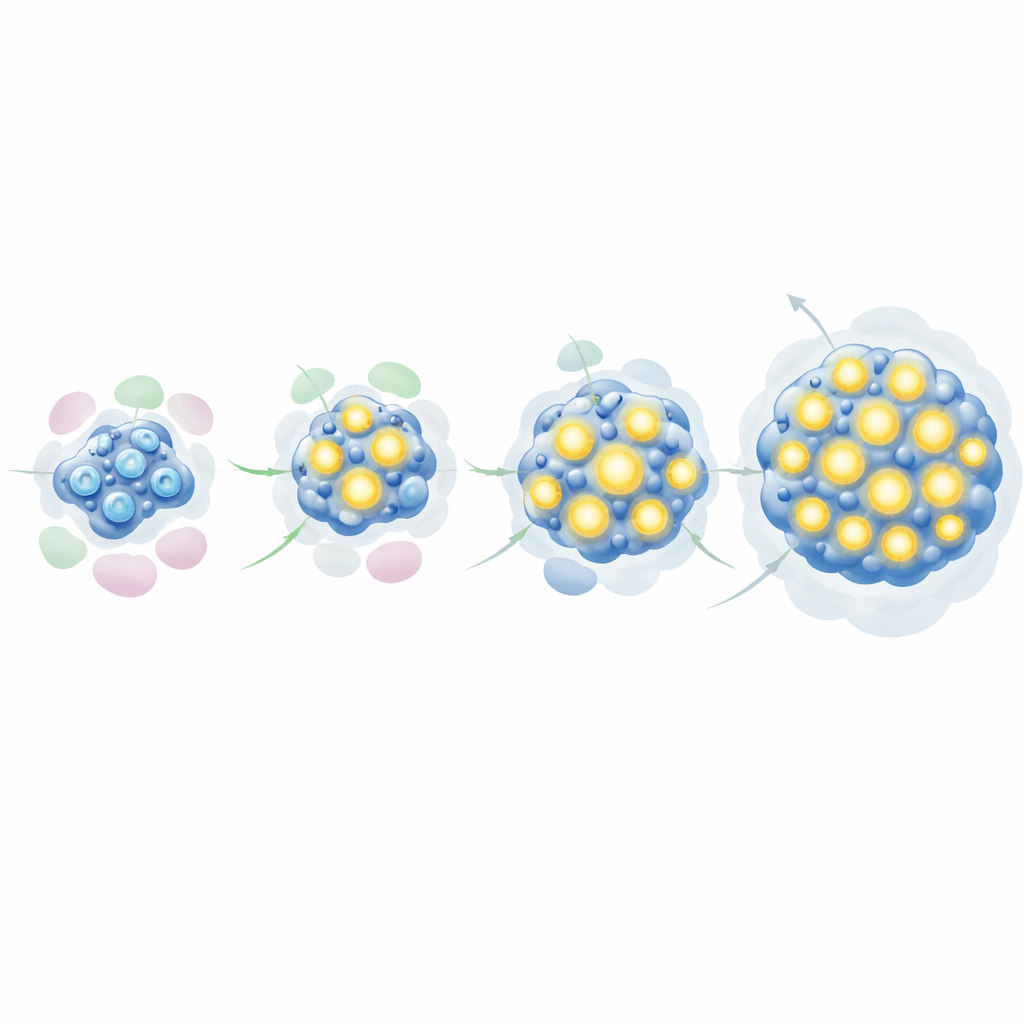
CLL cells in patients usually depend heavily on surrounding support cells, such as stromal cells in lymph nodes and bone marrow, which provide survival and growth cues. In a previous model, this support required a protein called PKC‑β in the non‑cancer cells; without it, transplanted CLL cells failed to thrive. In this new study, TCL1‑driven leukemia cells that also carried very strong NF-κB activation were able to grow even in mice completely lacking PKC‑β, whereas ordinary TCL1‑driven cells could not. In lab cultures, only the cells with both TCL1 and the highest NF-κB signal could keep dividing for many days without added stimulation. These findings show that intense internal NF-κB activity can replace normally essential signals from the microenvironment and make leukemia cells more self‑sufficient.
What This Means for Patients
This work demonstrates that strong, constant NF-κB signaling in B cells is not just a passenger but can be a direct driver of lymphoma and CLL‑like disease. By boosting the growth and self‑renewal of B1a‑like cells, cooperating with other cancer‑promoting genes such as TCL1, and reducing the tumor’s dependence on its surroundings, NF-κB helps generate more aggressive, treatment‑resistant disease. For patients, this suggests that therapies aimed at dampening NF-κB signaling, or blocking the key factors it turns on, could be especially valuable for high‑risk CLL and related lymphomas, particularly in cases that no longer respond to drugs targeting the tumor’s microenvironment.
Citation: Soberón, V., Osswald, L., Moore, A. et al. Strong constitutive NF-κB signaling in B cells drives SLL/CLL-like lymphomagenesis and overcomes microenvironmental dependencies. Leukemia 40, 522–539 (2026). https://doi.org/10.1038/s41375-025-02844-8
Keywords: chronic lymphocytic leukemia, B cells, NF-kappaB, lymphoma microenvironment, TCL1 mouse model