Clear Sky Science · en
JAK2V617F reprograms Hypoxia Inducible Factor-1 to induce a non-canonical hypoxia regulon in myeloproliferative neoplasms
Why this matters for blood cancer
Some slow-growing blood cancers, known as myeloproliferative neoplasms, can quietly smolder for years before suddenly turning into aggressive leukemia. This study asks a simple but crucial question: how does a common cancer-driving mutation hijack the cell’s built‑in system for sensing oxygen, and can that hijacking be specifically targeted without harming healthy cells? The answers may open a new way to treat high‑risk patients while sparing normal tissues that also depend on oxygen‑sensing signals.
The body’s oxygen alarm system
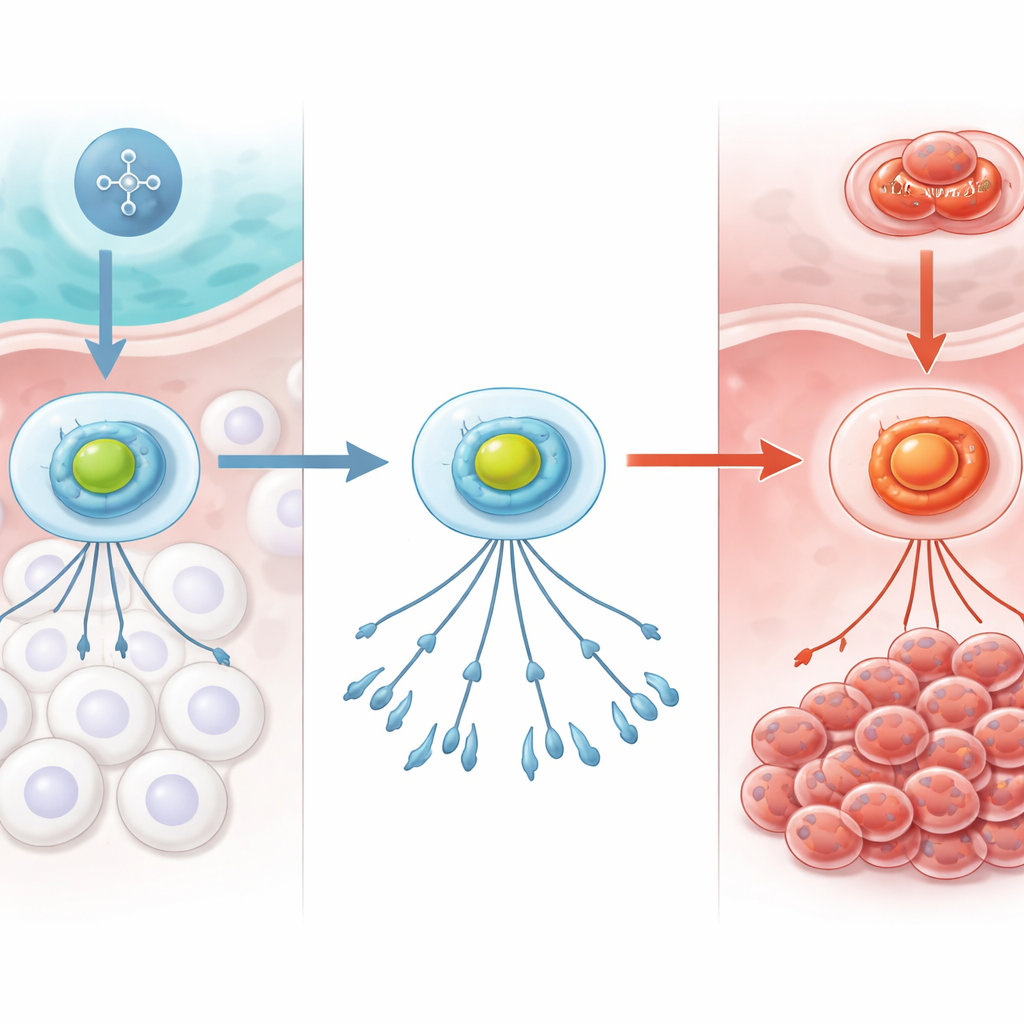
Cells constantly monitor how much oxygen is available. At the heart of this system is a protein complex called HIF‑1, which behaves like an oxygen alarm. Under normal, well‑oxygenated conditions, a subunit of HIF‑1 is rapidly broken down, keeping the alarm off. When oxygen drops, this breakdown halts, HIF‑1 stabilizes, moves to the cell’s DNA, and switches on genes that help cells adapt, for example by changing how they use energy or growing new blood vessels. In cancer, this same system can be turned to the tumor’s advantage, helping malignant cells cope with stressful environments such as the low‑oxygen bone marrow.
When a mutation rewires the alarm
The researchers focused on a mutation called JAK2V617F, which is very common in myeloproliferative neoplasms. Earlier work showed that this mutation keeps the HIF‑1 alarm switched on even when oxygen is plentiful. Using engineered cell lines, the team compared HIF‑1 bound to DNA under two conditions: genuine low oxygen, and normal oxygen in the presence of the JAK2V617F mutation. They found that in mutated cells HIF‑1 binds fewer regions of the genome, is less responsive to changes in oxygen, and interacts with a different set of partner proteins, many of them involved in RNA processing. In other words, the mutation does not just flip HIF‑1 permanently “on” — it retunes the alarm to a different set of targets.
A cancer‑specific gene program
From these experiments, the authors defined several HIF‑1–dependent gene sets, including one they call the JAK2V617F hypoxic signature. They then asked how strongly these signatures are turned on in blood cells from 172 patients with JAK2V617F‑positive myeloproliferative neoplasms. Surprisingly, the usual low‑oxygen HIF‑1 gene programs did not predict how sick patients were or how long they lived. In contrast, the mutation‑specific hypoxic signature clearly separated patients with more severe disease and was linked to poorer overall survival. Many of the genes in this set were especially active in megakaryocyte progenitors, the bone‑marrow cells that overgrow and drive scarring in these disorders, and some were involved in repairing DNA damage — a process that can help cancer cells survive harmful stresses.
Clues to sudden disease worsening
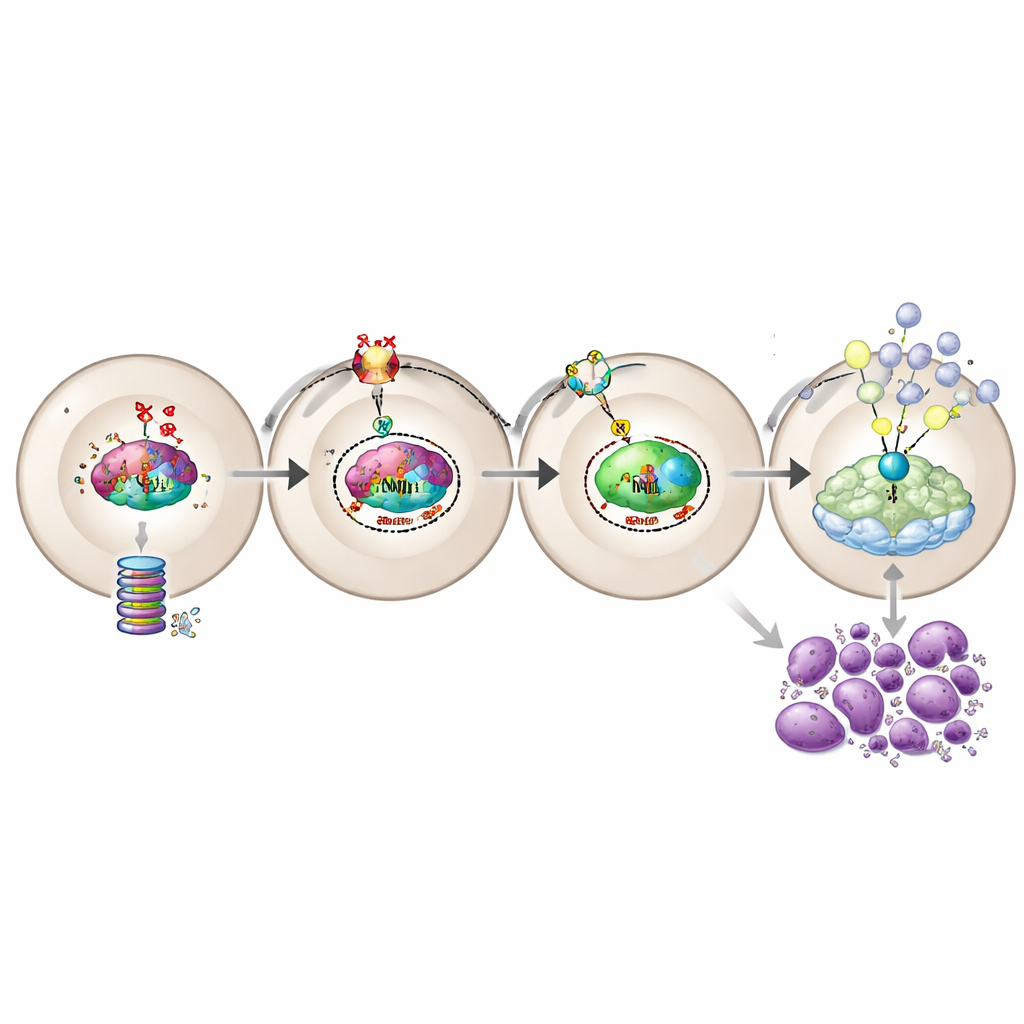
A major fear for patients is sudden transformation from chronic disease to an aggressive “blast phase” leukemia. By analyzing matched samples from patients before and after this change, the team distilled a smaller 13‑gene subset, dubbed the HIF1‑MPN‑BP signature, that rose or fell with transformation. This subset was strongly associated with higher risk scores, worse survival, and more severe bone‑marrow scarring. Importantly, this pattern appeared to be specific to JAK2V617F‑driven disease, rather than a generic feature of all leukemias. Many genes in this subset are plausible drug targets, suggesting a focused roster of candidates for future therapies aimed at blocking progression.
Finding the mutation’s hidden helper
How does JAK2V617F keep HIF‑1 active independently of oxygen? Using protein‑chemistry approaches, the authors discovered that in mutated cells HIF‑1 carries two previously unknown chemical tags (phosphorylations) within a region that normally controls its breakdown. They traced these changes to PIM1, a kinase enzyme switched on downstream of the JAK2 mutation. Blocking PIM1 with experimental drugs caused HIF‑1 levels to drop in mutant cells, but left the normal low‑oxygen response largely intact. PIM1 inhibition also selectively reduced expression of the risky HIF1‑MPN‑BP genes and pushed mutant cells toward cell death, while sparing their non‑mutated counterparts.
What this means for patients
This work shows that the same oxygen‑sensing protein, HIF‑1, behaves very differently depending on how it is activated. In JAK2V617F‑driven myeloproliferative neoplasms, a JAK2–PIM1 signaling axis stabilizes HIF‑1 in a way that detaches it from normal oxygen control and narrows its activity to a disease‑promoting gene set. Because this altered program is tightly linked to disease severity and transformation risk, and can be dampened by blocking PIM1, it offers a promising route to target malignant HIF‑1 activity while preserving its essential role in healthy tissues. Therapies that exploit this difference could one day help prevent slow‑burn blood cancers from tipping into life‑threatening leukemia.
Citation: Kealy, D., Ellerington, R., Bansal, S. et al. JAK2V617F reprograms Hypoxia Inducible Factor-1 to induce a non-canonical hypoxia regulon in myeloproliferative neoplasms. Leukemia 40, 609–621 (2026). https://doi.org/10.1038/s41375-025-02843-9
Keywords: myeloproliferative neoplasms, JAK2V617F, HIF-1, PIM1 kinase, blast phase transformation