Clear Sky Science · en
Prolonged patent ductus arteriosus exposure and risk for late acute kidney injury in extremely preterm infants
Why tiny kidneys and small heart vessels matter
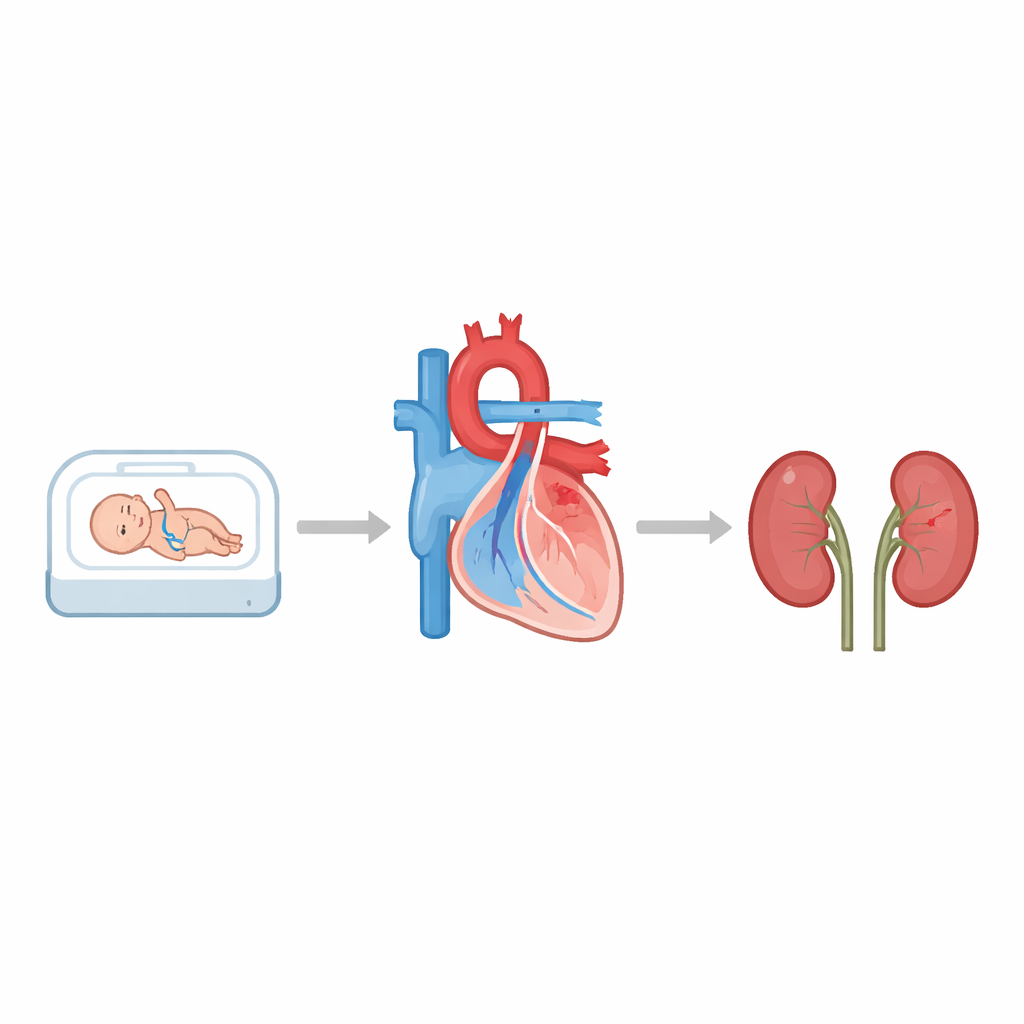
When babies are born extremely early, every organ is still under construction. Doctors worry a lot about the heart and lungs, but the kidneys—our natural filters—are also very vulnerable. This study asked a focused question: if a major blood vessel near the heart in very premature babies stays open for a long time, does that extra strain on circulation make serious kidney damage more likely weeks later?
A common vessel that should close but sometimes does not
Before birth, babies have a short blood vessel called the ductus arteriosus that helps bypass the lungs. After birth it is supposed to close. In very premature infants, however, it often stays open; doctors call this a patent ductus arteriosus, or PDA. When the PDA is large and strongly affects blood flow, it can steal blood away from the body and kidneys and push too much toward the lungs. At the same time, many hospitals have shifted toward a more watch-and-wait approach instead of closing PDAs quickly with medicines. This means some fragile infants may live with this extra heart vessel for months, raising concerns that their kidneys could suffer over time.
How the researchers followed blood flow and kidney health
The team reviewed records from a single intensive care unit for 216 infants born before 29 weeks of pregnancy who still needed breathing support at four weeks of age. These babies routinely received heart ultrasounds from about four weeks of life until they went home, allowing the doctors to see whether the PDA was still open and whether it was large enough to strongly affect blood flow. The researchers grouped the infants by how long they were exposed to a strongly influential PDA: about one to two months, two to three months, or three months or longer. They then tracked who developed "late" acute kidney injury—new kidney damage starting at four weeks of age or later—by looking at rises in blood creatinine, a standard marker of kidney function.
What they found about long-lasting openings
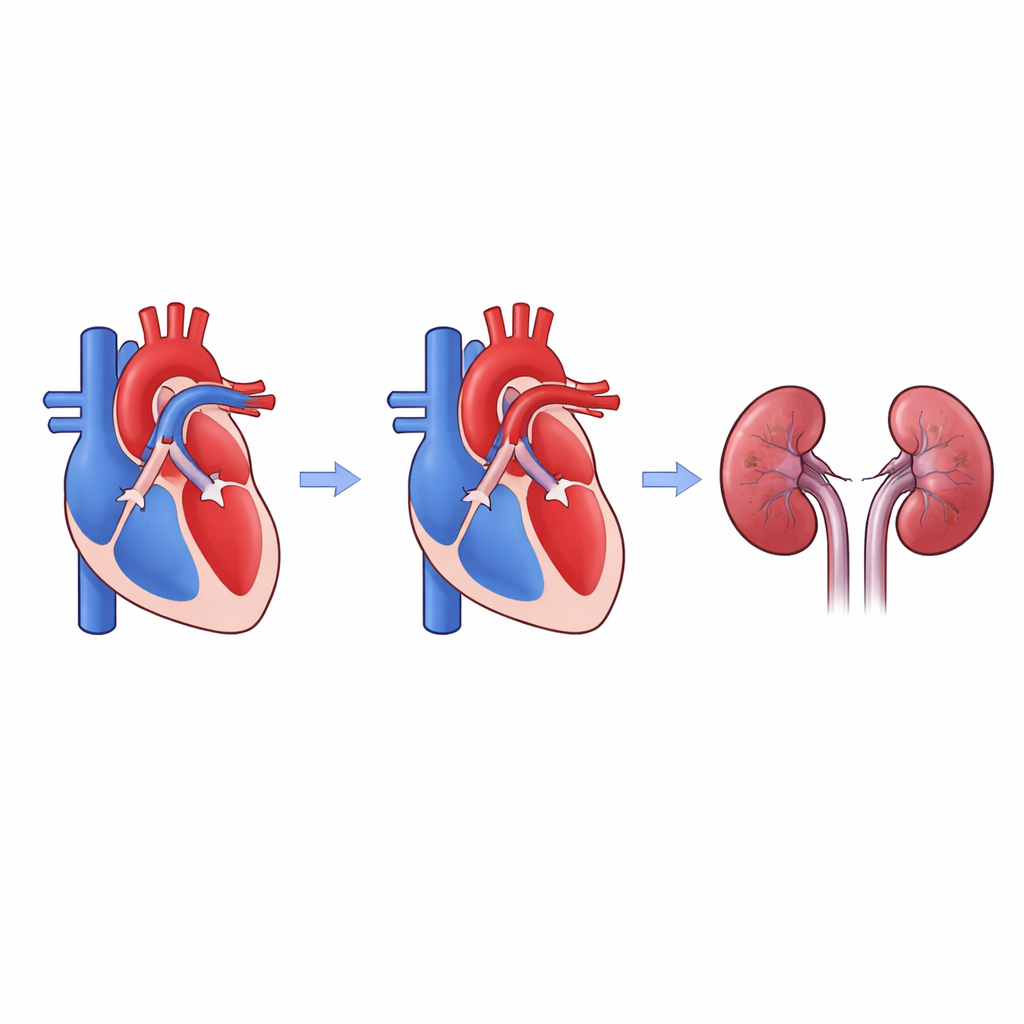
Overall, 18 percent of these very premature infants developed late kidney injury, and most of those cases were severe. At first glance, babies whose PDA stayed strongly open for at least 12 weeks seemed to have roughly four times the odds of severe kidney injury compared with babies without that long exposure. But the same babies were also the most premature and smallest at birth—factors already known to increase kidney risk. When the researchers adjusted for how early the babies were born, the apparent extra risk from a long-lasting PDA was no longer statistically clear. Shorter durations of PDA exposure did not show a meaningful rise in kidney problems. In other words, prematurity itself, along with other illnesses, may explain much of the danger.
Kidney injury as part of a bigger picture of illness
Babies who developed late kidney injury in this study tended to have more serious lung disease, more bowel disease, more high blood pressure in the lungs, and a higher risk of death than those without kidney injury. These links suggest that kidney trouble is often one piece of a larger pattern of strain on the body rather than an isolated problem caused by one blood vessel. The study also had limits: it came from one hospital, could not fully capture all drug exposures that affect the kidneys, and, because it looked backward at charts rather than running a controlled trial, cannot prove cause and effect.
What this means for families and future care
For parents of extremely premature infants, this research offers cautious reassurance: simply having a PDA, or even having it remain open for several weeks, did not clearly increase the risk of serious kidney injury by itself. There is a hint that very long-lasting, strong PDAs might contribute to kidney harm, but that signal is tangled up with the fact that the sickest and smallest babies are also the ones most likely to have both PDAs and kidney problems. The authors conclude that larger, multi-hospital studies and future clinical trials that report kidney outcomes are needed. Those efforts should help doctors decide how long it is safe to simply watch an open ductus arteriosus—and when closing it might best protect the tiniest kidneys.
Citation: Muterspaw, K., Griffin, R., Askenazi, D. et al. Prolonged patent ductus arteriosus exposure and risk for late acute kidney injury in extremely preterm infants. J Perinatol 46, 358–363 (2026). https://doi.org/10.1038/s41372-026-02566-4
Keywords: preterm infants, patent ductus arteriosus, acute kidney injury, neonatal intensive care, prematurity complications